

Commentary
Russia spent years building a “sovereign internet,” concentrating web infrastructure exclusively within Russian territory. Ukrainian drone attacks have shown how vulnerable that approach has left the Russian internet.
Maria Kolomychenko
{
  "authors": [
    "Pavel Tarasenko"
  ],
  "type": "commentary",
  "blog": "Carnegie Politika",
  "centerAffiliationAll": "dc",
  "centers": [
    "Carnegie Endowment for International Peace",
    "Carnegie Russia Eurasia Center"
  ],
  "collections": [],
  "englishNewsletterAll": "ctw",
  "nonEnglishNewsletterAll": "",
  "primaryCenter": "Carnegie Russia Eurasia Center",
  "programAffiliation": "russia",
  "programs": [
    "Russia and Eurasia"
  ],
  "projects": [],
  "regions": [
    "North America",
    "South America",
    "Russia",
    "Caucasus"
  ],
  "topics": [
    "Foreign Policy",
    "Economy"
  ]
}
Source: Getty
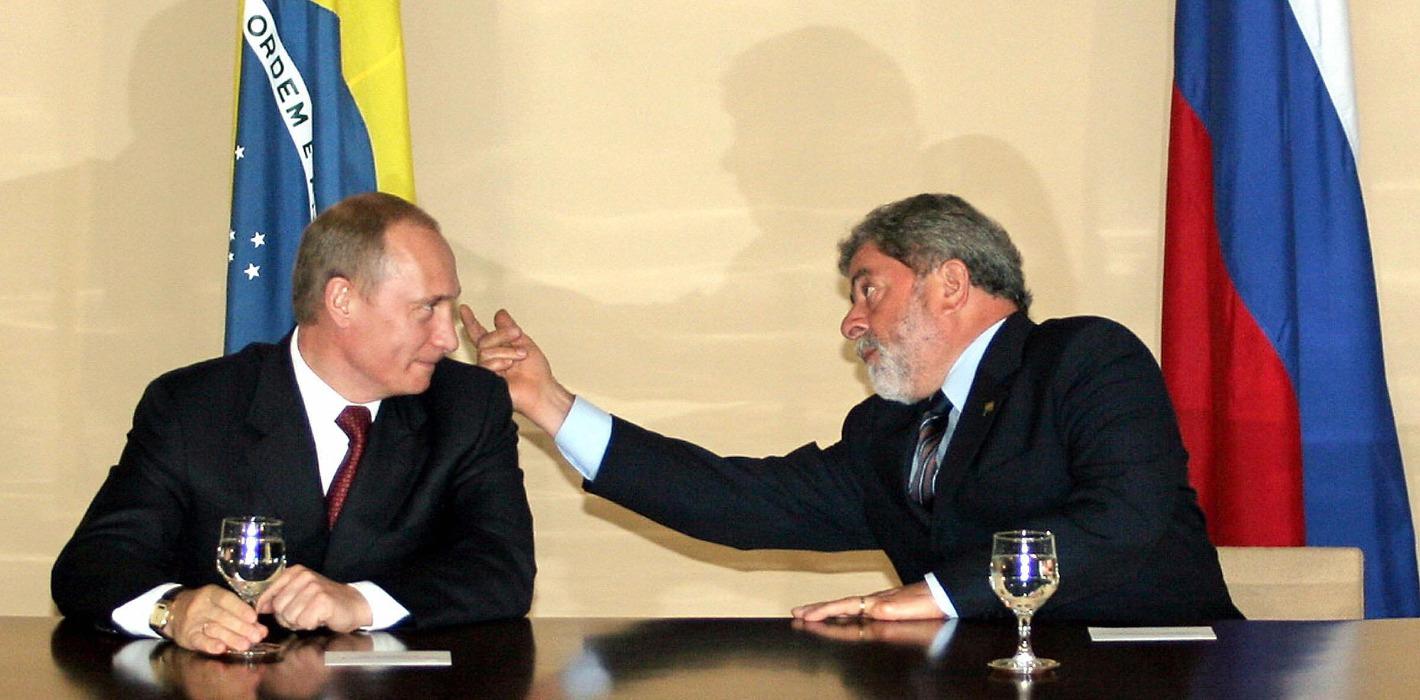
As one of the BRICS founders, Brazil’s new president will oppose pitting the BRICS against the West.
Ahead of Brazil’s recent presidential election, in which former president Luiz Inacio Lula da Silva narrowly beat the incumbent Jair Bolsonaro, the Kremlin was not too concerned about the outcome of the vote. Russian President Vladimir Putin noted that Russia had established “good relationships” with both contenders, and the Russian media gleefully reported that the “Latin American giant” wouldn’t join the West, whatever the outcome.
Moscow now hopes that the new socialist president—one of the BRICS founders during his previous presidency from 2003 to 2010—will work alongside Putin to create a multipolar world, and that he will strengthen Brazil’s role as Russia’s principal economic partner in the Western hemisphere.
The prospects of developing bilateral relations do look promising: Russia recently became Brazil’s fifth largest foreign trade partner, up from eleventh just a year ago. Yet Russian hopes for closer cooperation under an anti-U.S. banner are clearly exaggerated. Brazil certainly aspires to the role of a regional leader, but doesn’t believe that should necessarily entail confrontation with the West.
It’s true that Lula’s statements have left the West bewildered on more than one occasion. He criticized the United States and Europe for their unwillingness to enter into real negotiations with Russia or to de-escalate the situation by blocking Ukraine’s path to the EU and NATO. At the same time, he has called Russia’s military campaign in Ukraine a mistake. Bolsonaro’s approach was broadly similar.
Both contenders also criticized Ukrainian President Volodymyr Zelensky. Lula has said his behavior during the war is “a bit weird,” while Bolsonaro stated that Ukrainians “trusted a comedian with the fate of a nation.”
Putin, in contrast, gets entirely different treatment. Lula met the Russian president numerous times in the 2000s during his first presidential term and has called him a “great and dear friend.” Bolsonaro, meanwhile, made an extremely pro-Russian move by visiting the Kremlin on February 16, just days before Moscow’s invasion of Ukraine. Both the United States and even some Brazilian officials chided the Brazilian leader for making the trip, but he chose to pander to the love many Brazilians have for “tough guys” around the world.
Bolsonaro also needed the Kremlin summit to show that he was not alone following the departure from office of his key international ally Donald Trump, and to demonstrate his commitment to Brazil’s economic prosperity. While in Moscow, he managed to secure agreements on greater shipments of fertilizers and diesel fuel to Brazil.
Brazil imports 85 percent of the fertilizers used in its agriculture: a key sector of the economy, and one that was particularly important for Bolsonaro, since that’s where his main sponsors come from. An increase in the cost of fertilizers threatened Brazil’s soy, corn, sugarcane, and cotton exports. In 2021, Russia supplied around 25 percent of the fertilizers Brazil required, and Moscow agreed at the February meeting to double its exports in the near future.
When criticized, Bolsonaro always defended himself by saying that he was making sure Brazil would continue receiving the fertilizers it desperately needs. He also took credit for securing two tankers of diesel fuel Brazil received this fall.
Despite individual cases of cooperation, disagreements between Russia and Brazil do exist. Brazil voted for the UN resolutions condemning Russia’s actions in Ukraine, both in spring and in October. Many in the Bolsonaro administration opposed closer ties with Moscow, such as Vice President Hamilton Mourão, who compared Putin to Hitler this February, earning a reprimand from his boss. A lot of Brazilians—former foreign minister Ernesto Araújo among them—believe that their country should go further, and join the sanctions against Russia.
Like his predecessor, however, Lula will refrain from imposing sanctions and from harsh criticism of Moscow. Still, there is a limit to how close the countries’ cooperation can be. Brazil has alternative partners: as of this year, Russia no longer accounts for such a large proportion of Brazil’s fertilizer exports, while the share of Canada and the United States is growing.
Brazil is interested in Russian diesel fuel if, despite the sanctions and political risks, Russia’s terms prove better than those of numerous competitors in the United States, Saudi Arabia, and India. It will never be a market for Russian crude, however: Brazil is one of the ten largest oil producers in the world and competes with Russia for the Chinese market.
Moscow also hopes to cooperate in the realm of military technology. Previously, Brazil had purchased Russian Mi-35M helicopters and expressed considerable interest in Pantsir-S1 missile systems. But there has been no real progress in negotiations on the missile systems since 2013, and the Brazilian authorities have complained about problems servicing the helicopters.
Besides, Russia can hardly count on breakthroughs in this sector, given Brazil’s status as a “major non-NATO ally” of the United States, and the active role Israel and the EU states have been playing on the Brazilian market. France, for instance, has been helping Brazil to build its nuclear submarines, while Swedish planes have been used to modernize the country’s air force.
Even though Brazil has not joined Western sanctions against Russia, Brazilian companies generally observe them, which makes technological cooperation all but impossible. Back in March, Brazil’s aircraft producer Embraer, whose planes are flown by some Russian airlines like S7, announced that it was supporting the sanctions, and stopped providing components and services to Russia.
Of course, Brazil isn’t opposed to buying some goods like diesel fuel and fertilizer from Russia and shipping more agricultural products to the Russian market, so bilateral trade—which almost doubled in annual terms in the first seven months of this year, reaching $6.2 billion—may continue to grow. Still, that’s a fairly insignificant number compared to Brazil’s trade volumes with other states (around $125 billion with China, for instance).
Moreover, Lula’s presidency promises greater cooperation with the EU. The future president was warmly received in key EU countries a year ago, and the EU hopes for new opportunities in Brazil after the chill in relations under Bolsonaro.
As one of the BRICS founders, Lula will be working to strengthen this format, but for pragmatic rather than ideological reasons. Brazil will support the development of independent financial mechanisms like the BRICS Pay international payment system, but will oppose pitting the BRICS against the West. On the contrary, it sees BRICS as a vehicle for fostering equal partnership with the West and as a means of building bridges between developed and developing countries, which has little in common with Russia’s vision of the format.
One final factor that might hinder the progress of Russian-Brazilian relations is public opinion in Brazil. Polls show that before Russia’s invasion of Ukraine, 28 percent of Brazilians had a negative view of Russia, but that soared to 59 percent in May. Only 6 percent of Brazilians back Russia in this conflict, while 62 percent side with Ukraine. Any democratic leader will have to take such a substantial disparity into account.
Pavel Tarasenko
Carnegie does not take institutional positions on public policy issues; the views represented herein are those of the author(s) and do not necessarily reflect the views of Carnegie, its staff, or its trustees.
Russia spent years building a “sovereign internet,” concentrating web infrastructure exclusively within Russian territory. Ukrainian drone attacks have shown how vulnerable that approach has left the Russian internet.

Maria Kolomychenko

Putin’s conservative staffing policies and search for ever greater control have cemented parliament’s transformation into a bureaucratic appendage of the executive branch.

Andrey Pertsev

Russia’s AI-driven propaganda campaigns operate in a fragmented, chaotic, and often illogical manner. That’s not necessarily a problem for the Kremlin, though: It’s much easier to mimic genuine public debate that way.

Ilya Klishin

Without a ceasefire with Ukraine on attacking each other’s energy infrastructure—to which the Kremlin is unlikely to agree—the diesel agreement between Putin and Trump is largely for show, rather than representing a genuine increase in the volumes of Russian diesel on the global market.

Sergey Vakulenko

Russian strikes are weakening the economy sustaining Ukraine’s war effort. Closing the growing funding gap will require more European support and politically contentious reforms in Kyiv.

Balázs Jarábik