

Report
Mr. Husain Haqqani, Ashley J. Tellis
{
  "authors": [
    "Husain Haqqani"
  ],
  "type": "legacyinthemedia",
  "centerAffiliationAll": "dc",
  "centers": [
    "Carnegie Endowment for International Peace"
  ],
  "collections": [],
  "englishNewsletterAll": "ctw",
  "nonEnglishNewsletterAll": "",
  "primaryCenter": "Carnegie Endowment for International Peace",
  "programAffiliation": "russia",
  "programs": [
    "Russia and Eurasia"
  ],
  "projects": [],
  "regions": [
    "Pakistan"
  ],
  "topics": [
    "Political Reform"
  ]
}
REQUIRED IMAGE
Source: Carnegie
Reprinted from the Wall Street Journal, a Dow Jones Inc., May 2, 2002
If official results are to be believed, Pakistan's military ruler Gen. Pervez Musharraf won a respectable mandate in Tuesday's stage-managed referendum. But he lost a lot more in the bargain. The results, including figures for voter turnout, are mired in controversy. Instead of conferring legitimacy on him, the referendum has increased instability in a country considered a key ally in the war against terrorism.
Just as Pakistanis got ready to vote (or abstain, as requested by the main political parties) in the referendum, U.S. and Pakistani forces conducted joint raids against al Qaeda along the border with Afghanistan. The referendum was obviously timed so that Gen. Musharraf could use his "indispensability" in the war against al Qaeda to domestic political advantage.
The general wanted to change the label on his regime, redefining it as a democracy without altering its substance. But the U.S. should not allow him to get away with treating democracy with contempt. Doing so could plunge Pakistan into political conflict, undermining the antiterrorist effort. Given Gen. Musharraf's own mixed record, a blank check from Washington will embolden him to pursue domestic and regional policies that run counter to U.S. interests.
Before the referendum, Gen. Musharraf presented himself as a military leader with a difference. But by seeking a five-year term through the discredited device of an uncontested referendum, he invites comparison with previous military regimes. Each of Pakistan's military rulers has befriended the U.S. in the hope of maintaining power at home and balancing India's military superiority. Their repressive domestic policies have been accompanied by a belligerent anti-India posture, often couched in Islamic terms. In his referendum campaign, Gen. Musharraf let it be known that he is not going to be an exception.
The referendum's success was achieved by politicizing the election commission and compromising the supreme court. One member of the commission resigned to protest the illegality of the referendum. But the supreme court upheld it as valid, maintaining the tradition of a judiciary that has never ruled against a military regime.
The manner in which he conducted the referendum has cost Gen. Musharraf the sympathy of democrats who expected him to help reform the fractured political system. He lost his claim to the moral high ground as state resources were squandered and rules were changed daily to enable a high turnout. Having no competition on the ballot was not enough for the no-nonsense general. He also tried to create the illusion of an election campaign through orchestrated rallies and the forced participation of state employees.
Gen. Musharraf was assumed to have a degree of popular support. But the high-handedness of his team in organizing his rallies has created new pockets of antagonism toward him. The voter turnout (estimated officially to be at 30%, and by independent reporters as way below that) showed the public's indifference or opposition to the idea of endorsing military rule.
The erosion of institutions such as the supreme court, and lack of faith in the voting process, has led to widespread cynicism about the prospect of a return to democracy. Gen. Musharraf had allowed a free press so far, partly because it is a safety valve for populist sentiment. But the referendum campaign tested the limits of the regime's patience with the media, which was attacked by the general and his officials.
Gen. Musharraf's resort to Islamic symbolism and his hard-line statements against India during the referendum campaign makes it clear that he is not averse to using different languages for domestic and international consumption. Until recently, the U.S. looked upon him as the ally who would reverse Pakistan's involvement with militant Islamic ideology in addition to making peace with India. But he seems unwilling to break from the tradition of Pakistani military leaders to garner support on the basis of Islamic and anti-India sentiment. He also has made it clear that his idea of a modern Pakistan does not include a vision for a self-sustaining democracy.
After Sept. 11, the U.S. cannot afford to strengthen tactical allies who preside over unstable military regimes and pursue local agendas contradictory to U.S. strategic objectives. Washington must serve notice on Gen. Musharraf that he become its strategic partner by putting Pakistan on the path toward democracy and rule of law. Undiluted military rule is a recipe for instability. Gen. Musharraf's referendum has weakened Pakistan, instead of strengthening its ability to help in the war against terrorism.
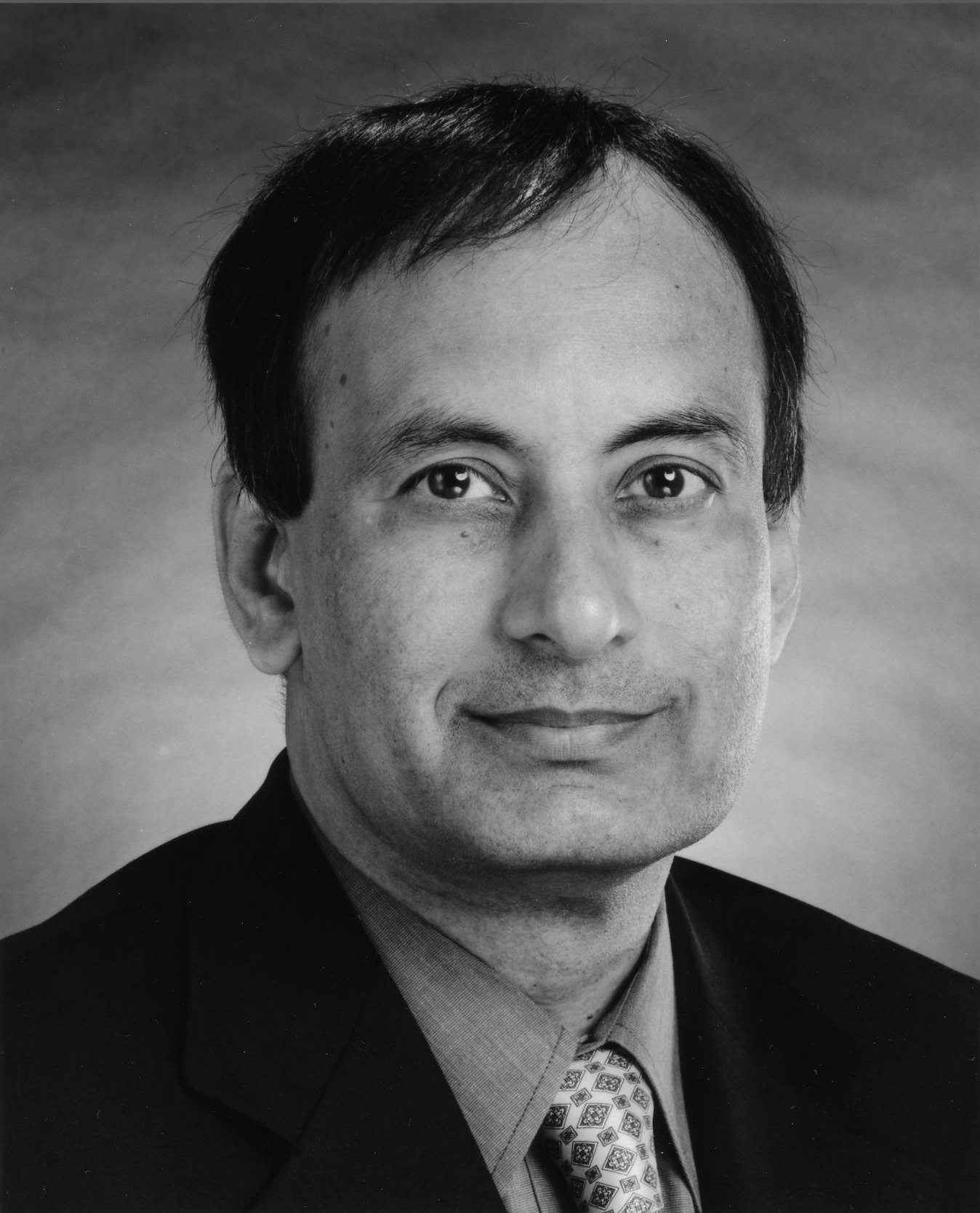
Mr. Haqqani, a visiting scholar at the Carnegie Endowment for International Peace, served as adviser to Prime Ministers Nawaz Sharif and Benazir Bhutto.
Former Visiting Scholar
Recent Work
Mr. Husain Haqqani, Ashley J. Tellis
Mr. Husain Haqqani
Carnegie does not take institutional positions on public policy issues; the views represented herein are those of the author(s) and do not necessarily reflect the views of Carnegie, its staff, or its trustees.

The European far right might fail to steer EU policy in the direction Russia wants, but they will create enough chaos inside Europe to benefit the Kremlin.

Dimitar Bechev

If the Russian-speaking community in Latvia cannot articulate their interests without being seen as disloyal, they could end up embracing a pro-Kremlin agenda.

Sergejs Potapkins

Russia’s ruling party would have benefited from Putin appearing as its distant patron, but as an active frontman imposing his views on the public, he has done nothing but harm both the party’s election campaign and the ruling system overall.

Andrey Pertsev

In the tenth year of his presidency, President Mirziyoyev’s system is becoming even more personalized than that of his predecessor Karimov.

Galiya Ibragimova
The greater threat to Zelensky comes not from Fedorov alone, but from the convergence between the former defense minister’s political campaign and the anti-corruption investigations moving ever closer to the presidential administration.

Balázs Jarábik