

In The Media
Michele Dunne, Robert Kagan
{
  "authors": [
    "Robert Kagan"
  ],
  "type": "legacyinthemedia",
  "centerAffiliationAll": "",
  "centers": [
    "Carnegie Endowment for International Peace"
  ],
  "collections": [],
  "englishNewsletterAll": "",
  "nonEnglishNewsletterAll": "",
  "primaryCenter": "Carnegie Endowment for International Peace",
  "programAffiliation": "",
  "programs": [],
  "projects": [],
  "regions": [
    "Iraq"
  ],
  "topics": []
}
REQUIRED IMAGE
Source: Carnegie
Originally published in the Washington Post.
Can the Bush administration follow its brilliant military campaign in Iraq with a smart political and diplomatic campaign after the war? It can if it avoids some dangerous temptations.
The first temptation comes in Iraq, where some Bush officials may want to support the political fortunes of people they have known and trusted for many years, such as Ahmed Chalabi.
It's understandable, but it's a mistake. Chalabi is undoubtedly a good man. While in exile, he labored long and hard against Saddam Hussein. If he can now muster genuine support in Iraq, through his own exertions, then the world should wish him well. But the United States must not give him a leg up over other potential leaders, and especially those who may now begin emerging from within Iraq. As Paul Wolfowitz put it last Sunday, "You can't talk about democracy and then turn around and say we're going to pick the leaders of this democratic country." Exactly right, so the United States shouldn't help Chalabi or anyone else position himself as Iraq's Charles de Gaulle in the waning days of the war. If it ever starts to look as if the United States fought a war in Iraq in order to put Chalabi in power, President Bush's great success will be measurably discredited.
The second temptation comes in Europe. There is a strong impulse in the administration right now to punish erstwhile allies in Europe who opposed the war. A certain righteous triumphalism in Washington is to be expected, and payback is a normal human desire. But this is the time for a little self-interested magnanimity.
The world's sole superpower doesn't need to hold grudges, and sometimes it can't afford to. No ally imperiled the American war effort more than Turkey, after all, but it would be politically and strategically insane, as the United States works on building a democratic Iraq, to punish the only well-established moderate Muslim democracy in the region. The Bush administration seems capable of burying the hatchet with Vladimir Putin, overlooking Russia's provision of banned weaponry to Iraq. Nor, one suspects, will China pay a price for joining France and Russia in opposition to the war.
So why not make amends in Europe? Of course Bush should reward those who took risks to support him, especially Tony Blair. And it won't be possible to do much business with France so long as the Chirac government continues to present itself as the builder of a great counterweight to the United States. But if the United States looks like it's asking Europeans to choose between being "European" and being pro-American, we'll fail. The European Union is still the dominant political institution in European society, and Blair is trying to knit back his own tattered relations with Europe. Punishing the rejectionist Europeans won't help him.
The United States should not try to divide Europe; let France do that. Most European leaders realize that a policy of opposing the United States makes European unity impossible. The Bush administration, for its part, should embrace Europe. Last week Colin Powell did good work in Brussels, and Vice President Cheney met with the EU's foreign minister, Javier Solana. It's time to take the next step. If pursuing important national interests means letting bygones be bygones in Moscow, Beijing and Ankara, why not in, say, Berlin? Unlike Turkey, Germany did not deny overflight rights to U.S. aircraft during the war or limit the use of American bases on German soil. Germany sent Patriot missile batteries to Israel. Many leading Germans would like to mend ties with the United States. If those reasons aren't enough, perhaps Bush officials will appreciate this one: The more the United States "punishes" the German government, the more we drive an anxious, isolated Germany into the welcoming arms of France. If Bush can call Putin on the phone, he can call Gerhard Schroeder, too -- not because he likes him but because it's the smart thing to do.
The best way to bring most Europeans around is through persuasion, not punishment. Which brings us to Temptation Three. As the military campaign winds down, there may be a tendency to ratchet down the public diplomacy campaign as well. In fact, the administration should do just the opposite. Once the fighting stops, the Bush administration needs to work even harder to justify the war.
The United States can win hearts and minds in Europe, and maybe even in the Arab world, by convincing people, in retrospect, that the war was more just than they thought. Obviously the administration intends to publicize all the weapons of mass destruction U.S. forces find -- and there will be plenty. But enormous efforts should also go into documenting and publicizing the brutal nature of the Saddam Hussein regime in all its horrifying detail. Some billionaire should finance the equivalent of a "holocaust museum" in Baghdad, memorializing the human suffering brought on the Iraqi (and Kuwaiti and Iranian) people over the past quarter-century. Those voices should finally be heard by everyone, including those who managed to plug their ears to Iraqi pleas while shaking their fists at the United States.
All in all, America's ability to lead effectively in the future will depend
a lot on how this war is understood and remembered by the world. This battle
is just beginning, and if the administration can be as clever in diplomacy as
it is in war, it can win that one, too.

Former Senior Associate
Kagan, author of the recent book, The Return of History and the End of Dreams (Knopf 2008), writes a monthly column on world affairs for the Washington Post and is a contributing editor at both the Weekly Standard and the New Republic.
Recent Work

Michele Dunne, Robert Kagan
Robert Kagan, Michele Dunne
Carnegie does not take institutional positions on public policy issues; the views represented herein are those of the author(s) and do not necessarily reflect the views of Carnegie, its staff, or its trustees.
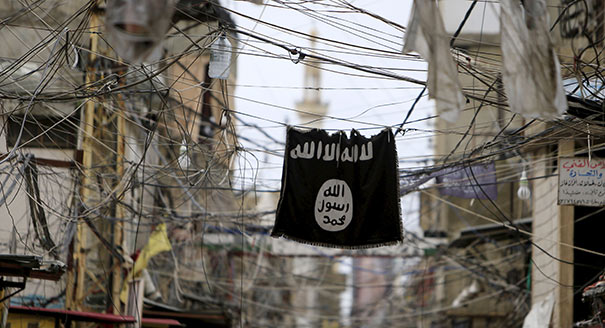
The Islamic State’s ideology is multifaceted and cannot be traced to one individual, movement, or period. Understanding it is crucial to defeating the group.
Hassan Hassan
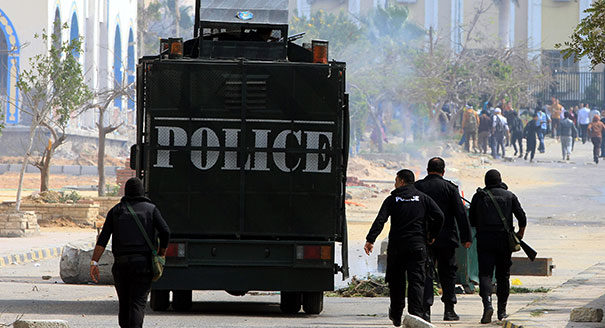
The Arab states in transition are confronted with a seemingly intractable task: rebuilding state institutions and social contracts in an era of global change. Conventional approaches to security sector reform that fail to grasp the dilemmas and challenges complicating this effort are certain to fail.

Yezid Sayigh
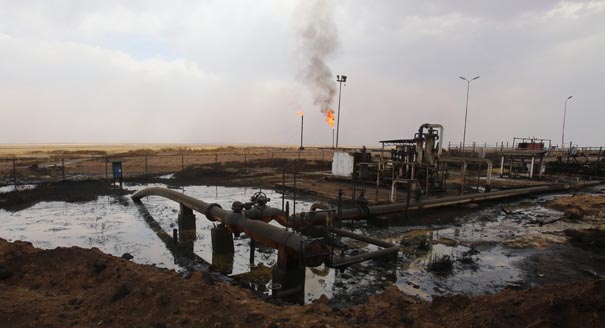
The group hasn't only recruited suicide bombers, it has also drawn technicians and engineers to manage oil fields under its control.

Carole Nakhle
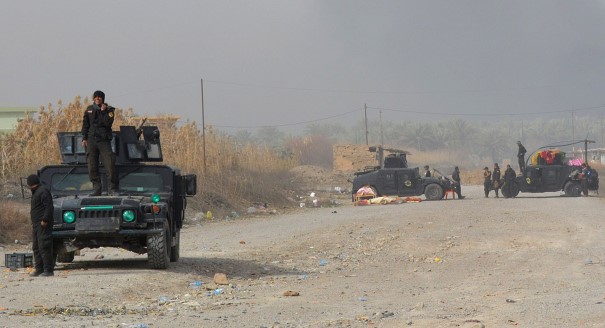
Many North Caucasus natives have joined the Islamic State, and some are returning home. If the socioeconomic and political situation in the region deteriorates and popular discontent increases, this may lead former Islamic State fighters to join the armed struggle.

Alexey Malashenko
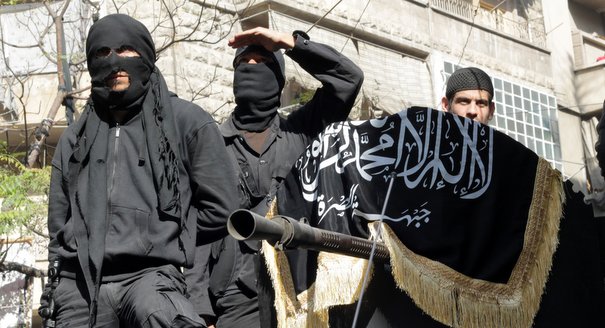
Syrian jihad will not be replicated by Central Asian combatants returning home, but fundamentalist ideals are long-established in this region and will not go away.
Timur Toktonaliev, Alexey Malashenko