

Other
Anders Aslund
{
  "authors": [
    "Anders Aslund"
  ],
  "type": "legacyinthemedia",
  "centerAffiliationAll": "dc",
  "centers": [
    "Carnegie Endowment for International Peace"
  ],
  "collections": [],
  "englishNewsletterAll": "ctw",
  "nonEnglishNewsletterAll": "",
  "primaryCenter": "Carnegie Endowment for International Peace",
  "programAffiliation": "russia",
  "programs": [
    "Russia and Eurasia"
  ],
  "projects": [],
  "regions": [
    "Caucasus",
    "Russia"
  ],
  "topics": []
}
REQUIRED IMAGE
Source: Carnegie
Putin's quest for power is harming Russia
Originally published in Financial Times on August 23, 2004.
Something extraordinary is happening in Russia. Yukos, its biggest oil company, is about to go bankrupt in the midst of an oil boom, even though it is one of Russia's most efficient, transparent and international companies and produces 2 per cent of world oil output, the same as Kuwait or Libya. The Yukos affair has helped drive up the world oil price. How could things have gone so awry?
The causes of this crisis are as unsavoury as they are plain: the seemingly insatiable appetite for political control on the part of Vladimir Putin, the president, and his cronies' desire for assets. The tax case against Yukos lacks merit. Yukos has used the same legal loopholes as many other companies. Eleven offers by the company to pay up have been rejected by the authorities, showing that they do not care about revenues. Instead, the government is after its assets.
The Yukos affair is about to define Mr Putin's second term, which promises to be very different from his first. Few presidents can pride themselves on as successful a first term as Mr Putin. Not only did he consolidate his own power, but he also shepherded the economy to high growth and boosted Russia's international standing. In March he was re-elected for a second term with 71 per cent of the votes cast. Although the election was neither free nor fair, his popularity is genuine. Given that his United Russia party gained a two-thirds majority in the State Duma in December's elections, Mr Putin has concentrated all power in his own hands. That may be good for him but it is not so good for Russia.
In his first term, Mr Putin had to balance the demands of powerful businessmen against those of his former colleagues from the KGB, often leaving a small group of well-placed liberals victorious. The outcome was impressive market-oriented reforms that bred economic growth. Mr Putin's preferences, however, appear to be political control, national strength and economic growth. This agenda is neither liberal nor democratic.
In Mr Putin's second term, this democracy deficit has begun to exact a high price. He has beaten all his adversaries: independent media, oligarchs, regional governors, communists, liberal parties, the parliament as such and even the government apparatus. The power they once wielded is being seized by Mr Putin's KGB friends and the remaining big state enterprises in armaments, energy, pipelines, railways, telecommunications and banking. Indeed, the distinction between these two forces is blurring, as the KGB men move into the commanding heights of the economy.
This shift back to state control is a real threat to the Russian economy because all the big success stories in recent years are to be found in the flourishing private sector, while the state is patently failing. Many had hoped that Mr Putin would use his strong popular mandate to reform the state - especially to make the state administration more efficient, to liberalise and privatise state monopolies and to improve social services. But to reform Russia's mighty public sector, you need strong allies. Alas, Mr Putin has subdued all forces that could have helped to discipline the state, such as the media and big businessmen. Far from reforming the secret police and the state monopoly companies, he has made them the basis of his regime.
Privatisation has all but stalled. Instead, the government is seeking a greater role for the state in energy and other sectors. The state already controls four-fifths of the banking sector, and by squeezing out private banks it is increasing this share. Meanwhile, the big state energy enterprises, Rosneft and Transneft, show falling profits in the midst of the oil boom. In short, Russia seems to be abandoning the Anglo-American model of competing private enterprises in resource industries that has been the backbone of its economic successes. Instead, it appears to be about to adopt the patently unsuccessful model of state monopoly enterprises used by many members of the Organisation of Petroleum Exporting Countries. Sooner rather than later, the resulting diseconomies will impede economic expansion.
That leaves only the social sector to be reformed. The Russian Federal Assembly has just decided to abolish many social benefits that have never actually been paid out and to replace numerous benefits paid in kind with cash payments. Meanwhile, Mr Putin has quintupled his own salary and those of thousands of senior officials, who also retain their old fringe benefits. Small wonder that his popularity has fallen sharply. Successful reform is often achieved when a leader is trying to consolidate his power. Then he is obliged to appeal to broad constituencies and pursue attractive policies. After he has consolidated power, he can indulge in his idiosyncrasies. Now Mr Putin is free, and his power base consists of secret service officers and state enterprise managers, groups known for corruption and secrecy rather than market reform and transparency.
Thus Russia has become structurally quite similar to Latin America, and analogies with Carlos Menem of Argentina and Alberto Fujimori of Peru may be appropriate. Both leaders were successful in their first terms but failed miserably in their second. Similarly, we should not assume that Mr Putin's policies in his second term will resemble those in his first. The Yukos affair may prove to be the decisive moment.
The writer is director of the Russian and Eurasian Programme at the Carnegie Endowment for International Peace.
Former Senior Associate, Director, Russian and Eurasian Program
Recent Work
Anders Aslund
Anders Aslund

Russia’s ruling party would have benefited from Putin appearing as its distant patron, but as an active frontman imposing his views on the public, he has done nothing but harm both the party’s election campaign and the ruling system overall.

Andrey Pertsev

Depleted financial reserves and a shrinking tax base mean it is no longer possible to simultaneously deliver high defense spending, price stability, and economic growth.

Alexandra Prokopenko

Blurring the line between humans and animals is a long-standing tradition in social utopian prose. In his latest novel, Leonid Bershidsky reminds us that in social experiments, people are often treated no differently than animals.

Alexander Baunov
While France and Australia are seeking to establish the legal obligations of messaging apps like Telegram, Russia wants total subordination.

Maria Kolomychenko
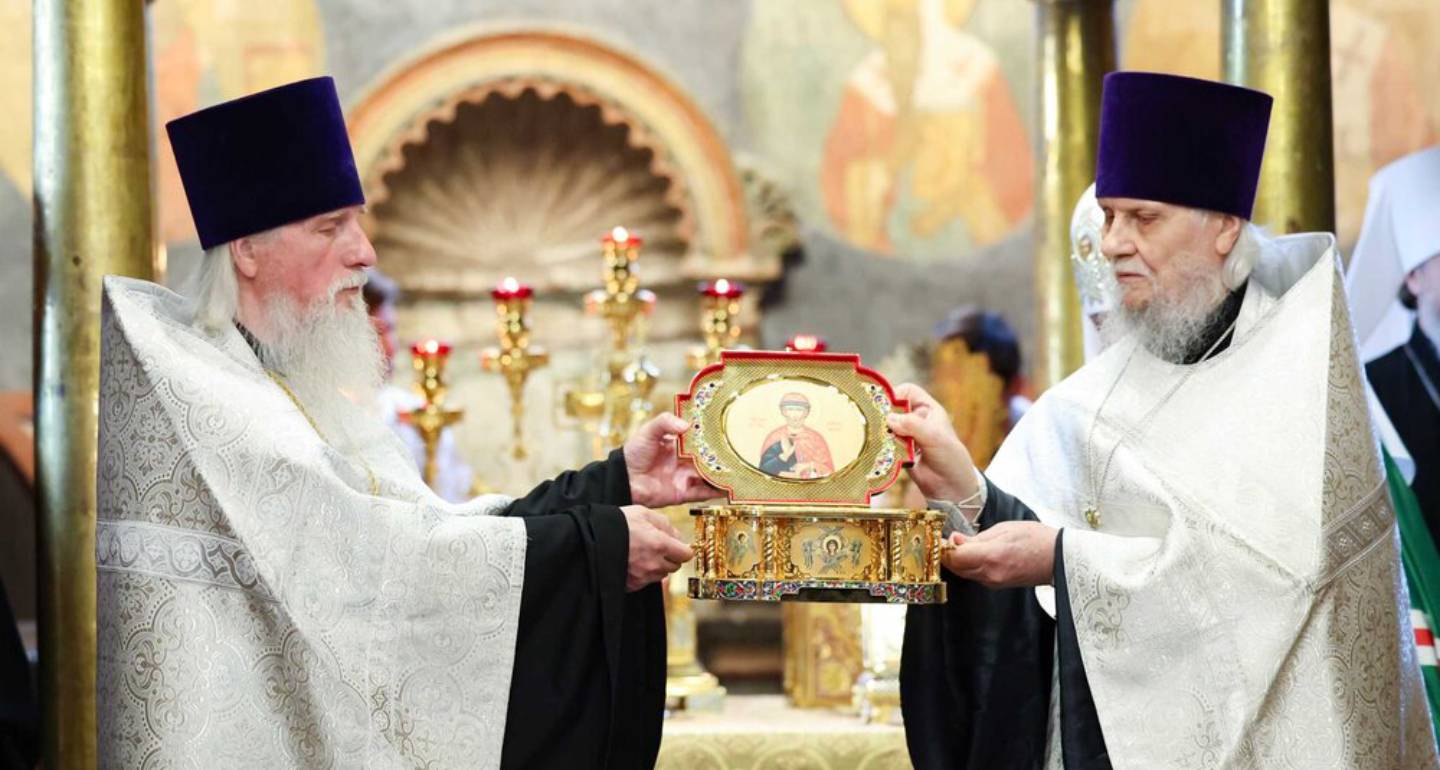
The recent uncovering of Dmitry Donskoy’s relics in the Cathedral of the Archangel is yet another attempt by the Russian Orthodox Church to help the state solve its problems. However, parroting the state’s version of Russian history leaves the Church with no message except “patriotism.”
Alexander Zanemonets