

Commentary
Official discussions about mini oil refineries are unlikely to come to anything—but the mere fact they’re happening reveals the regime is failing to deliver a functioning economy.
Sergey Vakulenko
{
  "authors": [
    "Nikolai Snezhkov"
  ],
  "type": "legacyinthemedia",
  "centerAffiliationAll": "dc",
  "centers": [
    "Carnegie Endowment for International Peace"
  ],
  "collections": [],
  "englishNewsletterAll": "ctw",
  "nonEnglishNewsletterAll": "",
  "primaryCenter": "Carnegie Endowment for International Peace",
  "programAffiliation": "russia",
  "programs": [
    "Russia and Eurasia"
  ],
  "projects": [],
  "regions": [
    "North America",
    "United States",
    "Caucasus",
    "Russia"
  ],
  "topics": [
    "Foreign Policy"
  ]
}
Source: Getty
U.S. Secretary of State Condoleezza Rice will arrive in Moscow on Tuesday, April 19th, 2005, for a two-day visit. According to official press release, Ms. Rice will be involved in preparations for the forthcoming meeting between American President George W. Bush and Russian President Vladimir Putin in Moscow during the May 9th V-Day celebrations.
Source: Pravda April 18

U.S. Secretary of State Condoleezza Rice will arrive in Moscow on Tuesday, April 19th, 2005, for a two-day visit. According to official press release, Ms. Rice will be involved in preparations for the forthcoming meeting between American President George W. Bush and Russian President Vladimir Putin in Moscow during the May 9th V-Day celebrations. Yet, both American and Russian experts tend to interpret Ms. Rice's visit as a larger event.
"From our point of view, the personal diplomacy at the level of presidents and foreign ministers is the most valuable asset of the Russian-American partnership and we hope to preserve it," said a representative of the press service of the Russian Embassy in Washington to Vremya Novostei. Mr. Bush and Mr. Putin had a summit meeting earlier this year in Bratislava, Slovakia.
The two presidents are going to discuss a number of top-priority subjects during the Moscow meeting. Those include steps for strengthening cooperation in the field of non-proliferation of weapons of mass destruction, the fight against the international terrorism, cooperation in energy sector, commerce, space, and investing activities. "We are determined to destroy some stereotypes that still exist in the USA with regard to the perception of the realities of today's Russia as certain political groups are trying to stir up discord between Moscow and Washington," said a representative of the Russian Embassy's press service. According to a Russian diplomat, "the current backdrop created by the American media is an obvious disadvantage to the development of the bilateral relations." He believes the fuss over the Russian matters in the media is a morbid and harmful situation reflecting the attitude to Russia which is still viewed by the USA as some kind of a rival, a source of instability.
American experts also believe that the visit of U.S. Secretary of State to Russia is an event of special importance. Michael McFall, an analyst with the Carnegie Endowment for International Peace, believes that "the Moscow meeting is important to President George W. Bush, it may be a major meeting of the two presidents during their final terms in office." Their next meeting could take place during G8 summit in Moscow next year, but after that "a new election will keep them far too busy," says Mr. McFall. "If the presidents really want to give a boost to the American-Russian relationship, their intentions should come to light during the coming Moscow talks," says he.
According to him, U.S. Secretary of State has one more important mission to accomplish in Moscow aside from conducting her preparatory work for President Bush's visit. She is going to personally smooth over the controversy caused by the plans of George Bush to meet with the presidents of the Baltic states and Georgia after visiting Moscow.
"Ms. Rice can certainly appreciate that the side trip should be explained to the Russian leaders to assure them that it is not a hostile move in respect to Russia," says Michael McFall. He is also confident that the visit of Condoleezza Rice to Moscow is particularly important in view of an increasingly heated debate over Russia within the Bush administration.
There is a growing number of high-ranking U.S. officials who criticize the Kremlin for "pursuing antidemocratic policies" and doubt Russia's contribution to the war on terror. Unlike those critics, Ms. Rice believes that President Putin is an America's ally in the fight against the international terrorism.
Nikolai Snezhkov
Carnegie does not take institutional positions on public policy issues; the views represented herein are those of the author(s) and do not necessarily reflect the views of Carnegie, its staff, or its trustees.

Official discussions about mini oil refineries are unlikely to come to anything—but the mere fact they’re happening reveals the regime is failing to deliver a functioning economy.

Sergey Vakulenko
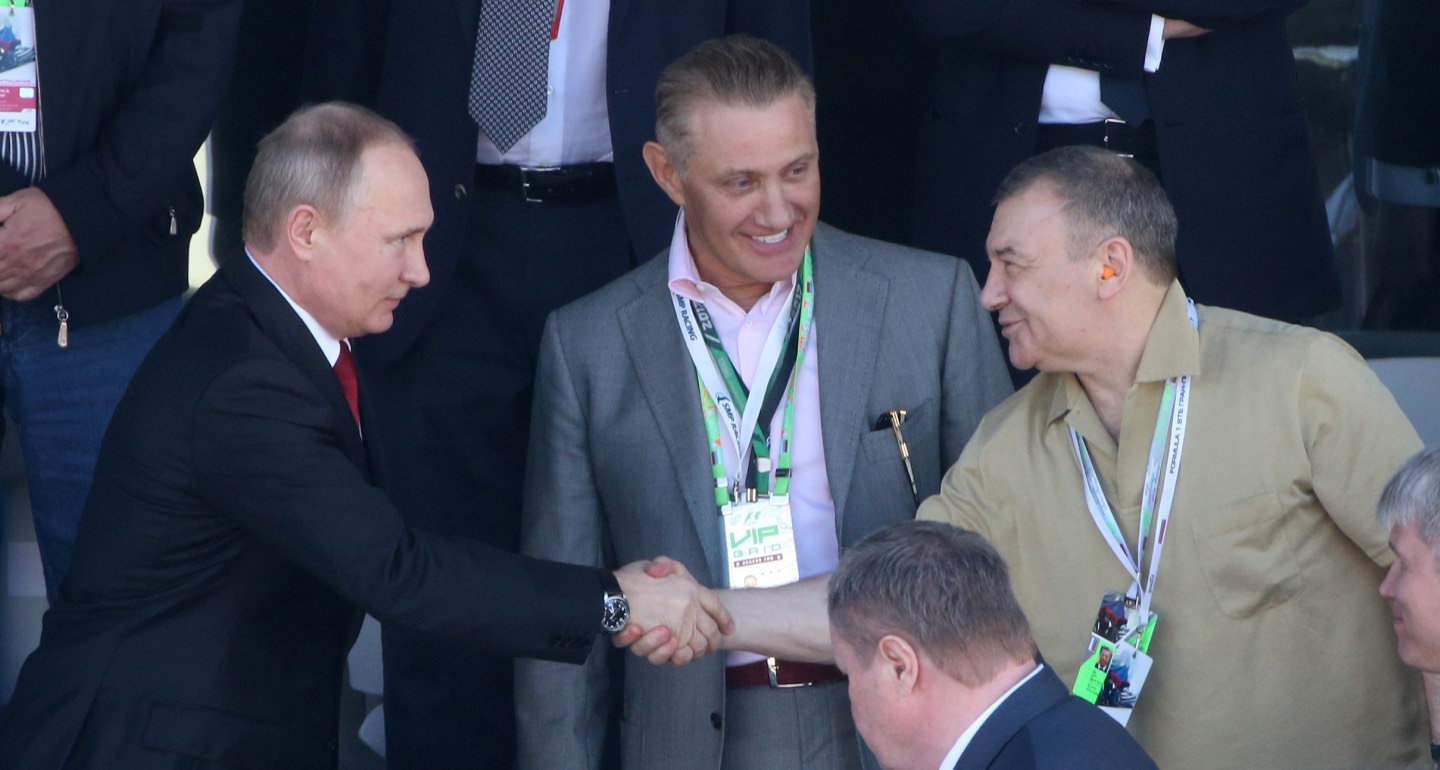
The security forces are targeting Arkady and Boris Rotenberg’s patronage network—and in Putin’s Russia, it’s extremely hard to stop a purge once it’s under way.

Mikhail Komin

Andrey Melnichenko’s essay offers no answer to the fundamental question of how, under any kind of negotiated settlement, Europe can protect itself from the Russian ressentiment that is inevitable in all scenarios except for an outright victory for Putin.

Leonid Bershidsky

Despite unhappiness on the ground, Moscow is determined to use both carrot and stick to ensure there is record support for United Russia in occupied Ukraine.

Konstantin Skorkin
Medvedev’s defeat in the battle for the position of speaker appears to signal that the long process of his marginalization in Russian politics has passed the point of no return.

Andrey Pertsev