

In The Media
Martha Brill Olcott
{
  "authors": [
    "Martha Brill Olcott"
  ],
  "type": "testimony",
  "centerAffiliationAll": "dc",
  "centers": [
    "Carnegie Endowment for International Peace"
  ],
  "collections": [],
  "englishNewsletterAll": "ctw",
  "nonEnglishNewsletterAll": "",
  "primaryCenter": "Carnegie Endowment for International Peace",
  "programAffiliation": "russia",
  "programs": [
    "Russia and Eurasia"
  ],
  "projects": [],
  "regions": [
    "Central Asia",
    "Uzbekistan"
  ],
  "topics": [
    "Political Reform",
    "Democracy",
    "Economy",
    "Trade",
    "Foreign Policy"
  ]
}
Source: Getty
While many aspects of recent events in Uzbekistan remain unclear, one thing is perfectly obvious. Unless the government of President Islam Karimov quickly moves to introduce economic and political reforms, it will not regain public confidence.
Source: United States Helsinki Commission Briefing on Uzbekistan

While many aspects of recent events in Uzbekistan remain unclear, one thing is perfectly obvious. Unless the government of President Islam Karimov quickly moves to introduce economic and political reforms, it will not regain public confidence. And if it fails to regain public confidence it will face an escalating series of political crises like the one it confronted in Andijan, with little reason to assume that the Uzbek government will handle these future crises any better than it did the current one.
The Karimov regime shows no outward signs of remorse over how it handled last week’s crisis, and has given no indication that it will forsake an exclusively force-driven solution to future challenges.
Virtually all independent observers, though, concur that a strategy based exclusively on the use of force cannot secure its desired outcome---that of maintaining the government of Islam Karimov. And saying this does not diminish the moral implications of allowing such a strategy to be perpetuated, even if it was presumed to be able to succeed.
Recognition that the continued use of force in Uzbekistan---in the absence of offering some economic relief and allowing basic political freedoms to its population---will create diminishing public order in Uzbekistan creates a different set of moral imperatives for the international community.
The recent actions in Uzbekistan creates the preconditions that require policy-makers to examine whether the rights of national sovereignty should be breached in the name of international responsibility to protect populations that are endangered and to restore their basic human rights.
As a result it is encumbent upon the U.S. government and the O.S.C.E. to be satisfied that they know what actually occurred in Andijan and its environs on May 12-14. This will not occur without the creation of an independent international commission under the auspices of the O.S.C.E., or alternatively of the U.N.
The Uzbek government has offered its version of events, not once, but several times, and not only have their accounts been inconsistent, but they are seriously at odds with what has been reported by journalists who have interviewed refugees in Kyrgyzstan and eyewitnesses in Uzbekistan.
As horrifying as some of these accounts are, and as incompetent as the Uzbek government has been in mounting its own defense, the international community has to make clear that it is looking for answers to what happened and not villains, answers that are necessary to produce the de-escalation of tensions between the government and the population.
And in asking for answers, the international community must make clear that it is not prejudging outcomes. It is not prejudging the guilt or innocence of the 23 businessmen who stood accused of supporting an outlawed religious group; that it recognizes that force was used to seize arms stores and take control of a prison; that it doesn’t by definition preclude the version that siege takers from within the crowd fired on the government troops.
Furthermore, there is no way that the Uzbek government will permit an international inquiry until they are convinced that this will be done by neutral and unbiased observers. And even then it is going to be a very hard sell, a point that I will return to below.
At the same time U.S. policy-makers and their O.S.C.E. colleagues must continue to ensure that discourse about these events moves from the question of international terrorism where the Uzbeks would like it to rest, to the underlying causes of why so many innocent people were drawn to the protest in the squares of Andijan on May 13-14.
We cannot allow the issue of whether Hizb ut-Tahrir is a terrorist organization and whether it and splinter groups like Akhromiya should be placed on a list of international terrorist organizations to become a focus of current concern. The focus must remain on the way the events in Andijan played out.
The U.S. administration has drawn attention to the fact that armed individuals broke into weapons stores, used weapons to forcibly release prisoners, and then set siege to public buildings. It is important to learn more about who these individuals were, and do so from independent sources as well as from the government of Uzbekistan.
Knowing as much about the history of religious ferment in the Ferghana Valley region as I do, it is hard for me to believe that the armed individuals who helped plan and carry out the attack on the weapons stores and prison did not include at least a few people who had passed through the network of terror training camps that begin in Tajikistan, and then moved to Afghanistan, where they enjoyed direct funding from al-Qaeda.
But the existence of such people----and there were prisoners in Andijan convicted for membership in the Islamic Movement of Uzbekistan---and the reality of the threat that they may pose to the government of Uzbekistan is but one of the questions before us.
The threat that armed individuals, committed to the use of terror in the name of Islam, may pose is magnified exponentially when the population they are appealing to has lost confidence in its government and lacks the means of expressing this in peaceful fashion.
This is one of the things that make the current Uzbek strategy so dangerous. But at the same time the international community must be aware of the security risks that will be created if the Karimov regime is ousted. There are two ways this might come about. Karimov might be sacrificed à la Nicolae Ceaucescu, by the heads of the very power ministries upon which his survival depends. This is unlikely, given the amount of rivalry that exists between these security services. But this is not impossible. However, these men are no more likely to endorse an economic or political reform agenda than the current president is, and may come to power through making alliances with local quasi-Islamist religious leaders.
More likely, is the scenario where the government simply crumbles in the face of widening popular opposition, which can no longer be contained through the use or threat of force. While Uzbekistan has the region’s largest and best equipped internal (and external) security forces, its capacity is limited and would not extend to squelching unrest in several cities simultaneously. It could not contain a nation-wide protest, and might well splinter into competing armed groups each backing up claims of competing regional elites, who might in turn be backed by competing clerics. The situation would be roughly analogous to what we saw in Tajikistan in the early and mid-1990s, but those invoking Islamic themes might find easy access to far deadlier global networks.
Tragically, one thing is clear. There will not be the same smooth transfer of power
in Uzbekistan that we saw in Georgia and Ukraine, or even in the bumpier Kyrgyz experience.
Among other things, there is no Saakashvili or Yushchenko waiting in the wings. While the secular democratic opposition in Uzbekistan includes many brave men and women, these people lack the political clout and the proven administrative skills of their Georgian and Ukrainian colleagues. There are also members of the ruling elite found in most walks of Uzbek life who support reform, but who have been frightened to speak up for fear of their jobs. Identifying them will be a difficult job, and more difficult will be to convince the small group of secular reformers and the long-time regime supporters to work together.
Rebuilding after regime collapse is difficult work and, as we see in Afghanistan and Iraq, requires close international engagement of the kind that has been lacking in Central Asia in the years since independence.
The consequences of state collapse in Uzbekistan are profound, and would endanger the survival of the Kyrgyz and Tajik states and change considerably the path of development in Kazakhstan.
Even today, the crisis is creating serious complications for the interim government in Kyrgyzstan. The Bishkek government must manage a refugee flow and sort through requests of asylum seekers in a way that assures its own large Uzbek population of its fairness, while not antagonizing the government in Tashkent, or permitting individuals that are part of groups outlawed in Kyrgyzstan (where both the Hizb ut-Tahrir and the IMU are illegal) to gain refuge in their country.
In a situation in which the risk of chaos or civil war is rapidly moving from vague to impending, U.S. policy-makers must find a way to translate noble pronouncements into action plans. But they cannot simply decide to abandon a sitting president without a plan of what they will do next and without making sure that the Uzbek president understands the door to chaos and civil war that he has opened.
An important first step is the formation of an international commission to investigate what occurred in Andizhan. This is a project worthy of using considerable back door diplomacy to gain Uzbek acquiescence through face to face contact with this man to warn him of what fate awaits him and his people. President Karimov will not survive unless he embraces the whole project of economic as well as political reform. Some seemingly small changes in policy----freeing the purchase price of cotton and grain, introducing a flat tax system for income and profit, offering a staged withdrawal of trade restrictions----would all rapidly produce new strains of support for the currently beleaguered Uzbek president.
This is especially true if they were accompanied by the registration of foreign NGOs, and removal of restriction on assembly, a new attitude toward open media, etc. Some of these steps could create quick but hopefully temporary budget deficits, which if the Uzbeks showed good faith with key political reforms the international community could help Tashkent absorb.
If the best auspices of the U.S., the O.S.C.E., the U.N., and of course those of friendly European and Asian states are unable to convince the current government of Uzbekistan that an independent inquiry into the events in Andijan is necessary, then the international community must prepare itself to face a much greater humanitarian intervention in Uzbekistan, and quite probably in the Central Asian region more generally.
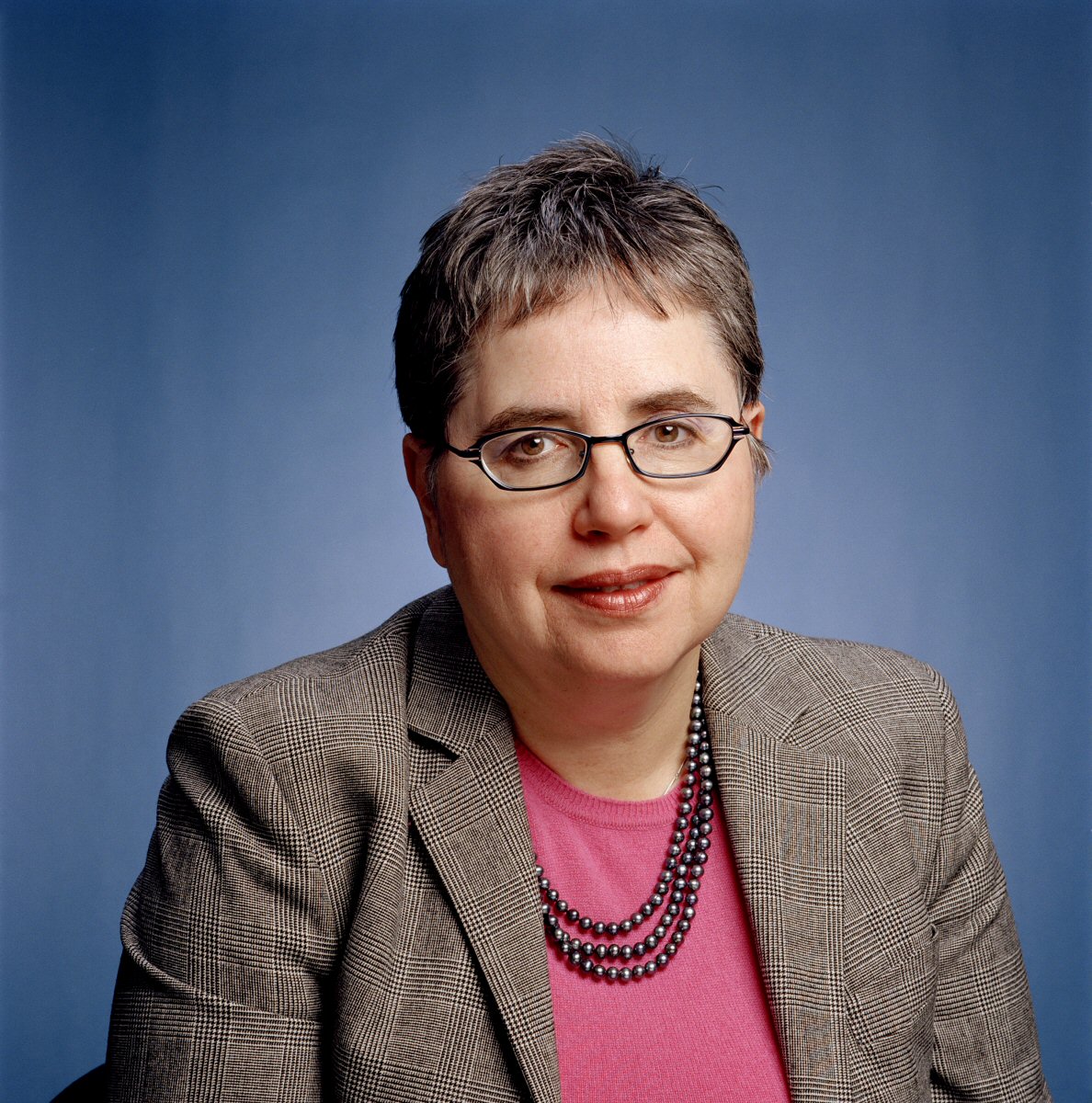
Former Senior Associate, Russia and Eurasia Program and, Co-director, al-Farabi Carnegie Program on Central Asia
Olcott is professor emerita at Colgate University, having taught political science there from 1974 to 2002. Prior to her work at the endowment, Olcott served as a special consultant to former secretary of state Lawrence Eagleburger.
Recent Work
Martha Brill Olcott
Martha Brill Olcott
Carnegie does not take institutional positions on public policy issues; the views represented herein are those of the author(s) and do not necessarily reflect the views of Carnegie, its staff, or its trustees.

Japan’s long-term security policy is driven by concerns about China, and there is little appetite for (or interest in) pursuing a confrontation with Moscow.

James D.J. Brown

Putin’s conservative staffing policies and search for ever greater control have cemented parliament’s transformation into a bureaucratic appendage of the executive branch.

Andrey Pertsev

Without a ceasefire with Ukraine on attacking each other’s energy infrastructure—to which the Kremlin is unlikely to agree—the diesel agreement between Putin and Trump is largely for show, rather than representing a genuine increase in the volumes of Russian diesel on the global market.

Sergey Vakulenko

Russian strikes are weakening the economy sustaining Ukraine’s war effort. Closing the growing funding gap will require more European support and politically contentious reforms in Kyiv.

Balázs Jarábik

Ex-president Gurbanguly Berdimuhamedov remains interested in politics, but his son Serdar, Turkmenistan’s current president, is becoming increasingly independent and willing to break with his father’s legacy. If their covert rivalry goes too far, both risk losing power.

Galiya Ibragimova