

Commentary
The European far right might fail to steer EU policy in the direction Russia wants, but they will create enough chaos inside Europe to benefit the Kremlin.
Dimitar Bechev
{
  "authors": [
    "Mark Teeter"
  ],
  "type": "legacyinthemedia",
  "centerAffiliationAll": "",
  "centers": [
    "Carnegie Endowment for International Peace"
  ],
  "collections": [],
  "englishNewsletterAll": "",
  "nonEnglishNewsletterAll": "",
  "primaryCenter": "Carnegie Endowment for International Peace",
  "programAffiliation": "",
  "programs": [],
  "projects": [],
  "regions": [
    "Caucasus",
    "Russia"
  ],
  "topics": [
    "Foreign Policy"
  ]
}
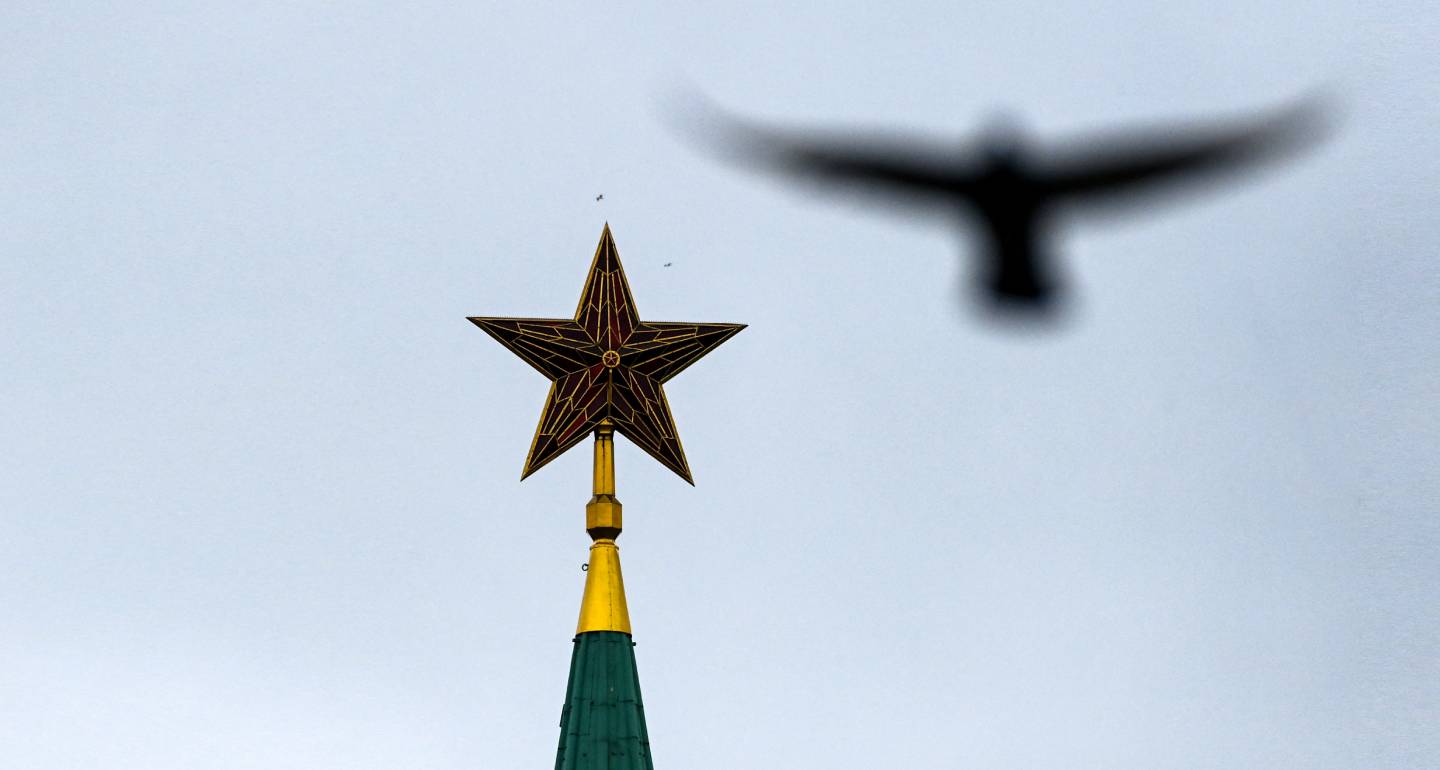
REQUIRED IMAGE
Source: Moscow Times
The Pew Global Attitudes Project reported late last month that favorable views of the United States were on the decline among Russians in 2005-06, while unfavorable views rose, overtaking the positives by a margin of 47 percent to 43 percent.
The administration of U.S. President George W. Bush likely lost little sleep over this news, preoccupied as it was with the mismanagement of two wars (in Iraq and on terror) and the continuing fallout from a massive electoral rejection at home. And even without its current mega-crises, the current U.S. regime would hardly have blinked at such a trend. One of this administration's hallmarks is an Olympian indifference to what others -- other governments, nations, individuals, flora, fauna, you name it -- think about the United States.
For that matter, the Pew data could be seen as merely a popular confirmation of the state of the two countries' official relations. The ineptness of the Bush people has been matched by the clumsiness of their Russian counterparts, producing a chill that has made the phrase "Cold War II" seem decreasingly hyperbolic over the past year.
Yet however unpopular the current U.S. administration has made itself and its country among Russians, it would be premature to assume that further anti-American drift in Russian public opinion is inevitable over the final two Bush years. Historians and various "old Russia hands" will testify that Russian perceptions of the United States have a history of fluctuation -- and that some periods of U.S. popularity have occurred when official relations were perhaps as strained as they are now.
The late Brezhnev era is a prime example. While there was no Pew project to measure popular attitudes in the Soviet Union of the late 1970s and early 1980s, the fact that a sizeable proportion of the Soviet citizenry held the United States in high regard then can be confirmed by a number of reliable sources, including me.
Over seven months in 1978 and 1979, with Cold War I going full tilt, it was my job to exchange opinions with a cross-section of Soviet citizens -- individuals and groups, six hours a day, six days a week -- as a guide for a U.S. cultural exhibition touring three Soviet cities. If the impressions from this experience represent only "anecdotal evidence" to the strict sociologist, one basic message was unmistakably clear over thousands of conversations: The vast majority of our Soviet visitors had something favorable, or very favorable, to say about the United States.
This was in the immediate wake, let's recall, of the two greatest systemic crises in U.S. postwar history -- the prolonged Vietnam debacle and the wrenching, divisive Watergate scandal. These disasters were not hidden from Soviet citizens by their government's pervasive censorship, which hid almost everything positive it could about the United States. But their dark tones did not prevail against three things: a vast reservoir of good feeling toward the United States accumulated over previous decades, and especially during the World War II alliance; the abstract nature of the self-inflicted U.S. wounds (there wasn't even a word for impeachment in Russian); and the all too concrete shortcomings of the already-decomposing Soviet system, which made almost any vision of the United States glow in comparison. Whatever else it was, U.S. society was perceived as economically advanced and politically dynamic -- while the Soviet Union was decidedly neither.
Many if not most of today's post-Soviet Russians by comparison do not see the United States as either a distinct or overwhelmingly attractive alternative to the "sovereign democracy" unfolding around them. While U.S. popular culture and economic stability are still admired, the United States itself is perceived by many -- including many of my students -- as a country off course and losing ground. And it is hard to disagree with them. That said, it is also true that Russian disillusionment with the reality of the United States is not irreversible -- or is no more irreversible, let's say, than the disillusionment of a sizeable portion of the U.S. population itself.
The U.S. image problem in Russia needs to be recognized in Washington as the indicative symptom it is. And once recognized, it needs to be understood as a problem more ours than that of our Russian observers. Such a two-stage epiphany might conceivably dawn before 2009. Afterward, steps could be taken to reverse the decline in the perception by changing the reality behind it.
Only with that under way can the concept of a functional, reality-based Russian-U.S. partnership re-enter the realm of the possible -- and Cold War II perhaps be frozen in its tracks.
Mark H. Teeter teaches English and Russian-American relations in Moscow.
Mark Teeter
Former Assistant to the Director, Moscow Center
Carnegie does not take institutional positions on public policy issues; the views represented herein are those of the author(s) and do not necessarily reflect the views of Carnegie, its staff, or its trustees.

The European far right might fail to steer EU policy in the direction Russia wants, but they will create enough chaos inside Europe to benefit the Kremlin.

Dimitar Bechev

Minsk clearly expected the dialogue with Washington to yield more results, in particular the lifting of EU sanctions and permission to export potash.

Artyom Shraibman

Russia’s ruling party would have benefited from Putin appearing as its distant patron, but as an active frontman imposing his views on the public, he has done nothing but harm both the party’s election campaign and the ruling system overall.

Andrey Pertsev

Depleted financial reserves and a shrinking tax base mean it is no longer possible to simultaneously deliver high defense spending, price stability, and economic growth.

Alexandra Prokopenko
Blurring the line between humans and animals is a long-standing tradition in social utopian prose. In his latest novel, Leonid Bershidsky reminds us that in social experiments, people are often treated no differently than animals.

Alexander Baunov