

Commentary
Sergey Vakulenko
{
  "authors": [
    "Sergey Vakulenko"
  ],
  "type": "commentary",
  "blog": "Carnegie Politika",
  "centerAffiliationAll": "",
  "centers": [
    "Carnegie Endowment for International Peace",
    "Carnegie Russia Eurasia Center"
  ],
  "collections": [
    "The Iran War’s Global Reach"
  ],
  "englishNewsletterAll": "",
  "nonEnglishNewsletterAll": "",
  "primaryCenter": "Carnegie Russia Eurasia Center",
  "programAffiliation": "",
  "projects": [
    "The Future of Russian Power"
  ],
  "regions": [
    "Russia",
    "Iran"
  ],
  "topics": [
    "Trade",
    "Energy",
    "Foreign Policy"
  ]
}
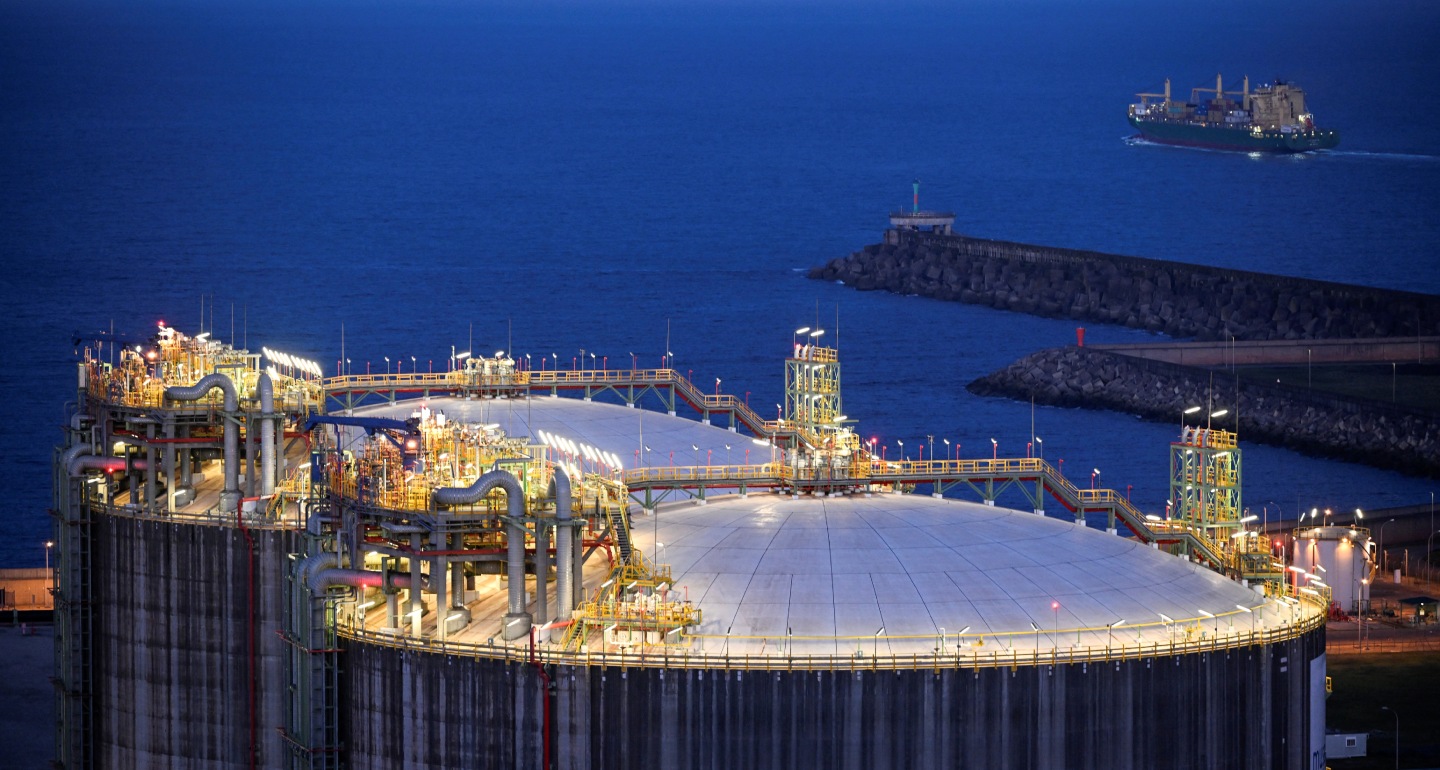
Source: Getty Images
The future trajectory of the U.S.-Iran war remains uncertain, but its impact on global energy trade flows and ties will be far-reaching. Moscow is likely to become a key beneficiary of these changes; the crisis in the Gulf also strengthens Russia’s hand in its relationships with China and India, where advantages might prove more durable.
The ongoing conflict in the Persian Gulf has upended major preconceptions about the global oil market. Even if the current crisis ends in a few weeks, it has already demonstrated the fragility and vulnerability of global energy trade. Trade flows and ties will be reconfigured, and the effects will ripple across Eurasia for a long time. Russia is emerging as one potential beneficiary of President Donald Trump’s war—and shifts in global energy markets may prove significant for Vladimir Putin’s regime. The Kremlin is already reaping the short-term benefits, but if war in the Gulf continues for several more weeks and leads to a broader escalation, the windfall for the Kremlin will become bigger and more persistent.
The closure of the Strait of Hormuz has been a perennial feature of scenario planning in the oil industry, but it was always considered a highly unlikely event that would be suicidal for any party bold enough to attempt it. Many in the industry also believed that it would be catastrophic—akin to the closure of the Suez Canal in 1967–1975 and the Arab oil embargo of 1973. Yet here we are—the Strait is closed and Iran is shooting at its Arab neighbors. Despite the continuing barrage of Israeli and American missiles, Tehran’s oil production and export infrastructure, a very easy target, remains mostly intact—at least for now. Iran continues to export its oil to global markets (predominantly China), and these tankers are not being stopped.
Oil and gas prices have shot up, but much less than what most planners generally assumed for a disruption of this scale. The series of crises which have occurred since 2020 appear to have convinced major players that global markets are resilient, capable of adjusting to disruptions quickly and effectively. Some hoped that the war would be over in two weeks or less, as had happened in the summer of 2025. Observed global oil inventories were reaching record highs, comparable to pandemic-era levels, which also gave markets a sense of security.
Today, we find ourselves in a complex new reality that is yet to be fully understood. On the one hand, countries are easily and nonchalantly crossing red lines long thought to be uncrossable; on the other hand, these countries are conducting compartmentalized wars. Nevertheless, the perennial issue of energy security looms large with any escalation in the Persian Gulf—that’s been the case since the 1980s. Just when the world starts to believe that markets are resilient, distance nonexistent, and supply abundant, reality reminds us that strategic choke points and securing one’s supply matter.
The current conflict is also a harsh reminder that when it comes to vital commodity flows, the world can cope with an all-out crusade against one supplier, but nothing more. In this sense, the attack on Iran is an opportunity for Russia to escape the doghouse it put itself into by attacking Ukraine in 2022 and launching a gas war with Europe. While prospects for lifting, weakening, or ignoring Western sanctions seem limited, the crisis in the Gulf also strengthens Russia’s hand in its relationships with China and India, and advantages there might prove more durable.
The shortage created by the closure of Hormuz is driving both general oil prices and Russian oil prices higher, infusing Russia’s struggling state budget with much-needed revenue. Throughout 2025, discounts on Russian oil have increased from $5 per barrel to more than $25 per barrel—owing to a decision by OPEC+ to increase production and sanctions pressure on Russia by the United States.
However, that trend has now been reversed. Between February 27 and March 6, the discount on Urals crude narrowed from $25 per barrel to $15 per barrel, and its price shot up by $30 per barrel. This increase provides Russia with $8.5 billion of revenue per month, $5 billion of which goes into state coffers and the rest—to oil companies. By mid-March, the price of Urals crude was twice as high as in February: $90 per barrel versus $45 per barrel.
The Gulf is also an LNG supplier, providing 80 million tons per year of the global capacity of 470 million tons per year. Before war erupted in the Gulf, the global LNG market was projected to enter a glut, spurred by a chain of newly built LNG plants in the United States. The shutdown of Qatari LNG exports changes the equation.
Much of Qatari LNG goes to the Asia-Pacific region. In 2025, Russia exported 32.5 million tons of natural gas, with 15 million tons going to the EU, so Russian and Qatari markets overlapped only partially. However, LNG today is a globally traded commodity, and a reduction in supply in one region creates waves of market dislocations around the world.
Russia is struggling to find buyers for its natural gas: its new Arctic LNG-2 terminal has a capacity of 13.5 million tons per year, but Russia only managed to export 1.3 million tons in 2025 due to sanctions and a lack of ice-class LNG carriers. The EU is trying to halt LNG imports from Russia altogether, despite pushback from some of its member states, but it can do so only if the market is oversupplied.
If things go back to normal after a few weeks’ disruption of energy supplies from the Persian Gulf, this might help Russia earn several billion additional dollars. However, the overall impact on Russian finances will be negligible—prospects were bleak before the crisis, but Russia wasn’t exactly scraping by. The state budget incurred a deficit of $35 billion just in the first two months of 2025; on the other hand, Russian hard currency and gold reserves exceed $800 billion.
Heavy and lasting damage to oil and gas infrastructure in the Gulf would be much more consequential. So far, the United States and Israel have refrained from bombing Iranian oil fields and terminals and thus damaging Iran’s oil potential, but they might change tack later in the conflict if Iran continues to fight back. Iran has fired a few demonstrative shots at oil and gas facilities in several Gulf countries, but until March 19 actual damage was minimal. Should Iran enter a total war with the intent to cause as much pain to its neighbors as possible, regardless of the cost to itself, the effects on global oil and gas supplies might be more long-lasting. A crushing U.S. victory would also spell danger: it would lead to the collapse of the Iranian state and a durable drop in Iranian oil production and exports.
If either scenario above were to happen, the recent glut in the global energy market might become a shortage, exacerbated by the fact that the countries that usually stabilize global supply would be part of the problem. This would drive energy prices higher—and make Russian oil and gas indispensable.
The ongoing crisis is already changing the medium-term outlook for oil and gas prices. Europe has emerged from the winter of 2025–2026 with a minimal amount of gas in storage, which was supposed to be replenished by imports. At the same time, Europe was planning to start reducing its purchases of Russian LNG and later pipeline gas. The deficit was expected to be filled primarily by American LNG, which is now in high demand. The gas market disruption of March 2026 exceeds that of summer 2022, when the halting of Russian pipeline gas exports to Europe caused a tenfold increase in gas prices for a brief period. Markets are much less hysterical now, but dark clouds are gathering.
There are problems with commercial and strategic oil reserves as well. It’s an issue of stock and flow: there is plenty of oil, but it cannot be shipped to market fast enough to compensate for the unprecedented supply reduction of about 15 million barrels per day. By most estimates, 4–5 million barrels per day is all that is possible. So far, global oil production has not decreased significantly, and the total global amount of oil in inventory has not declined much either. Having been cut off from export outlets, Gulf producers are filling their stores, but it’s only a matter of weeks before they reach max capacity and have to stop.
When the crisis is over, even if there is no substantial damage to Gulf oil and gas infrastructure, the world will emerge from it with less oil and gas in storage—a factor that tends to push prices higher. This is already reflected in forecasts by major banks and industry analysts, who have raised their 2026 estimates by $20 per barrel compared to their December figures.
For Russia, the changing energy landscape might be a blessing in disguise. There is hope in Moscow that Europe might finally find itself in an oil and gas crisis, which Russia failed to fully inflict in 2022, and soften its stance toward Russian hydrocarbons as a result—not just allowing Russia to sell to the EU again, but practically begging it to. That hope is also based on the fact that the United States is the only swing supplier that could help Europe with gas, and on speculation that given the downward turn in U.S.-EU relations, Europe might think twice before becoming too dependent on American supplies. Moscow is hoping for more than just additional earnings—it wants to create at least some dependency in Europe that would lead to a general softening of its outlook toward Russia.
Since the beginning of Trump’s second presidency and JD Vance’s speech in Munich in February 2025, Europe’s stance toward Russia has become increasingly confrontational and resolute: it is strengthening its support for Ukraine and preparing for a long standoff with Russia. If Russia cannot reverse this tendency, it would very much like to soften it, and the energy issue is probably the only carrot at Moscow’s disposal.
American policymakers might see Russia as a backup swing producer at a time when the usual players, Saudi Arabia and the UAE, have their hands tied and are, in fact, part of the problem. Considering the role that energy prices play in American politics and how unhappy most of the world has been about the ongoing war in Iran and the economic turmoil it has caused, they would welcome new emergency oil supplies with open arms. They also might think Russia can provide it. Kirill Dmitriev, Putin’s envoy for engagement with Donald Trump’s point men Steven Witkoff and Jared Kushner, will probably nurture these views and hope to use them as leverage.
Reality tells a different story. Russia has failed to meet its OPEC+ quota in the last few months, and its production has been declining (by a very small amount, but steadily). This decline was caused by underinvestment and reduced drilling in the second half of 2025. Russia does have the resources to increase its production by drilling more wells, but this won’t happen overnight. Rather, it will take several months and additional billion-ruble investments.
Russia’s most important windfall from the war in Iran might come from the east and south. President Trump has been applying steady pressure on India to reduce its Russian oil purchases or stop them altogether. And yet the U.S. government has issued temporary orders allowing India, and later any buyers, to buy Russian oil on the water. This decision appears to legitimize activity that was already rife when hostilities began.
India and China are the largest buyers of oil from the Gulf and were hit hardest by the closure of the Hormuz Strait. Under such circumstances, Russian oil, an important part of both countries’ portfolios, starts to look indispensable. Regardless of an eventual ceasefire, both countries will remain nervous about the potential resumption of hostilities and new closures for a long time—the taboo has been broken; the unthinkable happened; Iran might be tempted to close the strait again one day. Thus, it will be much harder for India to turn its back on Russian oil. That was already a no-go for China. Russia knows this, and as a result we likely won’t see a massive discount on Urals crude again for a very long time.
The Gulf crisis might also force China to reconsider its dependence on critical resource flows through marine chokepoints. Russia has been trying to persuade China to sign onto the Power of Siberia 2 gas pipeline project for years. China has been reluctant. A fresh draft of the five-year project plan, which appeared in March 2026, mentioned work on new Russian pipelines for the first time. This is surely a coincidence (the plan was prepared before February 28), but it’s a telling one. A safe overland route for gas, impervious to strait closures and naval blockades, is starting to look more attractive than it did even six months ago.
The same is true for an oil pipeline. In the 2000s, Russia built the Eastern Siberia–Pacific Ocean (ESPO) pipeline, capable of transporting 1.6 million barrels per day. Back then, Europe was the main buyer of Russian oil, and the idea of diverting all of Russia’s oil exports to Asia would have seemed positively nuts. Fast forward to 2026, and Russia is sending almost all its oil to Asia. However, a large portion of it still leaves Russia from Baltic and Black Sea ports, on tankers whose six-to-eight-week journeys expose them to Ukrainian drone attacks and the increased risk of arrest by coastal EU states. Later, these ships must pass through the potentially hostile Bab-el-Mandeb, Molucca, and Taiwan straits. Suddenly, a major ESPO expansion or the construction of ESPO-2 starts to make a lot of sense—for both Russia and China.
If this infrastructure were built, it would, on the one hand, shield Russian hydrocarbon exports to China from outside attempts to control them—unlike with tanker trade, such exports would be difficult to trace or quantify independently. On the other hand, it would only increase Russia and China’s codependence. It would also make China more invested in the stability of Putin’s regime.
The future trajectory of the U.S.-Iran war remains uncertain, but its impact on global energy trade flows will be far-reaching. Amid chaos on the ground and disruptions in the market, something else is becoming increasingly clear: the Kremlin stands to gain much from war in the Persian Gulf.

Senior Fellow, Carnegie Russia Eurasia Center
Sergey Vakulenko is a senior fellow at the Carnegie Russia Eurasia Center.
Recent Work
Sergey Vakulenko
Sergey Vakulenko
Carnegie does not take institutional positions on public policy issues; the views represented herein are those of the author(s) and do not necessarily reflect the views of Carnegie, its staff, or its trustees.

Russian strikes are weakening the economy sustaining Ukraine’s war effort. Closing the growing funding gap will require more European support and politically contentious reforms in Kyiv.

Balázs Jarábik

Despite a new textbook, an influx of Russian teachers and managers, and an end to the teaching of Ukrainian, the Kremlin is unlikely to have “reprogrammed” locals.

Konstantin Skorkin

For every ruble allocated to social policy, health, and education in 2027, double that amount is earmarked for the army, the police, and the security services.

Alexandra Prokopenko

Cargo traffic through Russia’s Northern Sea Route has increased because of the disruption caused by the conflict in the Middle East, the Ukraine war, and U.S.-China tensions.

Mikhail Korostikov
An analysis of traffic accident data suggests that Ukrainian drone attacks caused a material but not disastrous fall in Russian gasoline consumption over the summer.
Sergey Vakulenko