• Research
  • Politika
  • About
Carnegie Russia Eurasia center logoCarnegie lettermark logo
  • Donate
{
  "authors": [
    "Ashley J. Tellis"
  ],
  "type": "legacyinthemedia",
  "centerAffiliationAll": "dc",
  "centers": [
    "Carnegie Endowment for International Peace"
  ],
  "collections": [
    "U.S. Nuclear Policy"
  ],
  "englishNewsletterAll": "ctw",
  "nonEnglishNewsletterAll": "",
  "primaryCenter": "Carnegie Endowment for International Peace",
  "programAffiliation": "NPP",
  "programs": [
    "Nuclear Policy",
    "South Asia"
  ],
  "projects": [],
  "regions": [
    "North America",
    "United States",
    "India"
  ],
  "topics": [
    "Nuclear Policy"
  ]
}
Source: Getty

In The Media

U.S.-India Nuclear Disagreement

Link Copied
By Ashley J. Tellis
Published on Apr 23, 2007

Source: The Kojo Nnamdi Show

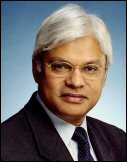
The United States and India made headlines in 2005 when they announced a deal to share U.S. civilian nuclear technology. Now, the agreement seems to be on the rocks, and officials from both countries are scrambling to salvage the deal. In an interview on The Kojo Nnamdi Show, Ashley Tellis, Senior Associate at the Carnegie Endowment, joined Edward Luce, Washington Bureau Chief of the Financial Times, to discuss the dispute and its impact on security in an increasingly strategic region.

Click here to listen to the audio or order a transcript.

About the Author

Ashley J. Tellis

Former Senior Fellow

Ashley J. Tellis was a senior fellow at the Carnegie Endowment for International Peace.

    Recent Work

  • Paper
    Multipolar Dreams, Bipolar Realities: India’s Great Power Future

      Ashley J. Tellis

  • Commentary
    India Sees Opportunity in Trump’s Global Turbulence. That Could Backfire.

      Ashley J. Tellis

Ashley J. Tellis
Former Senior Fellow
Nuclear PolicyNorth AmericaUnited StatesIndia

Carnegie does not take institutional positions on public policy issues; the views represented herein are those of the author(s) and do not necessarily reflect the views of Carnegie, its staff, or its trustees.

More Work from Carnegie Russia Eurasia Center

  • Commentary
    Carnegie Politika
    Simmering U.S.-Iran Conflict Is Moscow’s Ideal Outcome

    Ongoing uncertainty in the Middle East allows Moscow to both increase its influence in Tehran and continue to enjoy the financial windfall of higher oil prices.

      Nikita Smagin

  • Commentary
    Carnegie Politika
    Could Migrants From India and Africa Solve Russia’s Labor Shortage?

    The demands of the Kremlin’s war in Ukraine, demographic problems, and public hostility toward Central Asians mean Russia does not have enough workers.  
      Salavat Abylkalikov

  • Commentary
    Carnegie Politika
    As Trump Threatens to Quit NATO, the Baltic States Are Playing for Time

    Governments in Estonia, Latvia, and Lithuania want to ensure that a U.S. military withdrawal would not leave them dangerously exposed to a Russian attack.

      Sergejs Potapkins

  • Commentary
    Carnegie Politika
    What Does Nuclear Proliferation in East Asia Mean for Russia?

    Troubled by the growing salience of nuclear debates in East Asia, Moscow has responded in its usual way: with condemnation and threats. But by exacerbating insecurity, Russia is forcing South Korea and Japan to consider radical security options.

      James D.J. Brown

  • Commentary
    Carnegie Politika
    Russia Is Meddling for Meddling’s Sake in the Middle East

    The Russian leadership wants to avoid a dangerous precedent in which it is squeezed out of Iran by the United States and Israel—and left powerless to respond in any meaningful way.

      Nikita Smagin

Get more news and analysis from
Carnegie Russia Eurasia Center
Carnegie Russia Eurasia logo, white
  • Research
  • Politika
  • About
  • Experts
  • Events
  • Contact
  • Privacy
  • For Media
Get more news and analysis from
Carnegie Russia Eurasia Center
© 2026 Carnegie Endowment for International Peace. All rights reserved.



