

Commentary
Depleted financial reserves and a shrinking tax base mean it is no longer possible to simultaneously deliver high defense spending, price stability, and economic growth.
Alexandra Prokopenko
{
  "authors": [
    "Minxin Pei",
    "Wayne Chen"
  ],
  "type": "legacyinthemedia",
  "centerAffiliationAll": "dc",
  "centers": [
    "Carnegie Endowment for International Peace"
  ],
  "collections": [],
  "englishNewsletterAll": "asia",
  "nonEnglishNewsletterAll": "",
  "primaryCenter": "Carnegie Endowment for International Peace",
  "programAffiliation": "AP",
  "programs": [
    "Asia"
  ],
  "projects": [],
  "regions": [
    "China"
  ],
  "topics": [
    "Economy",
    "Trade"
  ]
}
REQUIRED IMAGE
The spectacular run-up in equity prices in China in the past two years has created a classic asset bubble. The likelihood that the stock market will crash in the not-too-distant future has recently increased because of rising inflation at home and a global economic slow-down. The Chinese stock market has already begun to correct – the main stock indexes have fallen 15 per cent from their highs. However, with Chinese equity price levels disturbingly close to those of Japan’s Nikkei in 1989 prior to its meltdown, the Chinese market will have to fall much further to reach reasonable valuations.
Source: Financial Times
The spectacular run-up in equity prices in China in the past two years has created a classic asset bubble. The likelihood that the stock market will crash in the not-too-distant future has recently increased because of rising inflation at home and a global economic slow-down. The Chinese stock market has already begun to correct – the main stock indexes have fallen 15 per cent from their highs. However, with Chinese equity price levels disturbingly close to those of Japan’s Nikkei in 1989 prior to its meltdown, the Chinese market will have to fall much further to reach reasonable valuations.
Most analysts argue that such a collapse will have minimal impact on the real economy. This might well be the case. But such thinking ignores the fact that, when it comes, a Chinese stock market crash will produce serious political consequences. Official figures show that more than 100m people have invested in equities, mostly during the recent bull market run. A massive sell-off will hit their household net worth. Because the Chinese government has been perceived as an active promoter of the country’s stock market, tens of millions of individual investors, members of the privileged urban middle-class, will direct their ire at the government. To make matters worse, most publicly listed companies are state-owned, so investors assume that the state is liable for the collapse of their share prices.
Because economic performance and, by extension, a booming stock market help legitimise the ruling Communist party, a collapse in equity prices will seriously damage the leadership’s credibility as competent technocrats. Therefore, the Chinese government needs to develop a political strategy that will contain the political fallout from a market collapse while using it as an opportunity to push through financial sector reforms to restore investor confidence.
It is reasonable to expect that angry retail investors will either ask the government for compensation or demand an investigation into corporate foul play after the bursting of the bubble. Large-scale public protest is a possibility: thousands of irate investors demonstrated at the headquarters of the Ministry of Finance the day after it increased trading tax by 0.2 per cent last May, precipitating an instant sell-off.
While Beijing should resist the calls to bail out investors, it must respond to public pressure to punish companies and individuals that have engaged in illegal dealings during the bubble years. The government should seize their ill-gotten gains to set up a fund to compensate investors. The China Securities Regulatory Commission, the chief market watch-dog, should make its investigative proceedings open to the public. Although such measures might strike one as cheap tricks to scapegoat companies and their executives, they are politically necessary and can help calm an agitated public.
To restore confidence and revive the market, Beijing must turn the crisis into an opportunity to enact structural reforms that will improve corporate governance, make the CSRC truly independent, increase competition and raise the level of transparency in the stock market. Many of the specific reform proposals, such as increasing financial products and expanding institutional investing, are well-known. But two deserve special attention. First, the institutional autonomy of the CSRC will be a crucial indicator of Beijing’s commitment to post-crisis reforms. Today, the CSRC is a bureaucracy staffed by political appointees with limited power to enforce regulations. A priority should be to de-link the CSRC from the Communist party’s patronage system and appoint truly respected individuals, including foreigners experienced in financial regulations, to a genuinely independent new CSRC.
Second, the desire to protect China’s growing domestic market in financial securities has seriously limited competition in this sector and led to the domination by state-owned brokerage firms, many of them implicated in previous scandals (only three years ago, the entire brokerage sector, beset by corruption and mismanagement, was on the verge of collapse). The Chinese government must accelerate plans to allow foreign firms to enter the sector. It must abolish its requirement that foreign firms form joint ventures with Chinese partners. This bold move will not only help restore stability in the market, but also create conditions for a future boom in equity investing in China.
This article was originally published at http://www.ft.com/cms/s/0/413d0ea2-c839-11dc-94a6-0000779fd2ac.html

Former Adjunct Senior Associate, Asia Program
Pei is Tom and Margot Pritzker ‘72 Professor of Government and the director of the Keck Center for International and Strategic Studies at Claremont McKenna College.
Wayne Chen

Depleted financial reserves and a shrinking tax base mean it is no longer possible to simultaneously deliver high defense spending, price stability, and economic growth.

Alexandra Prokopenko

With the growth in points of friction between the great powers, organizations like the SCO will continue to play a role in the strategic adaptation of the smaller powers caught between them.

Temur Umarov

When faced with fuel shortages in the past, Central Asian governments could always count on additional supplies from Moscow. That safety net no longer exists.

Galiya Ibragimova
Russia looks set to reap economic benefits from closer ties with Southeast Asian countries that are keen to find reliable energy suppliers and diversify trade ties.

Alexander Gabuev
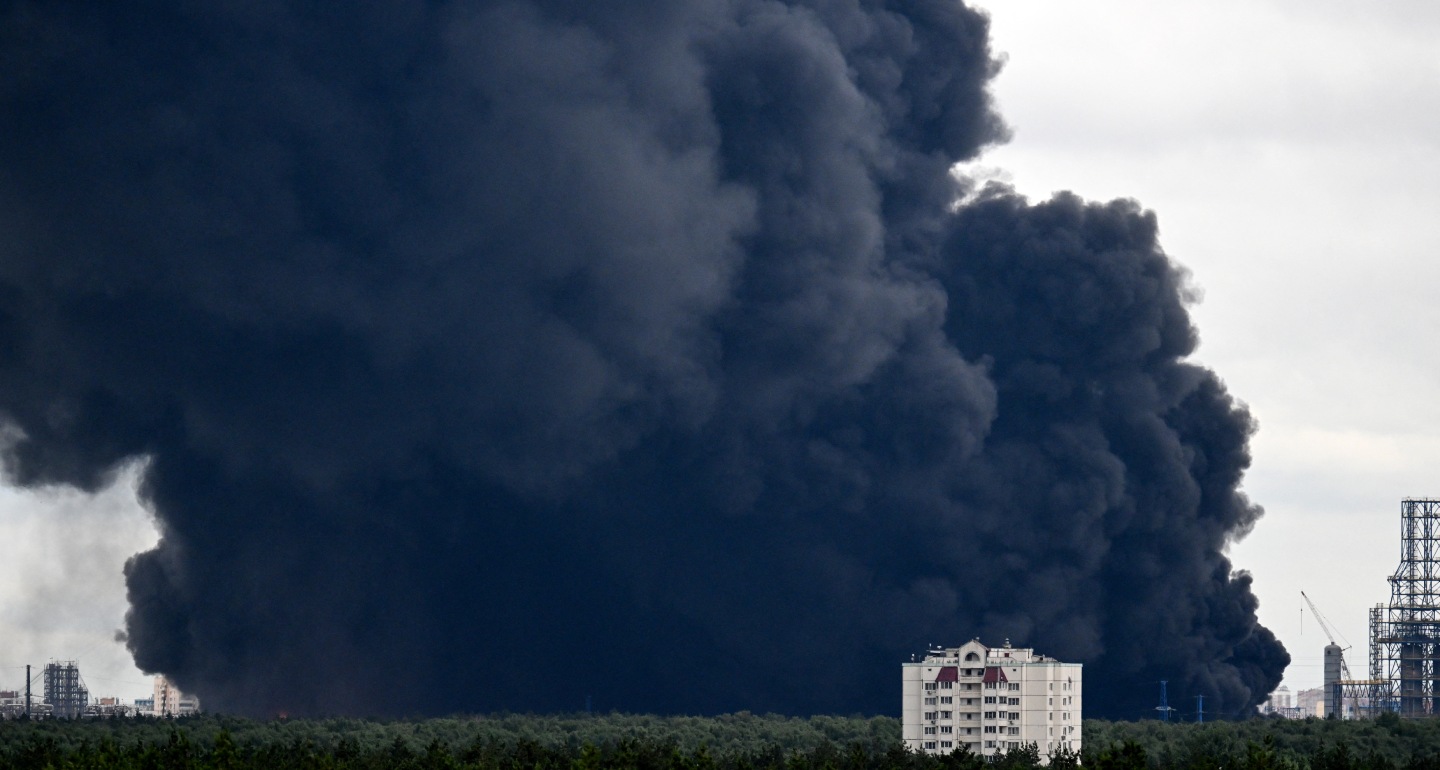
If it proves impossible for the Russian authorities to avoid a gasoline deficit, the question then becomes how they will organize the distribution of a scarce resource.

Sergey Vakulenko