

Commentary
If the Russian-speaking community in Latvia cannot articulate their interests without being seen as disloyal, they could end up embracing a pro-Kremlin agenda.
Sergejs Potapkins
{
  "authors": [],
  "type": "pressRelease",
  "centerAffiliationAll": "dc",
  "centers": [
    "Carnegie Endowment for International Peace"
  ],
  "collections": [],
  "englishNewsletterAll": "menaTransitions",
  "nonEnglishNewsletterAll": "",
  "primaryCenter": "Carnegie Endowment for International Peace",
  "programAffiliation": "MEP",
  "programs": [
    "Middle East"
  ],
  "projects": [],
  "regions": [
    "North America",
    "United States",
    "Middle East"
  ],
  "topics": [
    "Political Reform",
    "Democracy",
    "Foreign Policy"
  ]
}
REQUIRED IMAGE
By voting along tribal and sectarian lines in the 2008 election, Kuwaitis undermined efforts to establish a more democratic party system--a setback for a close U.S. ally curiously overlooked by American efforts to promote political reform in the Middle East.
WASHINGTON, May 27—The outcome of Kuwait’s May 17 parliamentary election is likely to further discredit democracy and thus undermine political reform in the Persian Gulf. The success of the conservative Islamist salafis will most certainly result in a splintered and combative parliament, while losses among the more moderate Muslim Brotherhood affiliate (HADAS) was a major setback for political reform.
Middle East expert Nathan J. Brown assesses the implications of the election in a new commentary, Kuwait’s 2008 Parliamentary Elections: A Setback From Democratic Islamism?. By voting along tribal and sectarian lines, Kuwaitis undermined efforts to establish a more democratic party system—a setback for a close U.S. ally curiously overlooked by American efforts to promote political reform in the region.
Key Conclusions:
Brown concludes:
“After Kuwait was liberated from Iraq in 1991, the United States implicitly coupled its security guarantee with an insistence that parliamentary and electoral life be revived. But the United States now is largely disengaged from the domestic political scene in Kuwait, despite its strong verbal push for Arab political reform. Kuwait’s long-simmering and nonviolent political crisis has been long been overshadowed by more dramatic and bloody conflicts. But the threat to one of the region’s most democratic experiments is real.”
###

Carnegie does not take institutional positions on public policy issues; the views represented herein are those of the author(s) and do not necessarily reflect the views of Carnegie, its staff, or its trustees.

If the Russian-speaking community in Latvia cannot articulate their interests without being seen as disloyal, they could end up embracing a pro-Kremlin agenda.

Sergejs Potapkins

Russia’s ruling party would have benefited from Putin appearing as its distant patron, but as an active frontman imposing his views on the public, he has done nothing but harm both the party’s election campaign and the ruling system overall.

Andrey Pertsev

In the tenth year of his presidency, President Mirziyoyev’s system is becoming even more personalized than that of his predecessor Karimov.

Galiya Ibragimova

With the growth in points of friction between the great powers, organizations like the SCO will continue to play a role in the strategic adaptation of the smaller powers caught between them.

Temur Umarov
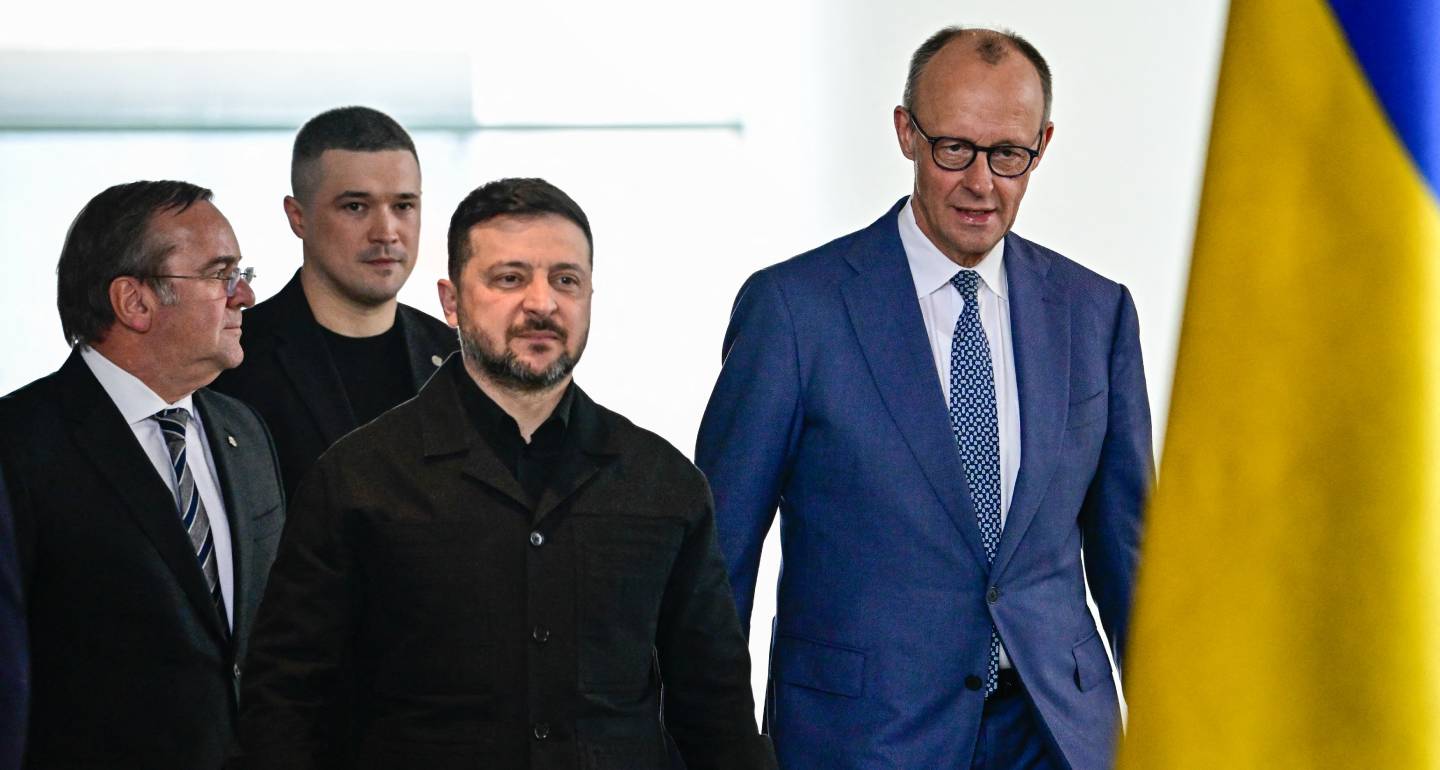
The greater threat to Zelensky comes not from Fedorov alone, but from the convergence between the former defense minister’s political campaign and the anti-corruption investigations moving ever closer to the presidential administration.

Balázs Jarábik