• Research
  • Politika
  • About
Carnegie Russia Eurasia center logoCarnegie lettermark logo
  • Donate
{
  "authors": [
    "Karim Sadjadpour"
  ],
  "type": "testimony",
  "centerAffiliationAll": "dc",
  "centers": [
    "Carnegie Endowment for International Peace"
  ],
  "collections": [
    "U.S. Nuclear Policy"
  ],
  "englishNewsletterAll": "ctw",
  "nonEnglishNewsletterAll": "",
  "primaryCenter": "Carnegie Endowment for International Peace",
  "programAffiliation": "NPP",
  "programs": [
    "Nuclear Policy",
    "Middle East"
  ],
  "projects": [],
  "regions": [
    "North America",
    "United States",
    "Middle East",
    "Iran"
  ],
  "topics": [
    "Foreign Policy",
    "Nuclear Policy"
  ]
}
Source: Getty

Testimony

Iranian Political and Nuclear Realities and U.S. Policy Options

U.S. policy options toward Iran lie in engaging Iran on issues of common interest, focusing communication on the office of the Supreme Leader, Ayatollah Khamenei, and presenting a united international approach to Iran's nuclear ambitions.

Link Copied
By Karim Sadjadpour
Published on Mar 3, 2009

Source: Senate Foreign Relations Committee

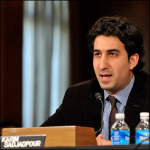
Given Iran’s sizable influence on issues of critical importance to the United States—namely Iraq, Afghanistan, the Arab-Israeli conflict, terrorism, nuclear proliferation, and energy security—the longstanding Washington policy debate about whether or not to “engage” has been rendered obsolete. In testimony before the Senate Foreign Relations Committee yesterday, Karim Sadjadpour explained that the United States can best attempt to set a new tone and context for its relationship with Tehran by building confidence in areas of overlapping interest, such as Iraq and Afghanistan.     

U.S. Policy Recommendations:
  • Attempt to discern which Iranian policies are driven by an immutable revolutionary ideology, and which are a reaction to punitive U.S. measures.
  • Focus on Supreme Leader Ayatollah Khamenei, who steers Iran’s nuclear ship and whose constitutional authority is far greater than that of President Mahmoud Ahmadinejad. The most influential institutions within Iran—the Revolutionary Guards, the Guardian Council, the presidency, the parliament—are all currently led by individuals who were either directly appointed by Khamenei or unfailingly loyal to him.
     
  • The nuclear issue is a symptom of the mistrust between the United States and Iran, not the underlying cause of tension. Given that neither side trusts the other’s intentions, there are no technical solutions to this nuclear dispute, only political ones.  
     
  • Maintain an airtight multilateral approach on the nuclear issue. Iran is adept at exploiting rifts within the international community, and the entire diplomatic approach could unravel if key countries approach Iran with divergent talking points and red lines.
     
  • A small group of spoilers will likely attempt to subvert a serious dialogue, whether by committing gratuitous human rights abuses or purposefully sending easily-discovered weapons shipments. Ending confidence-building efforts in retaliation strengthens the influence of these hardliners.
     
  • Project the self-assurance of a superpower. Don’t mimic Tehran’s criticism; hostile U.S. rhetoric allows Iranian leadership to depict the United States as an aggressor.
     
  • Refrain from any grand overtures to Tehran that could redeem Ahmadinejad’s leadership style ahead of the country’s June 2009 presidential elections. At the same time, refrain from commenting on the Iranian presidential campaign or expressing a preference for any particular candidate.   
NOTES:
 
Karim Sadjadpour joined Carnegie as an associate after four years as the chief Iran analyst at the International Crisis Group based in Tehran and Washington, D.C. A leading researcher on Iran, Sadjadpour has conducted dozens of interviews with senior Iranian officials, and hundreds with Iranian intellectuals, clerics, dissidents, paramilitaries, businessmen, students, activists, and youth, among others.
 
The Carnegie Middle East Program combines in-depth local knowledge with incisive comparative analysis to examine economic, socio-political, and strategic interests in the Arab world. Through detailed country studies and the exploration of key cross-cutting themes, the Carnegie Middle East Program, in coordination with the Carnegie Middle East Center, provides analysis and recommendations that are deeply informed by knowledge and views from the region. The Carnegie Middle East Program has special expertise in political reform and Islamist participation in pluralistic politics throughout the region.
 
The Carnegie Middle East Center is a public policy think tank and research center based in Beirut, Lebanon. Bringing together senior researchers from the region, the Carnegie Middle East Center aims to better inform the process of political change in the Middle East and deepen understanding of the issues the region and its people face.
 
The Carnegie Endowment for International Peace is pioneering the first global think tank—with operations in China, the Middle East, Russia, Europe, and the United States. The Endowment is a private, nonprofit organization dedicated to advancing cooperation between nations and promoting active international engagement by the United States. Founded in 1910, its work is nonpartisan and dedicated to achieving practical results.

About the Author

Karim Sadjadpour

Senior Fellow, Middle East Program

Karim Sadjadpour is a senior fellow at the Carnegie Endowment for International Peace, where he focuses on Iran and U.S. foreign policy toward the Middle East.

    Recent Work

  • Q&A
    What’s Keeping the Iranian Regime in Power—for Now

      Aaron David Miller, Karim Sadjadpour, Robin Wright

  • Q&A
    How Washington and Tehran Are Assessing Their Next Steps

      Aaron David Miller, David Petraeus, Karim Sadjadpour

Karim Sadjadpour
Senior Fellow, Middle East Program
Karim Sadjadpour
Foreign PolicyNuclear PolicyNorth AmericaUnited StatesMiddle EastIran

Carnegie does not take institutional positions on public policy issues; the views represented herein are those of the author(s) and do not necessarily reflect the views of Carnegie, its staff, or its trustees.

More Work from Carnegie Russia Eurasia Center

  • Commentary
    Carnegie Politika
    Why Are China and Russia Not Rushing to Help Iran?

    Most of Moscow’s military resources are tied up in Ukraine, while Beijing’s foreign policy prioritizes economic ties and avoids direct conflict.   

      • Alexander Gabuev

      Alexander Gabuev, Temur Umarov

  • Commentary
    Carnegie Politika
    Georgia’s Fall From U.S. Favor Heralds South Caucasus Realignment

    With the White House only interested in economic dealmaking, Georgia finds itself eclipsed by what Armenia and Azerbaijan can offer.

      Bashir Kitachaev

  • Commentary
    Carnegie Politika
    What Does War in the Middle East Mean for Russia–Iran Ties?

    If the regime in Tehran survives, it could be obliged to hand Moscow significant political influence in exchange for supplies of weapons and humanitarian aid.

      Nikita Smagin

  • Commentary
    Carnegie Politika
    How Trump’s Wars Are Boosting Russian Oil Exports

    The interventions in Iran and Venezuela are in keeping with Trump’s strategy of containing China, but also strengthen Russia’s position.

      • Mikhail Korostikov

      Mikhail Korostikov

  • Commentary
    Carnegie Politika
    How Far Can Russian Arms Help Iran?

    Arms supplies from Russia to Iran will not only continue, but could grow significantly if Russia gets the opportunity.

      Nikita Smagin

Get more news and analysis from
Carnegie Russia Eurasia Center
Carnegie Russia Eurasia logo, white
  • Research
  • Politika
  • About
  • Experts
  • Events
  • Contact
  • Privacy
Get more news and analysis from
Carnegie Russia Eurasia Center
© 2026 Carnegie Endowment for International Peace. All rights reserved.











