

In The Media
David Rothkopf
{
  "authors": [
    "David Rothkopf"
  ],
  "type": "legacyinthemedia",
  "centerAffiliationAll": "",
  "centers": [
    "Carnegie Endowment for International Peace"
  ],
  "collections": [],
  "englishNewsletterAll": "",
  "nonEnglishNewsletterAll": "",
  "primaryCenter": "Carnegie Endowment for International Peace",
  "programAffiliation": "",
  "programs": [],
  "projects": [],
  "regions": [
    "North America",
    "United States"
  ],
  "topics": [
    "Political Reform",
    "Security",
    "Military",
    "Foreign Policy"
  ]
}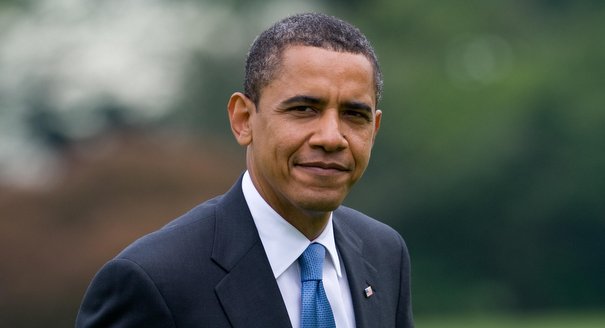
Source: Getty
In the first few months of Obama’s presidency, the personality discussion has been overblown and misdirected, the process discussion has been largely technical and misguided, and the policy discussion has failed to address the most important concerns confronting the United States.
Source: National Interest

All good stories are about people not just because they give the reader something to relate to, but because ultimately the interplay between personalities is a prime driver— often the most important one—of how governments function. There is a perfectly understandable aspiration that decisions be made dispassionately, on the merits. But that seldom happens, and the relationships between and among policy stakeholders—political leaders, policy makers and their multiple constituencies—are often hugely influential, even if they are disdained and ignored by academic analysts (many of whom entered academia precisely because their people skills were so lacking).
So coverage of the transition and the early days of the Obama presidency that has focused on whether Hillary Clinton can get along with the president or whether the Clinton people will get along with the Obama people or how Vice President Joe Biden will react to being locked in his office may seem superficial and titillating, but it matters. Because history teaches us a few things about the central role personality plays in shaping how the U.S. national-security apparatus works.
First, carefully considered policies aside, each administration is tested by unexpected crises that define it, and the interaction among the president and his senior advisers is shaped as much by individual characters, their different experiences and the nature of the relationships between them as by anything else. Whether this means the inexperienced but intuitive Bush deferring to the dominant and ideologically influenced team of Cheney and Rumsfeld after 9/11, or the inexperienced and hesitant Clinton turning to his inexperienced and hesitant team during Rwanda, or the highly effective, well-trained and collegial team of Bush 41 rising to the challenges of the fall of Communism, the “who” of each administration is central to determining its fate . . . and ours.
Second, human nature being what it is, rifts and tensions always emerge in collaborations among powerful people. The character of the president’s team determines whether those become toxic—as in the case of famous battles between Powell and Rumsfeld, or between Weinberger and Shultz, or between Brzezinski and Vance—or whether they are handled constructively, giving the president real choices through the well-managed processes of the Eisenhower, Bush 41 or later Clinton years.
Click here to read the full article in the National Interest.
Former Visiting Scholar
David Rothkopf was a visiting scholar at the Carnegie Endowment as well as the former CEO and editor in chief of the FP Group.
Recent Work
David Rothkopf
David Rothkopf
Carnegie does not take institutional positions on public policy issues; the views represented herein are those of the author(s) and do not necessarily reflect the views of Carnegie, its staff, or its trustees.

Sergei Kiriyenko used Russia’s parliamentary vote to further hone his strategy of corporate mobilization that is designed to maximize votes for United Russia.

Andrey Pertsev

Trump has promised Belarus a massive potash deal. But Minsk is seeking something greater: restored Western transit and greater room for maneuver from Russia.

Balázs Jarábik

The European far right might fail to steer EU policy in the direction Russia wants, but they will create enough chaos inside Europe to benefit the Kremlin.

Dimitar Bechev

Minsk clearly expected the dialogue with Washington to yield more results, in particular the lifting of EU sanctions and permission to export potash.

Artyom Shraibman

If the Russian-speaking community in Latvia cannot articulate their interests without being seen as disloyal, they could end up embracing a pro-Kremlin agenda.

Sergejs Potapkins