

Paper
Douglas H. Paal
{
  "authors": [
    "Douglas H. Paal"
  ],
  "type": "legacyinthemedia",
  "centerAffiliationAll": "dc",
  "centers": [
    "Carnegie Endowment for International Peace"
  ],
  "collections": [],
  "englishNewsletterAll": "asia",
  "nonEnglishNewsletterAll": "",
  "primaryCenter": "Carnegie Endowment for International Peace",
  "programAffiliation": "AP",
  "programs": [
    "Asia"
  ],
  "projects": [],
  "regions": [
    "North America",
    "United States",
    "East Asia",
    "South Korea",
    "North Korea"
  ],
  "topics": [
    "Security",
    "Military",
    "Foreign Policy"
  ]
}
Source: Getty
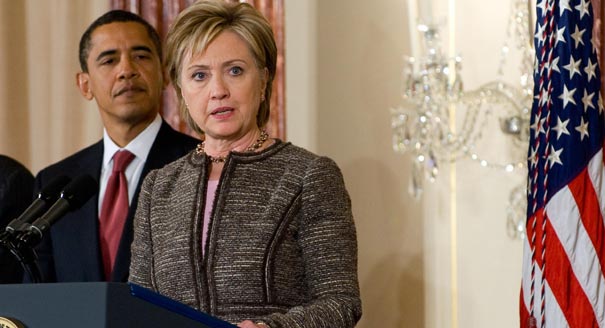
The Obama administration deserves credit for its approach to North Korea. By treating the regime with dignified tact and disassociating negotiations over the American journalists from larger nonproliferation objectives, the U.S. may have opened future diplomatic doors.
Source: New York Times

Ever since the journalists, Laura Ling and Euna Lee, were captured on North Korea’s border with China in March, America has had little diplomatic leverage. The Obama administration had two choices: to demand their release in a loud and threatening tone, or to use wits and discipline.
Some commentators are suggesting that the Clintons’ actions showed American weakness by expressing regret to a ruthless dictator. These critics need to ask themselves: how would a more aggressive approach have gained the release of these two women from a sentence of 12 years of hard labor?
Previous episodes of Americans drifting into North Korea — including an American helicopter pilot captured in 1994 who was released after Bill Richardson, then a member of Congress, traveled to Pyongyang — have taught us the pattern. First, North Korea protests the violations of its territory. Then it threatens or sentences the individuals. Finally, talks between North Korean diplomats, private intermediaries and American officials come up with a way for the North to climb down while saving face.
Bolstering the egos of Pyongyang’s leaders is no pleasure. Look at Bill Clinton’s grim expression in photos of him with Mr. Kim. But it is a proved means to a desired end.
The public stance of the Obama administration was dignified and correct throughout. Mrs. Clinton rightly acknowledged the prevailing legal system in North Korea in making a public plea for clemency, and Bill Clinton delivered the request in person. The alternative — having administration officials rant about the many perversions of the North’s system — would not have brought the journalists home.
The administration also deserves credit for insisting that these negotiations had nothing to do with efforts to penalize North Korea for its belligerence. It pressed hard for two sets of sanctions at the United Nations Security Council after North Korea’s test firing of a long-range missile in April and nuclear test in May. Will Mr. Clinton’s visit be a turning point in relations with North Korea? That is more up to Pyongyang than Washington. Kim Jong-il, who is reported to have had a stroke last year, looks frail but he is not necessarily dying. He seems to have completed his efforts to rally military support for his plan to have his 26-year-old son succeed him. He may be ready now to turn a more cooperative face to the outside world, if only for domestic political reasons.
In any new talks, of course, we can expect Pyongyang to try all sorts of diplomatic reversals to increase its leverage and gain bigger payoffs. Fortunately, the Obama administration has proved itself wary. For example, it has refused the North’s offers to resume bilateral negotiations unless Pyongyang agrees to return to the agreements reached during now-stalled six-party talks.
If tensions begin to cool and North Korea shows itself more open to legitimate talks, then the Clinton diplomacy will have helped to produce unexpected dividends. For the moment, however, it is enough to have two of our citizens back from the gates of Hell with America’s dignity intact.
Distinguished Fellow, Asia Program
Paal previously served as vice chairman of JPMorgan Chase International and as unofficial U.S. representative to Taiwan as director of the American Institute in Taiwan.
Recent Work
Douglas H. Paal

Douglas H. Paal, Tong Zhao, Chen Qi, …
Carnegie does not take institutional positions on public policy issues; the views represented herein are those of the author(s) and do not necessarily reflect the views of Carnegie, its staff, or its trustees.

Trump has promised Belarus a massive potash deal. But Minsk is seeking something greater: restored Western transit and greater room for maneuver from Russia.

Balázs Jarábik

The European far right might fail to steer EU policy in the direction Russia wants, but they will create enough chaos inside Europe to benefit the Kremlin.

Dimitar Bechev

Minsk clearly expected the dialogue with Washington to yield more results, in particular the lifting of EU sanctions and permission to export potash.

Artyom Shraibman

With the growth in points of friction between the great powers, organizations like the SCO will continue to play a role in the strategic adaptation of the smaller powers caught between them.

Temur Umarov

When faced with fuel shortages in the past, Central Asian governments could always count on additional supplies from Moscow. That safety net no longer exists.

Galiya Ibragimova