

In The Media
Michele Dunne, Robert Kagan
{
  "authors": [
    "Robert Kagan"
  ],
  "type": "legacyinthemedia",
  "centerAffiliationAll": "",
  "centers": [
    "Carnegie Endowment for International Peace"
  ],
  "collections": [],
  "englishNewsletterAll": "",
  "nonEnglishNewsletterAll": "",
  "primaryCenter": "Carnegie Endowment for International Peace",
  "programAffiliation": "",
  "programs": [],
  "projects": [],
  "regions": [
    "North America",
    "United States",
    "Middle East",
    "Iran",
    "South Asia",
    "Afghanistan"
  ],
  "topics": [
    "Foreign Policy"
  ]
}
Source: Getty
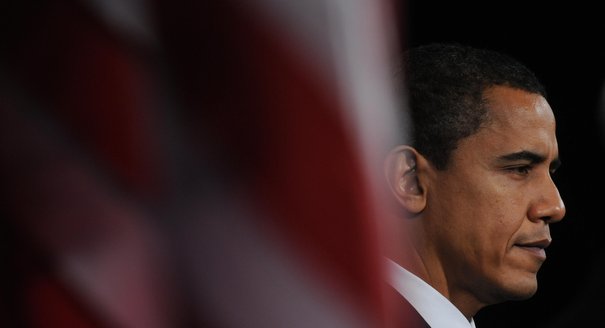
Obama's Nobel Peace Prize acceptance speech in Oslo signaled a tougher, less forgiving, and more quintessentially American approach to foreign policy.
Source: The Washington Post

The shift in rhetoric at Oslo was striking. Gone was the vaguely left-revisionist language that flavored earlier speeches, highlighting the low points of American global leadership -- the coups and ill-considered wars -- and low-balling the highlights, such as the Cold War triumph. Obama pointedly reminded his European audience of America's central role, with "the blood of our citizens and the strength of our arms," in helping to "underwrite global security" since World War II. Instead of treading gingerly around the issue of democracy and the imposition of our values on other peoples, he squarely rejected the "false suggestion that these are somehow Western principles, foreign to local cultures or stages of a nation's development." He went further than he ever had in arguing that for the United States, advancing democracy is not only a moral but also a strategic imperative, because "peace is unstable where citizens are denied the right to speak freely or worship as they please; choose their own leaders or assemble without fear." Nor did he shy away from the Manichaean distinctions that drive self-described realists (and Europeans) crazy, insisting that "Evil does exist in the world" and can neither be negotiated with nor appeased.
The Oslo speech was important not just because it broke rhetorical ground. Obama was following in a great tradition of hawkish Democrats fighting wars both hot and cold: Franklin Roosevelt, Harry Truman and John Kennedy, as well as that one-time Democrat, Ronald Reagan. More important, though, the speech heralded a course adjustment, a different approach by the Obama administration to the problems that have bedeviled it this year.
Obama's lengthy discussion of war, and his defense of America at war, obviously grew out of his months-long deliberation over whether to send more troops and expand the U.S. war effort in Afghanistan. The speech revealed a man who has armed himself with all the necessary moral and practical arguments to justify his decision for as long as necessary. He would not be the first president to make the transformation from skeptic to champion of a war. Look at the many speeches Woodrow Wilson gave when he was trying to stay out of World War I -- and then read the thunderous, moralistic justifications he gave once he decided to enter it. Previous opposition did not hinder Wilson's vigorous efforts to secure victory, and it need not hinder Obama's.
But Afghanistan was not the only policy shaping the president's new thinking. The Oslo speech should also be seen as a turning point in Iran policy. It is the end of Phase I, his tireless and unreciprocated efforts at engagement, and the start of Phase II, "increased pressure," sanctions that can "exact a real price" and are "tough enough to actually change behavior." Obama even ad-libbed an answer to critics who had accused him of ignoring Iran's repressed opposition. To Iranian protesters asking whose side he was on, Obama responded: "they have us on their side." Whether this portends new support for the Iranian opposition remains to be seen, but it may be the first sign of a shift there, too.
Then there was the greater emphasis on democracy and the more pointed criticism of those governments that deny basic human aspirations for freedom and dignity. Was this a product of the president's unhappiness with his recent Chinese hosts? Or his frustration with Russian arms negotiators? Or his displeasure at both nations' reluctance to join in sanctions against Iran? The speech hinted at frustration with partners who have delivered less than he had hoped.
It is only natural that President Obama should respond to unexpected or shifting circumstances by reevaluating his approach. Events in Iran, Afghanistan or China do not occur in isolation. You cannot expect a president to escalate a war without it affecting his broader attitude toward the questions of war and peace. You cannot expect Iran's spurning of his good-faith offer to have no effect on his broader perception of the strategy of engagement. For Obama, as for all of us, these events, these decisions and these lessons affect our broader perceptions and understandings, about the way the world works and about America's proper role in the world. Obama's current understanding was on display at Oslo last week. People at home and abroad should take notice.

Former Senior Associate
Kagan, author of the recent book, The Return of History and the End of Dreams (Knopf 2008), writes a monthly column on world affairs for the Washington Post and is a contributing editor at both the Weekly Standard and the New Republic.
Recent Work

Michele Dunne, Robert Kagan
Robert Kagan, Michele Dunne
Carnegie does not take institutional positions on public policy issues; the views represented herein are those of the author(s) and do not necessarily reflect the views of Carnegie, its staff, or its trustees.

Japan’s long-term security policy is driven by concerns about China, and there is little appetite for (or interest in) pursuing a confrontation with Moscow.

James D.J. Brown

Without a ceasefire with Ukraine on attacking each other’s energy infrastructure—to which the Kremlin is unlikely to agree—the diesel agreement between Putin and Trump is largely for show, rather than representing a genuine increase in the volumes of Russian diesel on the global market.

Sergey Vakulenko

Despite a new textbook, an influx of Russian teachers and managers, and an end to the teaching of Ukrainian, the Kremlin is unlikely to have “reprogrammed” locals.

Konstantin Skorkin

Cargo traffic through Russia’s Northern Sea Route has increased because of the disruption caused by the conflict in the Middle East, the Ukraine war, and U.S.-China tensions.

Mikhail Korostikov

Trump has promised Belarus a massive potash deal. But Minsk is seeking something greater: restored Western transit and greater room for maneuver from Russia.

Balázs Jarábik