

Paper
George Perkovich
{
  "authors": [
    "George Perkovich"
  ],
  "type": "legacyinthemedia",
  "centerAffiliationAll": "dc",
  "centers": [
    "Carnegie Endowment for International Peace"
  ],
  "collections": [
    "U.S. Nuclear Policy"
  ],
  "englishNewsletterAll": "ctw",
  "nonEnglishNewsletterAll": "",
  "primaryCenter": "Carnegie Endowment for International Peace",
  "programAffiliation": "NPP",
  "programs": [
    "Nuclear Policy"
  ],
  "projects": [],
  "regions": [
    "North America",
    "United States",
    "South Asia",
    "India"
  ],
  "topics": [
    "Nuclear Policy",
    "Nuclear Energy"
  ]
}
Source: Getty
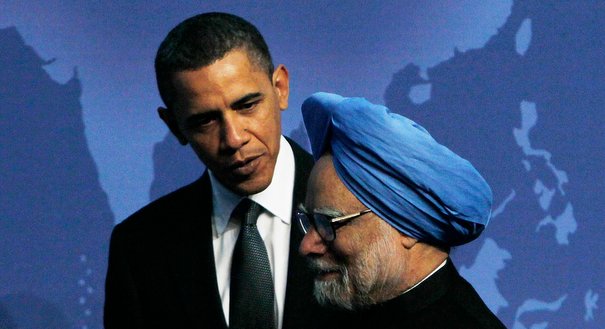
By exempting India from nonproliferation rules, all 45 members of the Nuclear Suppliers Group are complicit in the U.S.-India nuclear deal, and they should all feel compelled to cooperate to ensure that the India deal does not turn into a dangerous precedent.
Source: Daedalus

The making and enforcing of international rules is frequently quixotic. Making rules is often tedious and compromising, while their enforcement is often absent or feckless. The nuclear nonproliferation regime has suffered these afflictions. However, considering that the ambition is to regulate the most powerful technology and material known to humankind, the rules that have grown around the NPT since 1968 have been remarkably successful. The nonproliferation regime is a key structure of the nuclear order that most people in the world would rather not live without. Some wish that this nuclear order would more strongly incline toward the abolition of nuclear weapons, or would more actively promote distribution of nuclear energy. Others wish that it would concentrate more effectively on stopping proliferation. Few want the disorder that would follow a collapse of the bargains on which the current system of rules depends. Thus many observers and governments fear that the NSG-India nuclear deal is a bad portent: it may signal corrosion of the rules-based nuclear order.

Japan Chair for a World Without Nuclear Weapons, Senior Fellow
George Perkovich is the Japan Chair for a World Without Nuclear Weapons and a senior fellow in the Carnegie Endowment for International Peace’s Nuclear Policy Program. He works primarily on nuclear deterrence, nonproliferation, and disarmament issues.
Recent Work
George Perkovich
George Perkovich
Carnegie does not take institutional positions on public policy issues; the views represented herein are those of the author(s) and do not necessarily reflect the views of Carnegie, its staff, or its trustees.

Trump has promised Belarus a massive potash deal. But Minsk is seeking something greater: restored Western transit and greater room for maneuver from Russia.

Balázs Jarábik

Minsk clearly expected the dialogue with Washington to yield more results, in particular the lifting of EU sanctions and permission to export potash.

Artyom Shraibman

With the growth in points of friction between the great powers, organizations like the SCO will continue to play a role in the strategic adaptation of the smaller powers caught between them.

Temur Umarov
Ongoing uncertainty in the Middle East allows Moscow to both increase its influence in Tehran and continue to enjoy the financial windfall of higher oil prices.

Nikita Smagin

The demands of the Kremlin’s war in Ukraine, demographic problems, and public hostility toward Central Asians mean Russia does not have enough workers.
Salavat Abylkalikov