• Research
  • Politika
  • About
Carnegie Russia Eurasia center logoCarnegie lettermark logo
  • Donate
{
  "authors": [
    "Karim Sadjadpour"
  ],
  "type": "legacyinthemedia",
  "centerAffiliationAll": "dc",
  "centers": [
    "Carnegie Endowment for International Peace"
  ],
  "collections": [],
  "englishNewsletterAll": "menaTransitions",
  "nonEnglishNewsletterAll": "",
  "primaryCenter": "Carnegie Endowment for International Peace",
  "programAffiliation": "MEP",
  "programs": [
    "Middle East"
  ],
  "projects": [],
  "regions": [
    "Middle East",
    "Iran"
  ],
  "topics": [
    "Political Reform",
    "Foreign Policy"
  ]
}
Source: Getty

In The Media

Iran: What's Next?

The government’s successful crackdown on protestors on the anniversary of the Islamic Revolution may have dampened the opposition’s morale, but popular discontent in Iran has not diminished and the anniversary did not mark a significant change for either the regime or the opposition.

Link Copied
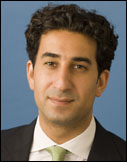
By Karim Sadjadpour
Published on Feb 14, 2010

Source: CNN Newsroom

DON LEMON, CNN ANCHOR: Tehran took center stage this week. A huge government crackdown on demonstrators as Tehran celebrated the Islamic revolution. Iran's president boasted about his nuclear program but international sanctions are looming. So let's talk about the future here. Trita Parsi of the National Iranian-American Council is in Washington. Also joining us is Karim Sadjadpour of the Carnegie Endowment in San Diego. Hey, good to see you.

Karim, I have to ask you this. We saw the crackdown and we saw that the current government was able to crack down on protesters. Where does this lead the green movement? What's next? What's going on for the green movement?
 
KARIM SADJADPOUR, CARNEGIE ENDOWMENT: It's a great question, Don. And I don't think the fundamentals have really changed. The government bussed in people from the provinces; they were ready for this day for a long time. But it's interesting, I was just looking at some Google Earth images and it looks like the government really exaggerated their support on that day.
 
And I think, Don, they probably know better than anyone about popular discontent in Iran because they didn't allow journalists to freely cover this event. I have no doubt that they also know that if people were allowed to freely assemble you would see crowds of upward of 5 million in Tehran and millions more throughout the country.
 
So I don't think the fundamentals have really changed all that much. The opposition's morale may be slightly dampened but I think they're going to continue onward.
 
LEMON: And Trita in your estimation how much, if at all, do you think this slows down the opposition, what happened last week?
 
TRITA PARSI, AUTHOR, "TREACHEROUS ALLIANCE": I think it's been quite exaggerated, this talk about the opposition facing a major defeat. At the end of the day this is going to be a long term cat- and-mouse game between the opposition and the government.
 
And the mere fact the game continues is in and of itself a defeat for the government because eight months, nine months after the fraud in elections this is still going on. Sometimes demonstrations are bigger, sometimes they're smaller. But any sense of normalcy the government is yet to be able to find.
 
LEMON: So, listen, Trita. We've talked about this before and we hear it a lot. People say that they want to hear something from the U.S. more from the administration. What will happen now with the U.S.-Iran relationship? Do you think we'll see major action here soon from the U.S.?
 
PARSI: Well, this has created significant problems for the Obama administration who initially wanted to go forward with diplomacy and find a way to resolve the nuclear issue. But at this point I think it's difficult to be able to have meaningful engagement, mindful of the fact the government over there is in a paralysis and no real big decision seems to be capable of being made over there.
 
At the same time perhaps we should also go a little bit more careful when it comes to some of these sanctions. It would be quite unhelpful to impose sanctions that will actually hurt the population rather than the government, particularly at a time when the population themselves, are showing such courage and doing everything they can to be able to change things in Iran. 
 
LEMON: And Karim, the pictures from last week, the images and what happened there, does this change anything you think for the U.S.? Are we going to see any action here? 
 
SADJADPOUR: I don't think it really fundamentally changes U.S. policy. I think there's very little confidence within the Obama administration that the Iranian government is amenable to some type of a sincere compromise on the nuclear program. But I do think moving forward, whereas a year ago when they were looking at sanctions and punitive measures they were looking at it only in the context of how the measures might alter Iran's nuclear calculations.
 
Now they're looking at these sanctions and punitive measures within the context of Iran's internal dynamics. If you notice, Don, the word that Hillary Clinton used a year ago, which was crippling sanction, has now been changed to targeted sanctions. And the target which they're focusing on is the Revolutionary Guards in Iran because really this is the entity that is managing the nuclear program. They're liaising with extremist groups like Hamas and Hezbollah and they're the ones who are brutalizing the population.
 
So I think the Revolutionary Guards are going to be the target of any measures moving forward.
 
LEMON: Karim Sadjadpour, Trita Parsi. Thank you both. 
 
SADJADPOUR: Thank you, Don. 

About the Author

Karim Sadjadpour

Senior Fellow, Middle East Program

Karim Sadjadpour is a senior fellow at the Carnegie Endowment for International Peace, where he focuses on Iran and U.S. foreign policy toward the Middle East.

    Recent Work
  • Q&A
    What’s Keeping the Iranian Regime in Power—for Now

      Aaron David Miller, Karim Sadjadpour, Robin Wright

  • Q&A
    How Washington and Tehran Are Assessing Their Next Steps

      Aaron David Miller, David Petraeus, Karim Sadjadpour

Karim Sadjadpour
Senior Fellow, Middle East Program
Karim Sadjadpour
Political ReformForeign PolicyMiddle EastIran

Carnegie does not take institutional positions on public policy issues; the views represented herein are those of the author(s) and do not necessarily reflect the views of Carnegie, its staff, or its trustees.

More Work from Carnegie Russia Eurasia Center

  • Commentary
    Carnegie Politika
    The Afghanistan–Pakistan War Poses Awkward Questions for Russia

    Not only does the fighting jeopardize regional security, it undermines Russian attempts to promote alternatives to the Western-dominated world order.

      Ruslan Suleymanov

  • Commentary
    Carnegie Politika
    Moldova Floats a New Approach to Its Transnistria Conundrum

    Moldova’s reintegration plan was drawn up to demonstrate to Brussels that Chișinău is serious about the Transnistria issue—and to get the West to react.

      Vladimir Solovyov

  • Commentary
    Carnegie Politika
    After Ilia II: What Will a New Patriarch Mean for Georgia?

    The front-runner to succeed Ilia II, Metropolitan Shio, is prone to harsh anti-Western rhetoric and frequent criticism of “liberal ideologies” that he claims threaten the Georgian state. This raises fears that under his leadership the Georgian Orthodox Church will lose its unifying role and become an instrument of ultraconservative ideology.

      Bashir Kitachaev

  • Commentary
    Carnegie Politika
    Lukashenko’s Bromance With Trump Has a Sell-By Date

    Lukashenko is willing to make big sacrifices for an invitation to Mar-a-Lago or the White House. He also knows that the clock is ticking: he must squeeze as much out of the Trump administration as he can before congressional elections in November leave Trump hamstrung or distracted.

      Artyom Shraibman

  • Commentary
    Carnegie Politika
    What the Russian Energy Sector Stands to Gain From War in the Middle East

    The future trajectory of the U.S.-Iran war remains uncertain, but its impact on global energy trade flows and ties will be far-reaching. Moscow is likely to become a key beneficiary of these changes; the crisis in the Gulf also strengthens Russia’s hand in its relationships with China and India, where advantages might prove more durable.

      • Sergey Vakulenko

      Sergey Vakulenko

Get more news and analysis from
Carnegie Russia Eurasia Center
Carnegie Russia Eurasia logo, white
  • Research
  • Politika
  • About
  • Experts
  • Events
  • Contact
  • Privacy
  • For Media
Get more news and analysis from
Carnegie Russia Eurasia Center
© 2026 Carnegie Endowment for International Peace. All rights reserved.