

Paper
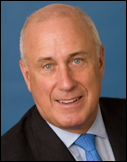
Douglas H. Paal
{
  "authors": [
    "Douglas H. Paal"
  ],
  "type": "legacyinthemedia",
  "centerAffiliationAll": "dc",
  "centers": [
    "Carnegie Endowment for International Peace"
  ],
  "collections": [],
  "englishNewsletterAll": "asia",
  "nonEnglishNewsletterAll": "",
  "primaryCenter": "Carnegie Endowment for International Peace",
  "programAffiliation": "AP",
  "programs": [
    "Asia"
  ],
  "projects": [],
  "regions": [
    "East Asia",
    "China"
  ],
  "topics": [
    "Political Reform",
    "Economy",
    "Foreign Policy"
  ]
}
Source: Getty
While China has adopted an increasingly tough stance in recent disputes with the United States, its rhetoric has not been matched by aggressive action, and fears about a new cold war are unfounded.
Source: BBC's World Have Your Say

As Douglas Paal argues on the BBC’s World Have Your Say, perceptions of growing Chinese confidence and U.S. decline will not lead to a new cold war. While China has adopted tough rhetoric against the United States, this has not been accompanied by a real shift in its policies. Instead, this rhetoric reflects an increasingly vocal and influential group of domestic hardliners who have overestimated China’s global clout. As such views have gained considerable traction, pragmatic Chinese officials have stiffened their language toward the United States but remain careful not to take actions that would seriously jeopardize the bilateral relationship. Paal also points out that the high degree of economic interdependence between the United States and China will keep them from pulling the trigger on each other and unleashing a major conflict.

Distinguished Fellow, Asia Program
Paal previously served as vice chairman of JPMorgan Chase International and as unofficial U.S. representative to Taiwan as director of the American Institute in Taiwan.
Recent Work
Douglas H. Paal

Douglas H. Paal, Tong Zhao, Chen Qi, …
Carnegie does not take institutional positions on public policy issues; the views represented herein are those of the author(s) and do not necessarily reflect the views of Carnegie, its staff, or its trustees.

In the tenth year of his presidency, President Mirziyoyev’s system is becoming even more personalized than that of his predecessor Karimov.

Galiya Ibragimova

With the growth in points of friction between the great powers, organizations like the SCO will continue to play a role in the strategic adaptation of the smaller powers caught between them.

Temur Umarov

The greater threat to Zelensky comes not from Fedorov alone, but from the convergence between the former defense minister’s political campaign and the anti-corruption investigations moving ever closer to the presidential administration.

Balázs Jarábik

With his public call for new elections in Ukraine, ex-defense minister Mykhailo Fedorov has opened Pandora’s box.

Konstantin Skorkin

In the discussions made possible by the State Duma election campaign, one question is being asked more and more loudly. “What next?”

Andrey Pertsev