

Commentary
A much-discussed disagreement over internet restrictions in Russia was never an existential threat for Putin: It was about elite groups protecting their interests.
Alexandra Prokopenko
{
  "authors": [
    "Shimelse Ali"
  ],
  "type": "legacyinthemedia",
  "centerAffiliationAll": "",
  "centers": [
    "Carnegie Endowment for International Peace"
  ],
  "collections": [],
  "englishNewsletterAll": "",
  "nonEnglishNewsletterAll": "",
  "primaryCenter": "Carnegie Endowment for International Peace",
  "programAffiliation": "",
  "programs": [],
  "projects": [],
  "regions": [
    "Southern, Eastern, and Western Africa",
    "North America"
  ],
  "topics": [
    "Economy"
  ]
}
Source: Getty
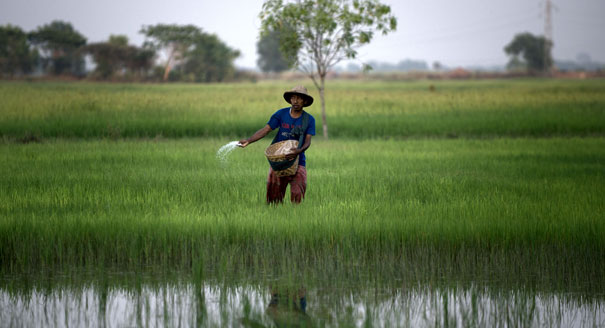
International food prices remain high and the use of food commodities for biofuels production is increasing, aggravating the food security problem of the poor.
Source: ActionAid UK

International food prices remain well above pre-crisis and historical levels. Corn and soybean prices were about 40 percent above their 2002–2007 average in February, and the price of rice had more than doubled from its 2002–2007 average. The World Bank's food price index rose 17 percent in 2009, surpassing its 2007 level by 11 percent.
Even staple foods have seen large price increases in developing countries recently. The most vulnerable countries are those with large portion of their population living in poverty. Out of the twenty developing countries with the largest poor populations, ranked according to the size of their population living under $1.25 a day poverty line, average domestic staple food prices in twelve were higher in 2009 than in 2008. Over that period, domestic prices rose most dramatically in Mozambique, where the price of cassava increased by 47 percent. The Philippines, Kenya, and Zambia saw prices increase between 20 percent and 26 percent from 2008 to 2009. Such price surges have severe implications for food security as most poor people—who typically spend more than 50 percent of their incomes on food—lose as very high food prices curtail their purchasing power.
A resurgence of rising oil prices and the continued diversion of food commodities into biofuels, on top of bad weather conditions, could lead to another spike in food prices in the near-term. The price of corn has been strongly and significantly correlated with ethanol production since 2006 as the use of corn for biofuels production surged. In the 2009/2010 crop year, approximately one third of U.S. corn will go to biofuels production, about three times the 2002–2005 average. This will have serious implications for international corn prices as the United States accounts for about a third of global corn production and two-thirds of global exports. The price of oil has now moved to over $80 per barrel, after averaging between $70 and $80 for more than five months, as the global economic recovery gains traction. This will further boost the demand for biofuels, raising the demand for—and price of—grains even more.
Advanced economies, mainly the United States and European Union, should reassess policies that promote biofuels production, which is economically inefficient, adds to carbon emissions, and is proving disastrous for poor countries. Serious consideration should be given to the trade-offs with food prices. At the same time, the increased demand for biofuels associated with rising oil prices underlines the need for conservation measures to reduce energy use and considerable investment in agriculture in developing countries.
Shimelse Ali
Carnegie does not take institutional positions on public policy issues; the views represented herein are those of the author(s) and do not necessarily reflect the views of Carnegie, its staff, or its trustees.

A much-discussed disagreement over internet restrictions in Russia was never an existential threat for Putin: It was about elite groups protecting their interests.

Alexandra Prokopenko

The demands of the Kremlin’s war in Ukraine, demographic problems, and public hostility toward Central Asians mean Russia does not have enough workers.

Salavat Abylkalikov

Minsk’s faith in the future of its larger neighbor’s economy is fading as Belarusian firms in Russia see record losses.

Olga Loiko

The cost of air defense has become an unregistered tax on revenue for businesses. While military rents are consolidated in the federal budget, the costs of defense are being spread across the balance sheets of companies and regional governments.
Alexandra Prokopenko

Powerful lobbyists and inertia led to Russia’s coal-mining sector missing an excellent opportunity to solve its structural problems.
Alexey Gusev