

Commentary
If the Russian-speaking community in Latvia cannot articulate their interests without being seen as disloyal, they could end up embracing a pro-Kremlin agenda.
Sergejs Potapkins
{
  "authors": [
    "Michele Dunne",
    "Amr Hamzawy"
  ],
  "type": "legacyinthemedia",
  "centerAffiliationAll": "dc",
  "centers": [
    "Carnegie Endowment for International Peace",
    "Malcolm H. Kerr Carnegie Middle East Center"
  ],
  "collections": [],
  "englishNewsletterAll": "menaTransitions",
  "nonEnglishNewsletterAll": "",
  "primaryCenter": "Carnegie Endowment for International Peace",
  "programAffiliation": "MEP",
  "programs": [
    "Middle East"
  ],
  "projects": [],
  "regions": [
    "North Africa",
    "Egypt"
  ],
  "topics": [
    "Political Reform"
  ]
}
Source: Getty
Recent changes in Egyptian media regulations and increased government intimidation of prominent independent journalists have prompted speculation that the government is cracking down on media freedom in advance of the upcoming November parliamentary elections.
Source: Carnegie Commentary

Among the far-reaching measures is a recent decision by the Egyptian ministry of information to compel satellite channels to obtain licenses before broadcasting an event live or distributing news reports to other television channels. Even before the step was announced, Egypt’s satellite broadcasting operator, Nilesat, had blocked the transmissions of four privately owned stations, issued warnings to two others, and canceled the popular talk show “Cairo Today.” Although people close to the government downplayed the significance of the four stations and Nilesat management claimed that it was simply punishing the nonpayment of bills, the stations’ owners have expressed skepticism, suggesting political motives are likely.
It’s probably not a coincidence that the decision was delivered as parliamentary election campaigning got underway and the opposition—some of whom are taking part in the elections while others are boycotting them, but all are active—becomes increasingly assertive in the streets. Videos and photos of demonstrations, coercion of voters, and other forms of police brutality appearing in the local and international media have caused headaches for the Egyptian government in past polls.
The National Telecommunication Regulatory Authority also increased restrictions on news and advertising using aggregate text messages. Media companies send text messages using major cell phone companies or intermediary providers and are now required to obtain explicit approval from the ministry of information and the supreme council for journalism before sending them. Officials justified the move as an effort to prevent intermediary providers without a clear legal status from asserting control over aggregate text messaging, as well as a step to better regulate an unruly business.
The use of aggregate text messaging to serve commercial purposes or to incite civil disorder (a flood of recent messages incited sectarian actions following tensions between Muslims and Christians) has soared lately. But many opposition groups also rely on aggregate text messages to stay in touch with their supporters and the public, disseminate political messages, and mobilize participation in peaceful demonstrations. Inhibiting such activity by opposition groups such as the April 6 Youth Movement, Muslim Brotherhood, and National Association for Change as they enter the election season is undoubtedly one of the government’s main goals in restricting bulk text messaging services.
Another set of measures has targeted freedom of expression in privately owned media through indirect pressure. The Egyptian public has been seized particularly with the case of Ibrahim Eissa, the outspoken journalist whose talk show was canceled by the management of On TV (a station funded by the billionaire Naguib Sawiris) in September. In October, Eissa was also forced to resign from his position as editor-in-chief of al-Dostor newspaper, just a few weeks after Sayyid al-Badawi, secretary general of the Wafd Party (nominally part of the opposition), became one of the paper’s principal owners.
Although the Egyptian government did not directly remove Eissa from his positions, Egyptians understand that media moguls ousted Eissa as a service to the government. It’s possible that they didn’t want their economic interests to be hurt by a government crackdown had Eissa continued his diatribes unchecked. The actions have effectively silenced a well-known voice of the opposition who has persistently supported opposition demands for political reform and unrelentingly criticized the authoritarian regime, electoral fraud, and the possibility that President Hosni Mubarak’s son Gamal will inherit the presidency. In the last few weeks, the government has also started intimidating other independent journalists, either through lawsuits (such as a case against opposition leader Hamdy Qandil) or by pressing media outlets to marginalize outspoken journalists.
The Egyptian government denies politics played a role in stopping the transmission of satellite channels and talk shows or heightening restrictions on aggregate text messaging; just as it washes its hands of responsibility for the pressure against troublesome journalists. Meanwhile, suspicion mounts that political motives have been pivotal in all of these decisions and that they are closely tied to the run-up to the parliamentary elections.
This piece was also published in the Los Angeles Times.

Former Nonresident Scholar, Middle East Program
Michele Dunne was a nonresident scholar in Carnegie’s Middle East Program, where her research focuses on political and economic change in Arab countries, particularly Egypt, as well as U.S. policy in the Middle East.

Director, Middle East Program
Amr Hamzawy is a senior fellow and the director of the Carnegie Middle East Program. His research and writings focus on Egypt’s and other middle powers’ involvement in regional security in the Middle East, particularly through collective diplomacy and multilateral conflict resolution
Carnegie does not take institutional positions on public policy issues; the views represented herein are those of the author(s) and do not necessarily reflect the views of Carnegie, its staff, or its trustees.

If the Russian-speaking community in Latvia cannot articulate their interests without being seen as disloyal, they could end up embracing a pro-Kremlin agenda.

Sergejs Potapkins

Russia’s ruling party would have benefited from Putin appearing as its distant patron, but as an active frontman imposing his views on the public, he has done nothing but harm both the party’s election campaign and the ruling system overall.

Andrey Pertsev

In the tenth year of his presidency, President Mirziyoyev’s system is becoming even more personalized than that of his predecessor Karimov.

Galiya Ibragimova

The greater threat to Zelensky comes not from Fedorov alone, but from the convergence between the former defense minister’s political campaign and the anti-corruption investigations moving ever closer to the presidential administration.

Balázs Jarábik
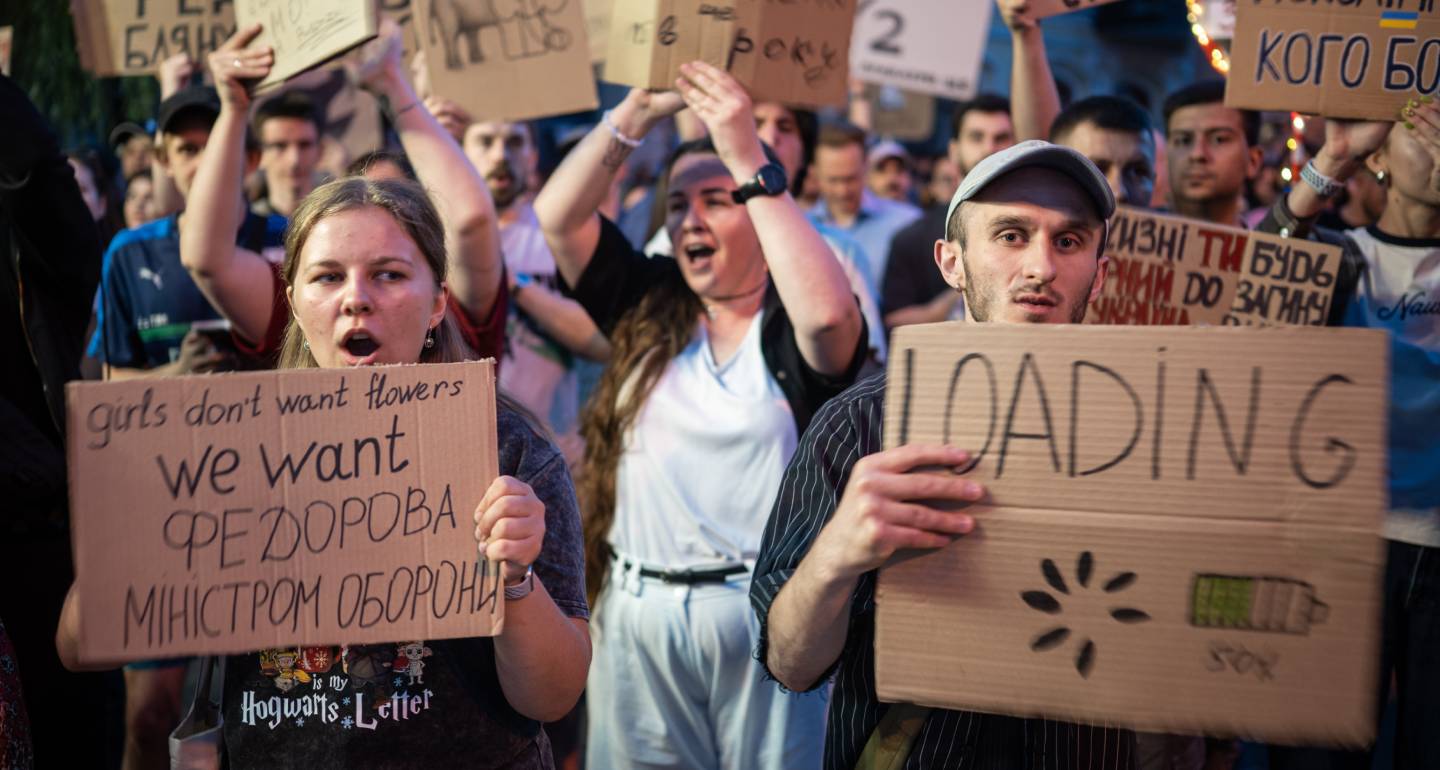
With his public call for new elections in Ukraine, ex-defense minister Mykhailo Fedorov has opened Pandora’s box.

Konstantin Skorkin