

Commentary
Sergei Kiriyenko used Russia’s parliamentary vote to further hone his strategy of corporate mobilization that is designed to maximize votes for United Russia.
Andrey Pertsev
{
  "authors": [
    "David Rothkopf",
    "Bernard Schwartz"
  ],
  "type": "legacyinthemedia",
  "centerAffiliationAll": "",
  "centers": [
    "Carnegie Endowment for International Peace"
  ],
  "collections": [],
  "englishNewsletterAll": "",
  "nonEnglishNewsletterAll": "",
  "primaryCenter": "Carnegie Endowment for International Peace",
  "programAffiliation": "",
  "programs": [],
  "projects": [],
  "regions": [
    "North America",
    "United States"
  ],
  "topics": [
    "Political Reform"
  ]
}
Source: Getty
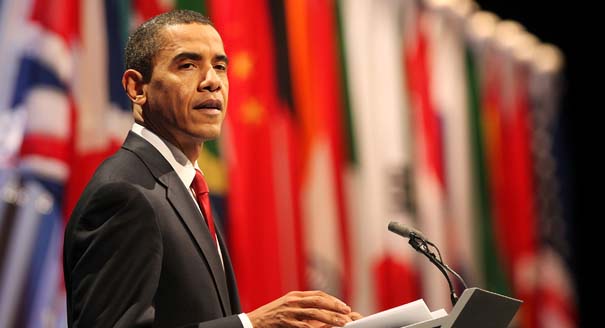
President Obama should focus his State of the Union speech on stimulating job creation through investment in America's neglected infrastructure, trimming individual states' overly rich pension plans, and adopting an independent capital budget.
Source: Financial Times

After a bruising year, Mr Obama enters 2011 energised by impressive legislative victories in December. His eyes (and those of his opponents) are already fixed on 2012. During his first two years Mr Obama’s instinct was to emulate the sweeping aspirations of presidents such as Ronald Reagan and John Kennedy. But if he is to match their stature, it is America’s extraordinary economic challenges, not its politics, that must shape his remarks.
The speech must acknowledge America’s difficulties. Economists predict growth of around 3 per cent this year, but unemployment is likely to hover near double digits well beyond 2011. This is the most protracted blow to the US labour force from any recession. But it is more than that. Not one net new job has been created in more than a decade, the first time that has happened in US history. While Mr Obama’s speech may touch upon the global trends that have helped drive these changes, the bulk of it and his time during the next two years must focus on what America can now do to stimulate job creation
This will require discipline. On the one hand this means avoiding distracting battles over otherwise important issues – like immigration reform, or rehashing healthcare. It also means resisting the temptation to score comparatively easier victories through bite-size legislative schemes – even these may appear to be the only things that appear digestible by the new, divided Congress. Current growth will generate only 100,000-150,000 jobs a month. This means 10m-15m additional jobs over the next six years are needed to get unemployment to historic levels. Given the urgency of America’s problems, thinking small is as dangerous as gridlock.
Just as importantly, the president must recognise his proposals need to be realistic in the context of the new environment in Washington. Given current concerns about the federal deficit, this means the answer cannot lie with further stimuli or big spending initiatives.
There is, however, a path that will allow both Mr Obama and Congress to craft an agenda on jobs growth. It begins with the fact that since we have for decades neglected our roads, highways, air traffic control systems, ports, power grids and telecoms infrastructure (so that today we lag behind many developing countries in our standards) it stands to reason that the best place to create jobs is in restoring these areas – especially since, in so doing, we will become more competitive and attract more investment.
What could be done? The president’s existing infrastructure bank could leverage $50bn in repayable capital into hundreds of billions in private investment. Removing the thicket of regulatory obstacles to modernising America’s energy infrastructure could release billions more in private money. Cutting corporate taxes could attract foreign investment.
Elsewhere, a tough stand may also be needed to get individual US states to trim overly rich public pension packages, to ensure their fiscal stability. This will be easier in an environment in which new infrastructure projects are creating demand, and enhancing the tax base. Finally, the federal government should adopt a long-overdue capital budget, to treat its investment spending differently from pure operating spending – just as all normal companies do.
The advantage of such a focus is that most of the money for these projects will come from the private sector. But bringing together Wall Street, private industry, foreign capital, pension funds and the other players who will be key to making such a broad programme a near-term reality requires the government to play the role of catalyst and advocate. If it does, in only a few short weeks Mr Obama can set out a plan to lift America and ensure his own re-election. What is more, by doing so through focusing boldly on America’s biggest challenge, and then working to implement a plan, he can mark an important turning point in US history.
Former Visiting Scholar
David Rothkopf was a visiting scholar at the Carnegie Endowment as well as the former CEO and editor in chief of the FP Group.
Bernard Schwartz
Carnegie does not take institutional positions on public policy issues; the views represented herein are those of the author(s) and do not necessarily reflect the views of Carnegie, its staff, or its trustees.

Sergei Kiriyenko used Russia’s parliamentary vote to further hone his strategy of corporate mobilization that is designed to maximize votes for United Russia.

Andrey Pertsev

Trump has promised Belarus a massive potash deal. But Minsk is seeking something greater: restored Western transit and greater room for maneuver from Russia.

Balázs Jarábik

The European far right might fail to steer EU policy in the direction Russia wants, but they will create enough chaos inside Europe to benefit the Kremlin.

Dimitar Bechev

Minsk clearly expected the dialogue with Washington to yield more results, in particular the lifting of EU sanctions and permission to export potash.

Artyom Shraibman

If the Russian-speaking community in Latvia cannot articulate their interests without being seen as disloyal, they could end up embracing a pro-Kremlin agenda.

Sergejs Potapkins