

Paper
George Perkovich
{
  "authors": [
    "George Perkovich"
  ],
  "type": "legacyinthemedia",
  "centerAffiliationAll": "dc",
  "centers": [
    "Carnegie Endowment for International Peace"
  ],
  "collections": [],
  "englishNewsletterAll": "ctw",
  "nonEnglishNewsletterAll": "",
  "primaryCenter": "Carnegie Endowment for International Peace",
  "programAffiliation": "NPP",
  "programs": [
    "Nuclear Policy"
  ],
  "projects": [],
  "regions": [
    "Middle East",
    "Iran"
  ],
  "topics": [
    "Nuclear Policy"
  ]
}
Source: Getty
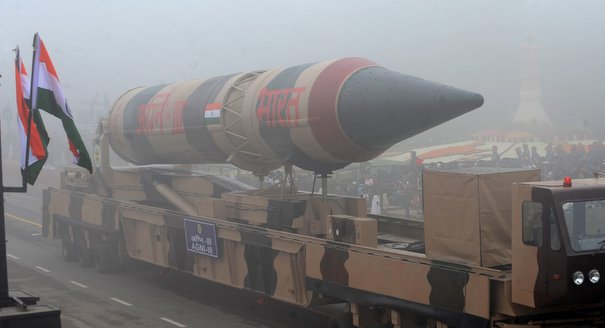
It remains to be seen whether a progressive international nuclear order can be built when states differ over which rules should be strengthened and how they should be enforced, and when some rulers reject the norms that others respect.
Source: Washington Post

Like other presidential aspirants, ElBaradei places himself in a flattering light and takes the popular side of issues voters care about. But “The Age of Deception” is more than a campaign biography: Written before the recent Egyptian upheaval, it reaches far beyond the politics of Cairo. The struggles ElBaradei waged in Iraq, North Korea, Iran and Libya to shape the international management of nuclear technology represent a central dynamic of the 21st century.
Will rule of law trump unilateralism? Can a progressive international order be built when states differ over which rules should be strengthened and how they should be enforced, and when rulers in North Korea, Burma, Syria and Iran reject norms that others respect? ElBaradei's vivid narrative brings these and other big questions to life.
"I am totally against wars," a 12-year-old Spanish girl named Alicia wrote to ElBaradei after he received the Nobel Prize in 2005. "I thank you very much for your efforts to try to avoid the war in Iraq. Despite the fact that your strategy, based on dialogue, was absolutely not to the liking of the USA, you knew how to stay firm and you showed that there were not nuclear weapons in Iraq, even while gaining the hate of the most powerful country."
Alicia sums up "The Age of Deception" in many ways. ElBaradei repeatedly describes the nuclear infractions of North Korea, Iran, Libya and other nations and then insinuates that the United States should be blamed for scaring them into misbehaving or impeding him from working out fair-minded solutions with Iraq’s Saddam Hussein, North Korea’s Kim Jong Il and Iran’s Ayatollah Khamenei and Mahmoud Ahmadinejad. For example: The Iranians "were busily undermining the very solution they had worked so hard to achieve," he writes after learning in 2006 that officials of former president Mohammad Khatami’s administration planned to attack the new president Ahmadinejad politically if he agreed to a deal with Washington. "I sighed. Tehran had been spending way too much time watching D.C. politics, I thought." And: North Korea is "isolated, impoverished, feeling deeply threatened by the United States but nonetheless defiant.”
Libya had in the 1990s secretly bought uranium enrichment equipment and a blueprint for a nuclear weapon from the infamous network of Pakistan's A.Q. Khan. This had not been detected by the International Atomic Energy Agency, but by British and American intelligence. ElBaradei was briefed before the story broke in December 2003. "I was told," he writes, "that the genesis of the Libyan nuclear weapon program — and Gaddafi’s other WMD programs — was in retaliation for the April 1986 U.S. bombing raids during which Gaddafi’s adopted daughter, Hannah, was killed.” One is left to wonder whether he thought the Libyan terrorist attacks weeks earlier that killed Americans on TWA flight 840 and in the La Belle disco in Berlin were irrelevant, for he does not mention them. He does describe meeting Gaddafi who “spoke earnestly of his desire to develop Libya.”
Young Alicia tapped into ElBaradei’s wishful credo in another portion of her letter. "I hope that in the conflict with Iran you are luckier and that things get solved by using dialogue and not through arms," she wrote. "And that the politicians of the USA accept the opinion of the UN." But the world is not as nice as 12-year-old girls wish. Some states are ruled through violent repression, and even if their leaders are willing to compromise on some things, they may not accept peaceably the enforcement of international rules they violate, including resolutions of the U.N. Security Council.
Iran's leadership is portrayed as fearful of the United States and very difficult to deal with. Still, ElBaradei insisted that Tehran would significantly constrain nuclear activities that could be used for military purposes if only Washington would take “yes” for an answer. ElBaradei makes no mention of the Iranian strategy revealed by the Khatami government’s chief negotiator, Hassan Rowhani, in a July 2005 interview. Rowhani, an urbane cleric since displaced by President Ahmadinejad, declared, “wherever we accepted suspension” of a nuclear activity, "we thought about another activity." When Tehran suspended work on uranium enrichment at Natanz, it “put all of [its] efforts" into uranium conversion at Esfahan. This stall-and-advance, bait-and-switch approach continues today.
ElBaradei offers no insight into what can and should be done when unaccountable leaders refuse to accede to the requirements of the IAEA or the U.N. Nor does he address the possibility that despotic regimes cling to nuclear-weapons capability to protect their rule against domestic and foreign pressures for change.
The high-minded dialogue ElBaradei repeatedly calls for is not always sufficient, leaving the reader to wonder what then? Certainly, the United States should be more committed and supple in its diplomacy. Washington needs to realize that the states it fears are even more fearful of its power and judgment. But that is far from sufficient to solve the tough nuclear cases. President Obama, despite his Nobel credentials, has been unable to resolve the nuclear impasse in North Korea and Iran, or to persuade France, Russia, China, Pakistan and others to join him in moving towards a world without nuclear weapons.
ElBaradei displays an enmity toward Western nuclear-armed states that is sometimes overt and sometimes subtle, sometimes deserved and sometimes unfair. A fascinating mix of emotions and calculations seems to animate his analysis. Anyone wishing to glimpse some of the central tensions in 21st-century international diplomacy should read "The Age of Deception."

Japan Chair for a World Without Nuclear Weapons, Senior Fellow
George Perkovich is the Japan Chair for a World Without Nuclear Weapons and a senior fellow in the Carnegie Endowment for International Peace’s Nuclear Policy Program. He works primarily on nuclear deterrence, nonproliferation, and disarmament issues, and is leading a study on nuclear signaling in the 21st century.
Recent Work
George Perkovich
George Perkovich
Carnegie does not take institutional positions on public policy issues; the views represented herein are those of the author(s) and do not necessarily reflect the views of Carnegie, its staff, or its trustees.
Ongoing uncertainty in the Middle East allows Moscow to both increase its influence in Tehran and continue to enjoy the financial windfall of higher oil prices.

Nikita Smagin

This year’s wars have made alternative routes to transit through Russia no less risky for Central Asian countries.

Galiya Ibragimova
Troubled by the growing salience of nuclear debates in East Asia, Moscow has responded in its usual way: with condemnation and threats. But by exacerbating insecurity, Russia is forcing South Korea and Japan to consider radical security options.

James D.J. Brown
The Russian leadership wants to avoid a dangerous precedent in which it is squeezed out of Iran by the United States and Israel—and left powerless to respond in any meaningful way.
Nikita Smagin
Not only does the fighting jeopardize regional security, it undermines Russian attempts to promote alternatives to the Western-dominated world order.

Ruslan Suleymanov