

In The Media
David Rothkopf
{
  "authors": [
    "David Rothkopf"
  ],
  "type": "legacyinthemedia",
  "centerAffiliationAll": "",
  "centers": [
    "Carnegie Endowment for International Peace",
    "Carnegie Europe"
  ],
  "collections": [
    "Transatlantic Cooperation",
    "Brexit and UK Politics"
  ],
  "englishNewsletterAll": "",
  "nonEnglishNewsletterAll": "",
  "primaryCenter": "Carnegie Endowment for International Peace",
  "programAffiliation": "",
  "programs": [],
  "projects": [],
  "regions": [
    "North America",
    "United States",
    "Western Europe",
    "United Kingdom",
    "Europe"
  ],
  "topics": [
    "Foreign Policy"
  ]
}
Source: Getty
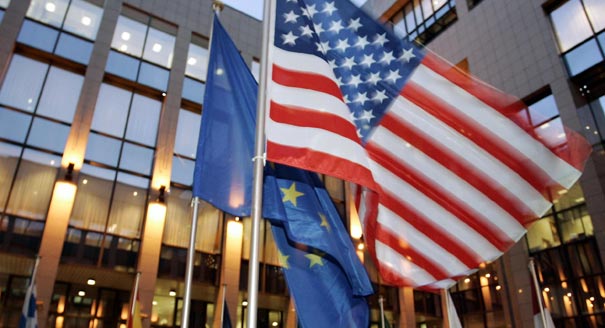
As the United States strengthens its ties with many global and European powers and turns its focus to the Pacific, its special relationship with the United Kingdom stands to become slightly less special.
Source: Independent

Like most clichés, the term means different things to different groups: one man's "world's strongest alliance" is another's "Uncle Sam and his poodle". But the special relationship between this President and Prime Minister is new.
At the outset it looked to be a far cry from recent iterations of the London-Washington partnership. From Reagan and Thatcher to Bush and Major to the unlikely political ménage à trois that Tony Blair managed to engineer between himself, Bill Clinton and later George Bush, the ties at the top between the US and the UK were more than good diplomacy. There were friendships, shared confidences, a certain ease.
David Cameron and Barack Obama were not a promising couple. Washington viewed Cameron's election with some unease. That a real bond could form between the former community organiser and the old Etonian former spin-doctor appeared outlandish. In reality, the men had much in common. Both were high achievers who attended top universities, and were deeply political animals from a very young age. Whatever the language of their political bases, they have revealed themselves to be pragmatic and, on key issues, not afraid to stray from their party lines. While the relationship started coolly, as such ties often do, circumstances have nudged it towards special status.
Both men took office in very difficult economic times, which provided both a bond and a point of tension, and laid the groundwork for an important shift from the past balance in the relationship. The bond was in their being forced to deal with similar challenges, indeed some, like the international financial crisis, in which the fates and problems of both countries were inextricably and irreversibly linked. They had to work together within the G8, the G20, and as the men presiding over the world's two most important financial markets.
The point of tension, at least early on, was that Cameron came in with an aggressive, austerity-driven agenda, while Obama's approach was more cautious. Cameron's austerity agenda was closely watched and embraced by many of Obama's opponents. The approach of both men to the crisis ties to crucial faultlines in the politics of their respective countries.
While the special relationship from Reagan-Thatcher through to Bush-Blair was defined by an America in ascendancy, the economic crisis and the deep structural flaws in the US economy that it revealed caused the Obama-Cameron relationship to be heavily defined by the fact that America is now weakened, at the very least, and possibly at the beginning of a protracted period of decline.
What that may mean for the "specialness" of the relationship is best illustrated via the foreign policy interactions that have taken place during the tenures of the two men. On the one hand, these are favourable to Cameron and the UK. Not only is America hardly the domineering partner of even the recent past – thus enabling Cameron to announce the unilateral draw down of British troops in Afghanistan on a schedule not ideal from the US perspective – but the US has actually become much more dependent on working within coalitions, including Nato, in places such as Libya, or in partnerships with Europe on issues such as creating economic incentives for Middle East reformers or sanctions for bad actors. The UK is a natural interlocutor in such coalitions and so plays a more important role to a US that is less inclined to act alone, and to a President whose instincts are more oriented toward multilateralism than any of his recent predecessors.
This rebalancing of relative strengths and the consequent adjustment in respective foreign policies is complicated, however, by the simultaneous distinction between the real multilateralism of Obama and the faux multilateralism of predecessors such as Bush. In the past, Blair offered a fig-leaf of internationalism, the illusion that US initiatives were actually more broadly supported than they were. Today, Obama needs active support from a real coalition and this creates a requirement that other relationships become more "special" themselves.
The US-French relationship, for example, is stronger than in the past. Obama's exceptionally active and highly regarded Secretary of State, Hillary Clinton, has spent much of her time focusing on strengthening relationships across Europe and around the world, making Nato, Bric (Brazil, Russia, India and China) and other powers more central to US efforts. Obama, too, has been active. This week's trip is his eighth to Europe since taking office. The more ties that are cultivated, the less special any one may be.
In a G20 world, the old trans-Atlantic ties are less central. What's more, in a world in which the new great power axis is trans-Pacific rather than trans-Atlantic, not only are the old trans-Atlantic ties less central, but those that have greater resonance with, for example, China, as Germany has, become more important.
For, however loud the cheers may be for Obama when he speaks to Parliament, however warm the reception may be for him at Buckingham Palace or in the British tabloids, however the Cameron-Obama relationship may have deepened against all odds, it must be acknowledged that most important US relationship with Europe today is with Germany.
Germany is the lynchpin to a European economic recovery that is essential to the recovery of the global economy. As an abstainer on the Libya UN vote, it has actually gained leverage, now being seen as more key to truly sustainable initiatives. It has greater leverage with the rest of Europe and with Asia.
The German Chancellor, Angela Merkel, and President Obama may not be the best of pals, but it is worth remembering the core lesson offered by the evolving Obama-Cameron relationship. As useful as interpersonal international ties may be, the really important special relationships are between countries, based on national needs, and not between people, based on personal affinities.

Former Visiting Scholar
David Rothkopf was a visiting scholar at the Carnegie Endowment as well as the former CEO and editor in chief of the FP Group.
Recent Work
David Rothkopf
David Rothkopf
Carnegie does not take institutional positions on public policy issues; the views represented herein are those of the author(s) and do not necessarily reflect the views of Carnegie, its staff, or its trustees.

With the growth in points of friction between the great powers, organizations like the SCO will continue to play a role in the strategic adaptation of the smaller powers caught between them.

Temur Umarov

When faced with fuel shortages in the past, Central Asian governments could always count on additional supplies from Moscow. That safety net no longer exists.

Galiya Ibragimova
Andrey Melnichenko’s essay offers no answer to the fundamental question of how, under any kind of negotiated settlement, Europe can protect itself from the Russian ressentiment that is inevitable in all scenarios except for an outright victory for Putin.

Leonid Bershidsky

Despite unhappiness on the ground, Moscow is determined to use both carrot and stick to ensure there is record support for United Russia in occupied Ukraine.

Konstantin Skorkin
Whether PAS can refocus on the unfinished business of state-building may ultimately prove more consequential for Moldova’s European future than the pace of its accession negotiations.

Balázs Jarábik