

Paper
Matthew Rojansky
{
  "authors": [
    "Matthew Rojansky"
  ],
  "type": "legacyinthemedia",
  "centerAffiliationAll": "dc",
  "centers": [
    "Carnegie Endowment for International Peace",
    "Carnegie Europe",
    "Carnegie Russia Eurasia Center"
  ],
  "collections": [],
  "englishNewsletterAll": "ctw",
  "nonEnglishNewsletterAll": "",
  "primaryCenter": "Carnegie Endowment for International Peace",
  "programAffiliation": "russia",
  "programs": [
    "Russia and Eurasia"
  ],
  "projects": [],
  "regions": [
    "Caucasus",
    "Russia"
  ],
  "topics": [
    "Foreign Policy"
  ]
}
Source: Getty
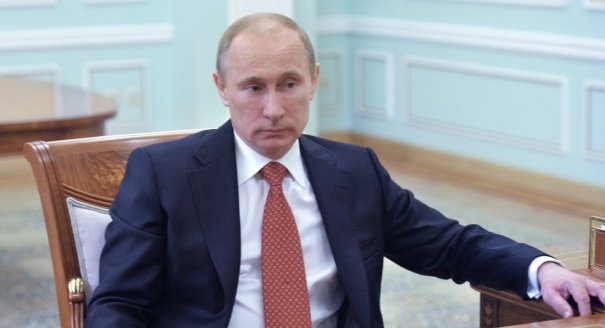
Putin's promise is simple and appealing: Stability for Russian politics, and self-confidence for the Russian nation.
Source: The European

Vladimir Putin has resolved to run for President once again, and his message was loud and clear: stability is back, and it is here to stay.
But there was another message in Putin’s carefully orchestrated coronation before some ten thousand party loyalists on September 24. It recalled times past, when Moscow meeting halls echoed with ardent praise for the glorious motherland, its noble leaders, and the party’s ambitious future plans. Vladimir Putin is not a communist, and Russia is not the Soviet Union, but with the restoration of one-party rule, Russia has become a far less dynamic and in many ways a weaker society.
Ironically, Putinism is both successful and largely popular in Russia because it seems to promise the opposite. In contrast to weak-willed, out-of-touch liberals, Putin is seen as a strong and decisive leader, under whom stability and security have replaced the privations and injuries of the post-Soviet decade.
Even if Putin and his party win the upcoming elections without violence or fraud, Russia will be a far cry from vibrant democracy. Over the past decade Putinism has steadily sapped the country of its core assets, as more than a million university graduates have emigrated, and billions of dollars has fled the country every year.
Putin cannot help but acknowledge a looming budget crisis as oil and gas output plateau over the next decade, while the population ages and the costs of social welfare, health care, and infrastructure upkeep continue to climb. Looking west at the Eurozone crisis and south at the Arab Spring, Putin recognizes that if he cannot placate citizens and stimulate investor confidence, he might soon face not only financial tumult but political as well.
Putin surely knows that Russia has a bleak future without modernization, which is why he has supported and increasingly adopted Medvedev’s rhetoric to this effect. Russia still has a comparatively well-educated and skilled population, capable of innovating and growing the economy, but these human growth engines are stuck on idle thanks to the retarding influence of pervasive and deep-rooted corruption. Over the long term, the challenge for Putin will be how to tackle corruption at an operational level while tolerating it—indeed depending on it—at a strategic level. This is a contradiction no Russian autocrat has been able to resolve.
In the world around him, Putin recognizes the rise of Asia, and seeks a prominent place for Russia in what is fast becoming a “pacific century.” Yet he cannot undo centuries of Russian and Soviet prejudice that has denigrated Asians and concentrated the vast preponderance of the country’s wealth, population and infrastructure west of the Urals.
Fearful of both the unchecked power of the United States and the rising power of states like China, India and Turkey, Putin will cling to Russia’s seat at the table in old clubs like the UN Security Council and the G8, as well as new ones like the Shanghai Cooperation Organization and the BRICS. But without the leverage of value-added economic growth and robust trading ties, Russia cannot rise to global leadership.
Putinism is largely about restoring the material welfare and self-confidence that Russians lost under incompetent leaders from the late Soviet period to the last decade. But the state’s dependence on managed democracy and rentier economics stifles Russians’ creative energy and circumscribes Russia’s vast potential.
Former Deputy Director, Russia and Eurasia Program
Rojansky, formerly executive director of the Partnership for a Secure America, is an expert on U.S. and Russian national security and nuclear-weapon policies.
Recent Work
Matthew Rojansky
Matthew Rojansky
Carnegie does not take institutional positions on public policy issues; the views represented herein are those of the author(s) and do not necessarily reflect the views of Carnegie, its staff, or its trustees.

Russian strikes are weakening the economy sustaining Ukraine’s war effort. Closing the growing funding gap will require more European support and politically contentious reforms in Kyiv.

Balázs Jarábik

Despite a new textbook, an influx of Russian teachers and managers, and an end to the teaching of Ukrainian, the Kremlin is unlikely to have “reprogrammed” locals.

Konstantin Skorkin

For every ruble allocated to social policy, health, and education in 2027, double that amount is earmarked for the army, the police, and the security services.

Alexandra Prokopenko

Cargo traffic through Russia’s Northern Sea Route has increased because of the disruption caused by the conflict in the Middle East, the Ukraine war, and U.S.-China tensions.

Mikhail Korostikov
An analysis of traffic accident data suggests that Ukrainian drone attacks caused a material but not disastrous fall in Russian gasoline consumption over the summer.

Sergey Vakulenko