

In The Media
Lahcen Achy
{
  "authors": [
    "Lahcen Achy"
  ],
  "type": "legacyinthemedia",
  "centerAffiliationAll": "",
  "centers": [
    "Carnegie Endowment for International Peace",
    "Malcolm H. Kerr Carnegie Middle East Center"
  ],
  "collections": [],
  "englishNewsletterAll": "",
  "nonEnglishNewsletterAll": "",
  "primaryCenter": "Malcolm H. Kerr Carnegie Middle East Center",
  "programAffiliation": "",
  "programs": [],
  "projects": [],
  "regions": [
    "Maghreb"
  ],
  "topics": [
    "Economy"
  ]
}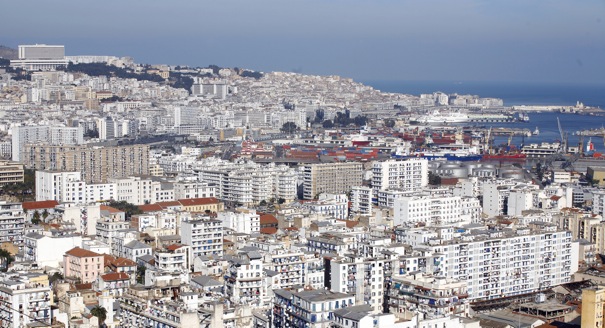
Source: Getty
Inadequate access to housing has emerged as one of Algeria’s most pressing crises. The government has to design an effective housing policy that enables citizens to have access to decent housing at a reasonable cost without squandering public money.
Source: Al-Hayat

Media and government representatives often attribute the housing crisis to problems at the local administrations in charge of preparing lists of beneficiaries, blaming an absence of transparency and a lack of respect for eligibility criteria that stems from rampant corruption and nepotism. What is happening at the local level, however, is only the tip of the iceberg. State housing policy, riven by structural imbalances, has proved flawed both in its design and implementation.
Access to decent housing is of key importance, as it provides families with stability and improves their social welfare. The housing construction sector stimulates the domestic economy and generates plenty of jobs, especially for unskilled workers, which is vital for the Algerian economy with its fast-growing workforce and limited job opportunities.The real challenge facing the government is how to design an effective housing policy that enables citizens, mainly low-income earners, to have access to decent housing at a reasonable cost and without squandering public money.
State intervention in the housing sector can take one of the three forms. First, the state may provide financial aid for disadvantaged groups to buy market-produced houses. Second, the state can grant financial and tax incentives to the private sector to produce affordable housing that meets the needs and the means of low-income families. Third, the state may directly build housing or contract with the private sector to do so and then distribute the homes, at nominal prices or at no cost at all, to eligible beneficiaries selected by the central or local administrations.
The latter approach may at first seem attractive and convenient for the disadvantaged groups; its side effects, however, make it costly and its targets far-fetched.
The distribution of housing for free has a political dimension designed to appeal to voters but does not take proper account of either the sound management of public resources or social justice goals. Such an approach also leads to a handful of private companies monopolizing government projects, which prevents other companies from entering the market, weakens competition, and causes an upsurge in the price of housing.
Applications for free housing increase tremendously under such a system, which creates a parallel market where rights to “free housing” are traded for bribes and other corrupt payoffs. As a result, poor people with a real need for state support are excluded and many of them remain in precarious dwellings for years waiting for an unsure outcome. That in turn slows down housing construction and increases the supply shortage.
Policymakers in Algeria should understand the limits of their social housing scheme and strike a delicate balance between state intervention and market incentives to allow for the supply of social housing at competitive prices and to offer wider options for beneficiaries.
Access to affordable and decent housing for low-income households needs to be part of a comprehensive strategy that deals with land-use planning so sufficient residential land is allocated for social housing projects, that addresses uncompetitive practices in the upstream markets—especially cement and steel—and that ensures access to credit facilities through competitive mortgage markets and state collateral for households with low and often volatile income.
Generous government spending will remain unable to provide decent housing to poor Algerian families without a sound and better governed public housing policy that addresses existing distortions. Putting the blame on the local officials and their corrupt habits is a step in the wrong direction and does not spare the state responsibility.

Former Nonresident Senior Associate, Middle East Center
Achy is an economist with expertise in development, institutional economics, trade, and labor and a focus on the Middle East and North Africa.
Recent Work
Lahcen Achy
Lahcen Achy

A much-discussed disagreement over internet restrictions in Russia was never an existential threat for Putin: It was about elite groups protecting their interests.

Alexandra Prokopenko
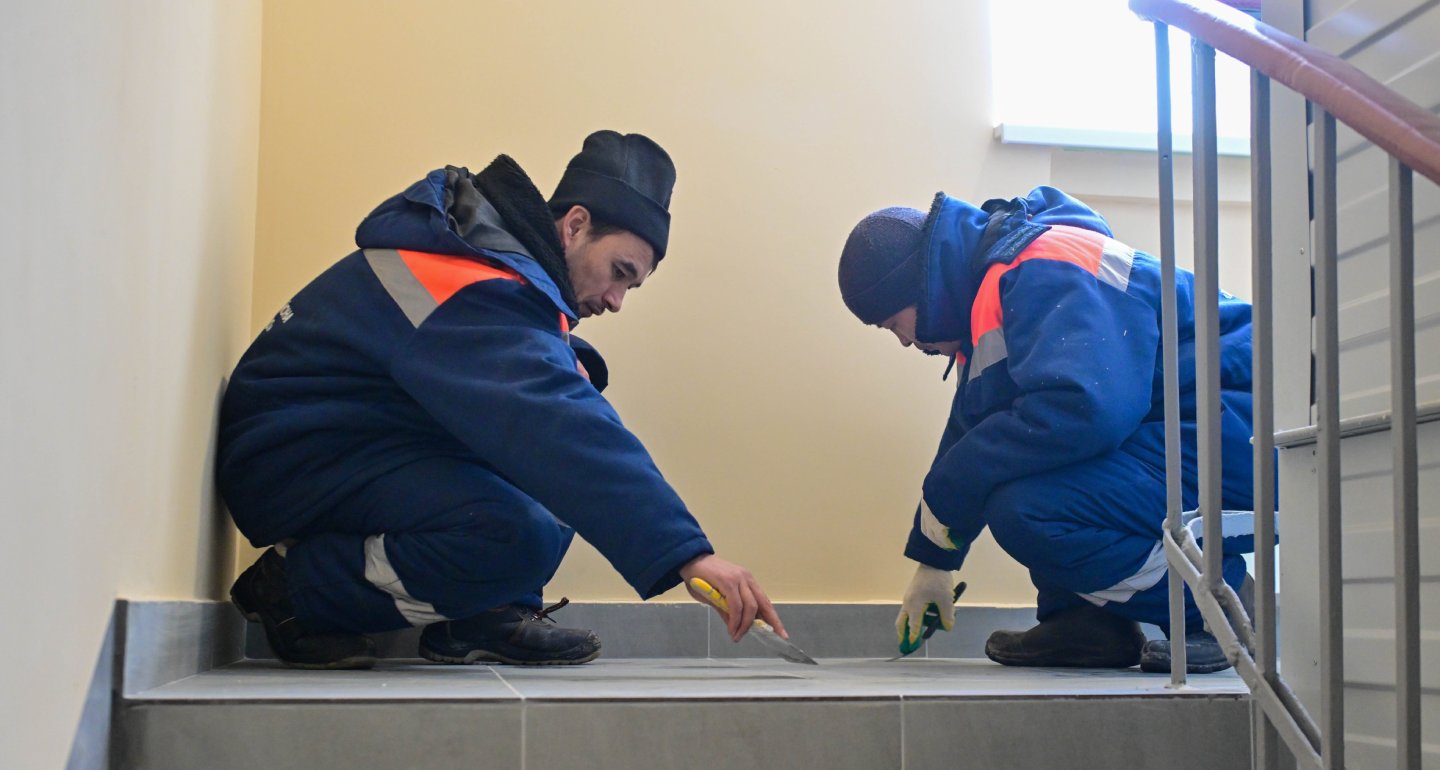
The demands of the Kremlin’s war in Ukraine, demographic problems, and public hostility toward Central Asians mean Russia does not have enough workers.

Salavat Abylkalikov
Minsk’s faith in the future of its larger neighbor’s economy is fading as Belarusian firms in Russia see record losses.

Olga Loiko
The cost of air defense has become an unregistered tax on revenue for businesses. While military rents are consolidated in the federal budget, the costs of defense are being spread across the balance sheets of companies and regional governments.
Alexandra Prokopenko

Powerful lobbyists and inertia led to Russia’s coal-mining sector missing an excellent opportunity to solve its structural problems.
Alexey Gusev