

Commentary
Cargo traffic through Russia’s Northern Sea Route has increased because of the disruption caused by the conflict in the Middle East, the Ukraine war, and U.S.-China tensions.
Mikhail Korostikov
{
  "authors": [
    "Milan Vaishnav",
    "Nancy Birdsall",
    "Daniel Cutherell"
  ],
  "type": "legacyinthemedia",
  "centerAffiliationAll": "dc",
  "centers": [
    "Carnegie Endowment for International Peace"
  ],
  "collections": [],
  "englishNewsletterAll": "ctw",
  "nonEnglishNewsletterAll": "",
  "primaryCenter": "Carnegie Endowment for International Peace",
  "programAffiliation": "SAP",
  "programs": [
    "South Asia"
  ],
  "projects": [],
  "regions": [
    "North America",
    "United States",
    "South Asia",
    "Pakistan"
  ],
  "topics": [
    "Security",
    "Military",
    "Foreign Policy"
  ]
}
Source: Getty
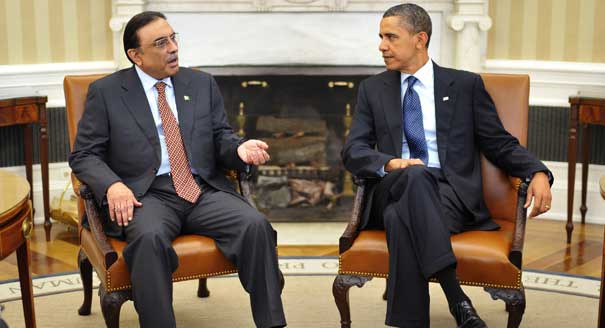
In order to make the most of American aid to Pakistan, Washington and Islamabad must work together to identify what kinds of development the United States does best—and what kinds it should leave to other donors.
Source: Dawn

Last week we released a new report, "More Money, More Problems," evaluating KLB’s progress to date. In short, the bill has failed to live up to its creators’ expectations and the United States must alter its approach if the program is to continue. But bilateral development cooperation is still important to improve the lives of millions of Pakistanis and enable better relations between the two countries. There are steps that Pakistan can take to help ensure U.S. assistance is effective.
But before lambasting the United States for not accomplishing what it set out to do, it’s important to recognise the context in which KLB is being implemented. The last three years have not been good ones for the United States-Pakistan relationship. From Raymond Davis to Salala (not to mention that little episode in Abbottabad), a series of diplomatic dust-ups have opened a widening rift between the two countries. Given the circumstances, in some ways it’s surprising that the U.S. assistance programme still exists at all.As critical as the report is of U.S. efforts, one of its underlying assumptions is that United States-Pakistan development cooperation should continue. The lives of Pakistanis can be improved by adding megawatts of power to the national grid and by improving entrepreneurs’ access to credit — areas where the United States can help. And the development programme also provides a more neutral channel for engagement between the two countries. As the political-military relationship encounters inevitable bumps in the road, development offers a channel for working together—a channel that, importantly, relies on collaboration between civilians in both governments.
In order for KLB to achieve its potential, however, both countries must do more to ensure that dialogue around development continues. They must redouble their efforts to make sure that money spent on development achieves its intended result.
At the end of the day, U.S. assistance, on its own, cannot alter the fundamental realities of Pakistan’s political economy. Decades of failed reform efforts highlight the limits of donor leverage. Yet, U.S. assistance can act as a catalyst to bring about modest change. In order for this to be possible, however, the United States must acknowledge its shortcomings as a development actor and Pakistan must recognise its role in helping get the KLB program back on track.
There are three steps the government of Pakistan can take to help the United States help Pakistan. First, Pakistan needs to insist that the two countries agree on a limited set of metrics to measure Pakistan’s overall development progress. These should be more than direct outputs of aid projects. Rather, they should reflect a shared view of what development can do, and which outcomes should be pursued over the next several years. One of the biggest failures of the current U.S. approach is the lack of overarching vision. The best American civilians have been able to do is identify five "priority" sectors to organise its activities in Pakistan. Within each sector, however, Pakistanis are clueless about the end goals of U.S. assistance, and U.S. officials have struggled to construct a compelling narrative.
In Pakistan, mentioning "indicators" immediately raises red flags about "conditionality" or "benchmarks." Yet without clear objectives, aid will continue to be evaluated using the only available (but largely unhelpful) metric: aid dollars spent. We know, of course, that aid spending alone does not guarantee positive development impact. The government of Pakistan must exercise leadership and either take ownership over development programming to ensure that it is a joint, highly focused effort, or reject it outright.
Second, Pakistan must recognize America’s limitations as a development actor. The United States— like all donors—is simply better at some things than others. Acknowledging this central truth also requires a dose of humility on the part of American civilians.The same country that can conduct targeted drone strikes in remote Waziristan is not, it turns out, the most effective agent for strengthening primary education in southern Punjab.
The United States has a comparative advantage in using its development funds on energy, innovation, higher education programmes and supporting the private sector. Pakistan can help U.S. civilians by identifying sectors or projects where U.S. support is most needed, and by discouraging U.S. programs where other donors would do a better job. Pakistan should also encourage donors to pool resources through multilateral channels that can be directed to specific sectors or programs, and led by donors who have the best expertise and experience.
Finally, both countries bear a degree of responsibility for managing expectations for what development programmes can actually achieve. The Obama administration needs to communicate to Congress that aid will not buy Americans love, rein in the Pakistani military or force crucial reforms on energy or tax collection. Pakistan, for its part, should also scale back its own expectations. There are still far too many people inside Pakistan who believe a miserly Obama administration has total control of $7.5 billion but is holding back in order to punish Pakistan. In reality, U.S. development budgets are approved on a yearly basis by Congress; KLB merely represents an intention, not an iron-clad contract. The administration has to make the case to Congress each year that Pakistan deserves the money.
Despite the unfulfilled expectations thus far, the United States should remain fully committed to its KLB promise to support the creation of a strong, economically vibrant Pakistan with an accountable, democratic government. This is in the interests of Americans as well as Pakistanis. Yet it’s clear that the United Statesfaces severe constraints in its ability to be an effective development actor in Pakistan.
There are certainly reasons to be critical of U.S. development efforts in Pakistan and serious changes need to be made, but Pakistan too shares the burden for improving U.S. efforts. Even though the United States is spending billions to help Pakistan, ironically it is Pakistan that must help the United States in order to help itself.

Director and Senior Fellow, South Asia Program
Milan Vaishnav is a senior fellow and director of the South Asia Program and the host of the Grand Tamasha podcast at the Carnegie Endowment for International Peace. His primary research focus is the political economy of India, and he examines issues such as corruption and governance, state capacity, federalism, and electoral behavior. He also conducts research on the Indian diaspora.
Former Senior Associate
Daniel Cutherell
Center for Global Development
Carnegie does not take institutional positions on public policy issues; the views represented herein are those of the author(s) and do not necessarily reflect the views of Carnegie, its staff, or its trustees.

Cargo traffic through Russia’s Northern Sea Route has increased because of the disruption caused by the conflict in the Middle East, the Ukraine war, and U.S.-China tensions.

Mikhail Korostikov

Trump has promised Belarus a massive potash deal. But Minsk is seeking something greater: restored Western transit and greater room for maneuver from Russia.

Balázs Jarábik

The European far right might fail to steer EU policy in the direction Russia wants, but they will create enough chaos inside Europe to benefit the Kremlin.

Dimitar Bechev

Minsk clearly expected the dialogue with Washington to yield more results, in particular the lifting of EU sanctions and permission to export potash.

Artyom Shraibman

With the growth in points of friction between the great powers, organizations like the SCO will continue to play a role in the strategic adaptation of the smaller powers caught between them.

Temur Umarov