

Report
Iskander Rehman
{
  "authors": [
    "Iskander Rehman"
  ],
  "type": "other",
  "centerAffiliationAll": "dc",
  "centers": [
    "Carnegie Endowment for International Peace",
    "Carnegie China"
  ],
  "collections": [
    "China’s Foreign Relations"
  ],
  "englishNewsletterAll": "ctw",
  "nonEnglishNewsletterAll": "",
  "primaryCenter": "Carnegie Endowment for International Peace",
  "programAffiliation": "NPP",
  "programs": [
    "Nuclear Policy"
  ],
  "projects": [],
  "regions": [
    "South Asia",
    "India"
  ],
  "topics": [
    "Nuclear Policy",
    "Security"
  ]
}
Source: Getty
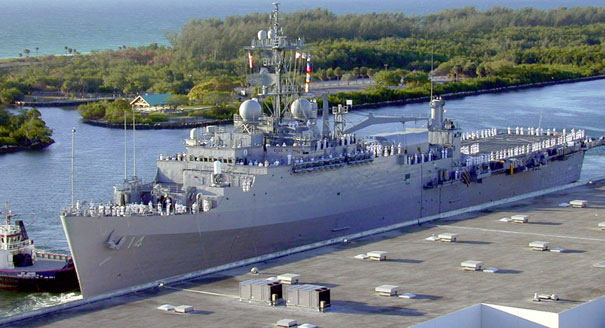
The Indian Navy has had to grapple for years with receiving only a meager portion of the nation's defense budget.
Source: Excerpt from The Rise of the Indian Navy

An array of land-driven concerns has, however, since Independence, had a way of dragging India back to shore, thwarting its sporadic thalassocratic ambitions. Blessed by its geography, India is cursed by its neighbourhood. The pan-oceanic vision nurtured under the Raj and shared by great post-Independence figures such as Nehru and K.M. Pannikar5 has been buried under the ‘sacred soil’ of the numerous territorial disputes and festering insurgencies that have convulsed the subcontinent and consumed much of its leadership’s strategic attention for the past six decades. The Indian Navy, arguably the most strategic-minded of the three services, has had to grapple for years with its ‘Cinderella service’6 status, which has left it with but a meagre portion of the defence budget. Having played a mostly peripheral part in most of India’s past conflicts7 the Navy has also been hard pressed to define and justify its role. In such a context, the latest edition of the Indian Maritime Doctrine8 issued by the Naval Headquarters, which builds upon both an earlier version released in 2004 and India’s Maritime Strategy (2007)9 provides a vital insight into how the Navy draws its inspiration and conceives of its present and future mandate in a strategically dynamic era.
This chapter aims to provide a better understanding not only of the Indian Maritime Doctrine but also of the larger context surrounding it. Doctrinal developments do not emerge from a vacuum, and are best understood from both a cultural and organizational perspective. It will be argued that in the Indian context, the nation’s complex civil-military and inter-service relations are key to better gauging some of the motivations underlying the Maritime Doctrine.
The study proceeds in three parts. Section one focuses on the essence of the maritime doctrine itself, as well as on the complex institutional setting which provides its backdrop. The document’s lofty ambitions, when juxtaposed with the study of current realities, suggest that it may be more advocatory and aspirational than genuinely reflective of reality. The second section ventures that India’s naval thought can best be understood as syncretic, with a variety of traditions shaping the service’s vision and evolution.
Four different traditions or schools of thought are identified:
The third and final section draws on these four models in order to chart out different potential trajectories for the Indian Navy in terms of its organization. Depending on changing geopolitical circumstances and shifts in the institutional makeup of India’s Armed Forces, one, or several of these schools will take pride of place. This will have a sizeable impact on the Indian Navy’s deployment patterns, force structure, and planned future acquisitions.10
1. Ashley Tellis, ‘Securing the Barrack: The Logic, Structure and Objectives of India’s Naval Expansion’, Naval War College Review (Summer 1990): 80.
2. K.M. Panikkar, ‘The Defence of India and Indo-British Obligations’, International Affairs, 22(1) (January1946): 85–90.
3. Zhang Ming, ‘The Malacca Dilemma and the Chinese Navy’s Strategic Choices’, Modern Ships, 274, (October 2006): p. 23.
4. Cheng Ruisheng, ‘Interview: Reflections from China’, Journal of International Affairs, 64(2) (Spring/Summer 2011): 213.
5. Kavalam Madhava Pannikar was an influential Indian diplomat and historian who wrote Mahanesque texts on the role of sea power in Indian history and the need for the country to look seaward. Although he was prolific, his most famous and oft cited work remains India and the Indian Ocean: An Essay on the Influence of Sea Power on Indian History (London: George Allen & Unwin, 1945), p. 9.
6. Admiral Arun Prakash, ‘Is the Future Beneath the Waves?’, Livefist Blog Post, Sunday 21 December 2008, retrievable at: http://livefist.blogspot.com/2008/12/admiral-arun-prakash-is-future-beneath.html.
7. The 1971 conflict, during which the Indian Navy’s Osa class missile boats launched a daring attack on the Karachi harbour constitutes a notable exception.
8. Integrated Headquarters, Ministry of Defence (Navy), INBR-8, Indian Maritime Doctrine, 2009.
9. Integrated Headquarters, Ministry of Defence (Navy), Freedom to Use the Seas: India’s Maritime Military Strategy, 2007.
10. The author would like to thank Professor Sumit Ganguly, Walter C. Ladwig, and an anonymous referee for their helpful comments on an earlier draft, as well as Professor Daniel Deudney for his invaluable assistance in helping him achieve a more profound understanding of military doctrine.
Reprinted by permission of the Publishers from India's Aspirational Naval Doctrine in The Rise of the Indian Navy ed. Ashgate 2012, pp. 55-79 Copyright © 2012.

Former Associate, Nuclear Policy Program
Rehman was an associate in the Nuclear Policy Program at the Carnegie Endowment and a Stanton Nuclear Security Fellow. His research focuses on security and crisis stability in Asia, specifically the geopolitical ramifications of naval nuclearization in the Indian Ocean.
Recent Work
Iskander Rehman
Carnegie does not take institutional positions on public policy issues; the views represented herein are those of the author(s) and do not necessarily reflect the views of Carnegie, its staff, or its trustees.

Russia’s AI-driven propaganda campaigns operate in a fragmented, chaotic, and often illogical manner. That’s not necessarily a problem for the Kremlin, though: It’s much easier to mimic genuine public debate that way.

Ilya Klishin

Russian strikes are weakening the economy sustaining Ukraine’s war effort. Closing the growing funding gap will require more European support and politically contentious reforms in Kyiv.

Balázs Jarábik

The European far right might fail to steer EU policy in the direction Russia wants, but they will create enough chaos inside Europe to benefit the Kremlin.

Dimitar Bechev

With the growth in points of friction between the great powers, organizations like the SCO will continue to play a role in the strategic adaptation of the smaller powers caught between them.

Temur Umarov

Two divergent trends—Putin’s hardline vision of how to prosecute the war in Ukraine, and a growing desire for change in Russia—could tear the regime apart.

Tatiana Stanovaya