

Article
Thomas de Waal
{
  "authors": [
    "Thomas de Waal"
  ],
  "type": "legacyinthemedia",
  "centerAffiliationAll": "dc",
  "centers": [
    "Carnegie Endowment for International Peace",
    "Carnegie Europe",
    "Carnegie Russia Eurasia Center"
  ],
  "collections": [],
  "englishNewsletterAll": "ctw",
  "nonEnglishNewsletterAll": "",
  "primaryCenter": "Carnegie Europe",
  "programAffiliation": "russia",
  "programs": [
    "Russia and Eurasia"
  ],
  "projects": [],
  "regions": [
    "Caucasus",
    "Russia"
  ],
  "topics": [
    "Security"
  ]
}
Source: Getty
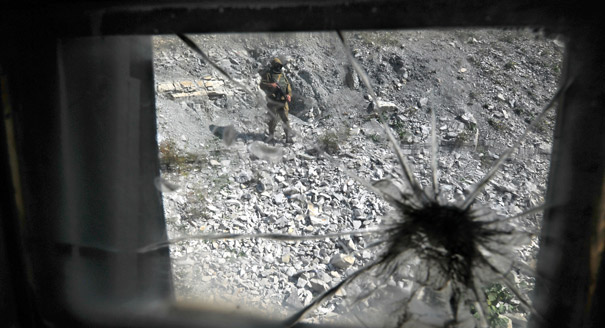
The two suspected terrorists were influenced at least indirectly by the Chechen wars which devastated Chechnya. While this was traumatic for most, a small minority have become radicalized.
Source: CNN
It was during this violence that the younger Tsarnaev brother, Dzhokhar, was born and given the name of a Chechen leader.
THOMAS DE WAAL, CARNEGIE ENDOWMENT: It's a sure sign of Chechen patriotism in the family that in 1993, they called that little son Dzhokhar, after Dzhokhar Dudayev, who was the pro-independence president.WALSH: But Chechen independence wouldn't last. Another war with Russia would kill thousands and Chechen extremists would wage a campaign of terror across Russia, killing 186 children at a school in Beslan and more than 100 theatergoers in Moscow.
The Tsarnaev family escaped the violence of the region by making their way to the U.S.
VASQUEZ: He would tell that he is from Chechnya.
WALSH: Luis Vasquez was friends with Tamerlan in high school.
VASQUEZ: That's where he's from. That's where he told me he had struggles. He didn't really elaborate.
DE WAAL: There's a whole generation of Chechens who grew up with their families being displaced, relatives being killed and so on.
WALSH: Thomas de Waal has studied and written about the region.
DE WAAL: For most people, that's just a traumatic experience, but obviously for a small minority, this is something that is in their DNA that drives them.
WALSH: And like many displaced Chechens, Tamerlan may have struggled to fit in. Chechnya is still home to militant separatist groups, and the home Tamerlan's father grew up in has been destroyed by war. But relatives still live hire. Tamerlan traveled here during his trip last year.
ZAINALBEK TSARNAEV, GREAT UNCLE TO SUSPECTS (through translator): came to see me. We talked. I said, come here, guy. Are you studying, I asked. I'm studying, he said. There was nothing criminal about him.
WALSH: De Waal says this region has also seen a growth in Islamic extremism, becoming more anti-Western and anti-American.
DE WAAL: If you're a young jihadist from this region, you certainly blame Russia as the kind of evil empire that attacked and oppressed you, and also the West basically did nothing to intervene when Russia was bombing Chechnya.

Senior Fellow, Carnegie Europe
Thomas de Waal is a senior fellow at Carnegie Europe, specializing in Eastern Europe and the Caucasus.
Recent Work
Thomas de Waal
Thomas de Waal

Russia’s ruling party would have benefited from Putin appearing as its distant patron, but as an active frontman imposing his views on the public, he has done nothing but harm both the party’s election campaign and the ruling system overall.

Andrey Pertsev

Depleted financial reserves and a shrinking tax base mean it is no longer possible to simultaneously deliver high defense spending, price stability, and economic growth.

Alexandra Prokopenko

Blurring the line between humans and animals is a long-standing tradition in social utopian prose. In his latest novel, Leonid Bershidsky reminds us that in social experiments, people are often treated no differently than animals.

Alexander Baunov
While France and Australia are seeking to establish the legal obligations of messaging apps like Telegram, Russia wants total subordination.

Maria Kolomychenko
The recent uncovering of Dmitry Donskoy’s relics in the Cathedral of the Archangel is yet another attempt by the Russian Orthodox Church to help the state solve its problems. However, parroting the state’s version of Russian history leaves the Church with no message except “patriotism.”
Alexander Zanemonets