

Commentary
Dmitri Trenin
{
  "authors": [
    "Dmitri Trenin"
  ],
  "type": "legacyinthemedia",
  "centerAffiliationAll": "",
  "centers": [
    "Carnegie Endowment for International Peace",
    "Carnegie Europe",
    "Carnegie Russia Eurasia Center"
  ],
  "collections": [
    "Transatlantic Cooperation"
  ],
  "englishNewsletterAll": "",
  "nonEnglishNewsletterAll": "",
  "primaryCenter": "Carnegie Russia Eurasia Center",
  "programAffiliation": "",
  "programs": [],
  "projects": [],
  "regions": [
    "North America",
    "United States",
    "Western Europe"
  ],
  "topics": [
    "Security",
    "Military"
  ]
}
Source: Getty
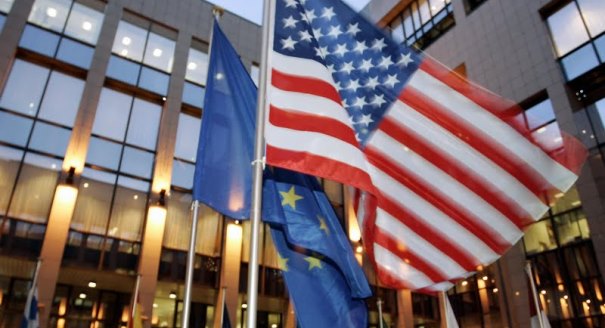
The Atlantic alliance needs to be renewed with an effective trans-Atlantic rebalancing.
Source: New York Times
If the Atlantic alliance were disbanded, European defense policies could be renationalized and the United States would lose its close interaction with highly capable like-minded European countries. Particularly at a time of the European Union’s restructuring, this would create tension and turbulence in that part of the world.
Instead, the Atlantic alliance needs to be renewed with an effective trans-Atlantic rebalancing.An economically and politically more integrated Europe, which is a likely outcome of the present crisis, should be able to become a full-fledged security partner to the United States. A renewed Atlantic alliance should be based on an agreement among the United States, a new military arm of the European Union composed of current NATO members and NATO countries outside the E.U., like Canada, Norway, Turkey and others.
This revamped NATO would create joint forces supported by a common industrial, research and development base.
This would be a real breakthrough in the process of European integration, making the E.U. ever more united in an area until now jealously protected as the ultimate symbol of national sovereignty.
Creating a defense community within the E.U. -- and turning it into NATO’s European pillar -- would also help to better balance the European Union itself. Germany, which will have to take the lead on economics and finance, will be flanked by France and Britain, which would be in the forefront of joint defense and security effort.
A reform on such a scale will need a new treaty, and the organization which will emerge from it will probably need a new name, but both will be based on more than six decades of close trans-Atlantic relations. NATO may eventually be allowed to become history; the Atlantic alliance should find a way to live on.
Former Director, Carnegie Moscow Center
Trenin was director of the Carnegie Moscow Center from 2008 to early 2022.
Recent Work
Dmitri Trenin
Dmitri Trenin
Carnegie does not take institutional positions on public policy issues; the views represented herein are those of the author(s) and do not necessarily reflect the views of Carnegie, its staff, or its trustees.

Trump has promised Belarus a massive potash deal. But Minsk is seeking something greater: restored Western transit and greater room for maneuver from Russia.

Balázs Jarábik

The European far right might fail to steer EU policy in the direction Russia wants, but they will create enough chaos inside Europe to benefit the Kremlin.

Dimitar Bechev

Minsk clearly expected the dialogue with Washington to yield more results, in particular the lifting of EU sanctions and permission to export potash.

Artyom Shraibman

With the growth in points of friction between the great powers, organizations like the SCO will continue to play a role in the strategic adaptation of the smaller powers caught between them.

Temur Umarov

Two divergent trends—Putin’s hardline vision of how to prosecute the war in Ukraine, and a growing desire for change in Russia—could tear the regime apart.

Tatiana Stanovaya