

Commentary
Yukon Huang, Isaac B. Kardon, Matt Sheehan
{
  "authors": [
    "Yukon Huang"
  ],
  "type": "legacyinthemedia",
  "centerAffiliationAll": "dc",
  "centers": [
    "Carnegie Endowment for International Peace",
    "Carnegie China"
  ],
  "collections": [
    "China’s Foreign Relations"
  ],
  "englishNewsletterAll": "asia",
  "nonEnglishNewsletterAll": "",
  "primaryCenter": "Carnegie Endowment for International Peace",
  "programAffiliation": "AP",
  "programs": [
    "Asia"
  ],
  "projects": [],
  "regions": [
    "East Asia",
    "China"
  ],
  "topics": [
    "Political Reform",
    "Economy",
    "Security",
    "Foreign Policy"
  ]
}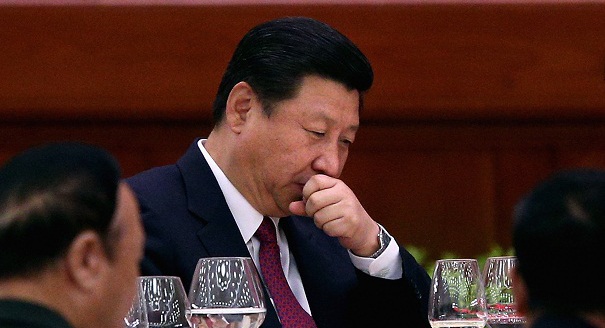
Source: Getty
Relations in Asia have deteriorated in large part because China’s willingness to act lags behind its capabilities. More productive outcomes could be realized if China became more active in crafting the global agenda.
Source: Wall Street Journal
A year of seemingly intractable Asian diplomatic crises has raised fears of Chinese assertiveness. Behind the brinksmanship in the South China Seas and North Korea, the thinking goes, lies an emboldened Beijing that seeks to use newfound military and economic power to change the state of play.
In fact, the opposite dynamic is at work. International relations in Asia have deteriorated in large part because China's willingness to act lags behind its capabilities to do so. The world needs Beijing to become more "active" in shaping global issues, not less.
While China's economic clout and rising nationalism encouraged Beijing to play a larger role in Asian affairs, its strategic moves have been fundamentally passive. China remains a reactive player, focused on countering what Beijing—rightly or wrongly—perceives as the provocations of others (a category that includes everything from Japanese nationalization of disputed islands to sanctions against Pyongyang).
China's reactive tendencies are partly the product of structural weakness. The country's rapid economic rise has made it a major power far earlier than its leaders expected. China's under-powered agencies for international diplomacy and negotiation lag well behind its impressive economic achievements, placing it at a disadvantage in working with other powers. China's leadership also feels the need to get its own house in order before forging its international path. The glaring need for economic reforms means that Chinese growth has not translated into greater self-confidence.
But there is also a tactical element to Chinese passivity. Beijing has long sought to bide its time when dealing with sensitive geopolitical issues. This reflects a belief that hot issues such as North Korea, Taiwan and disputed islands will eventually resolve themselves without confrontation, and that waiting will promote better outcomes. While countries such as the United States are affected by near-term election considerations, China prides itself on an ability to take a much longer view.
Beijing's wait-and-see approach fails in practice because events often force China to react before it would have preferred. Beijing's response to maritime disputes, for instance, is not a product of grand strategy. Rather, it is largely a knee-jerk reaction to what China sees as rising nationalism among its neighbors coupled with a containment strategy led by the U.S. This reactive stance has been self-defeating as others come to regard China as deliberately uncooperative. Refusing to work toward multilateral solutions only leaves China with undesirable policy options shaped by more engaged states.
The problem is that China cannot be expected to alter its reactive stance as long as it sees itself as an outsider to an international system built by the West. More productive outcomes could be realized if China became more active in crafting the global agenda. The good news is that there are domestic factions in China's government that support such engagement. Others are awaiting signs that Washington will accommodate the realities of an altered power-sharing configuration in the region.
Change could begin with the U.S.-led trade negotiations over the Trans Pacific Partnership. With China currently on the outside looking in, Beijing can easily dismiss the trade deal as part of a U.S. containment strategy. But Beijing must realize that the best play is to become engaged in the negotiations and start lobbying sooner rather than later for more amenable provisions such as rules of origin that would not damage the efficiency of the East Asian production sharing network. The U.S. should welcome and encourage Chinese participation in trade negotiations.
As for island disputes, China's objectives would be better served by setting aside the sovereignty question and focusing on narrow confidence-building measures such as joint patrols and training. It should also return to a focus on negotiating less-troublesome joint resource rights. Given the complexity of the sovereignty claims at play, Beijing should welcome, rather than discourage, multilateral approaches in order to achieve more inclusive solutions. A reactive China that seeks power without leadership can help neither itself nor the world.

Senior Fellow, Asia Program
Huang is a senior fellow in the Carnegie Asia Program where his research focuses on China’s economy and its regional and global impact.
Recent Work


Yukon Huang, Isaac B. Kardon, Matt Sheehan
Yukon Huang, Genevieve Slosberg
Carnegie does not take institutional positions on public policy issues; the views represented herein are those of the author(s) and do not necessarily reflect the views of Carnegie, its staff, or its trustees.

Two divergent trends—Putin’s hardline vision of how to prosecute the war in Ukraine, and a growing desire for change in Russia—could tear the regime apart.

Tatiana Stanovaya
Ultimately, Zelensky sided neither with the reform camp nor with the military establishment as such, but with political control.

Balázs Jarábik
Tokayev’s predecessor, Nursultan Nazarbayev, outlined arrangements for a power transition too soon and in too much detail, ultimately losing control over the process. Tokayev is determined not to meet the same fate.

Temur Umarov

Andrey Melnichenko’s essay offers no answer to the fundamental question of how, under any kind of negotiated settlement, Europe can protect itself from the Russian ressentiment that is inevitable in all scenarios except for an outright victory for Putin.

Leonid Bershidsky

Despite unhappiness on the ground, Moscow is determined to use both carrot and stick to ensure there is record support for United Russia in occupied Ukraine.

Konstantin Skorkin