

Paper
George Perkovich
{
  "authors": [
    "George Perkovich"
  ],
  "type": "legacyinthemedia",
  "centerAffiliationAll": "dc",
  "centers": [
    "Carnegie Endowment for International Peace"
  ],
  "collections": [
    "U.S. Nuclear Policy"
  ],
  "englishNewsletterAll": "ctw",
  "nonEnglishNewsletterAll": "",
  "primaryCenter": "Carnegie Endowment for International Peace",
  "programAffiliation": "NPP",
  "programs": [
    "Nuclear Policy"
  ],
  "projects": [],
  "regions": [
    "North America",
    "United States"
  ],
  "topics": [
    "Political Reform",
    "Nuclear Policy"
  ]
}
Source: Getty
The big disputes between libertarian-conservatives and progressives revolve around whether justice can be reduced to individual liberty and property rights, and whether individual liberty and property rights should be privileged over correcting injustices.
Source: Politico
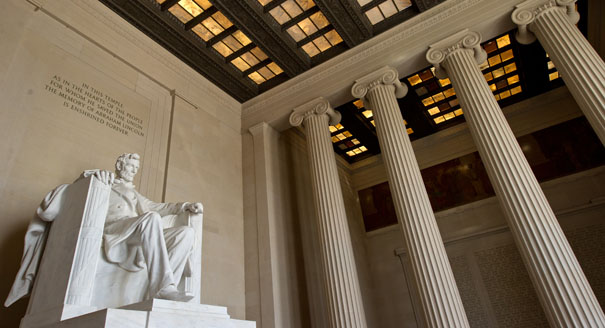
Writing in POLITICO last week, Rich Lowry accused President Obama (and liberals such as Mario Cuomo) of brazenly body-snatching Abraham Lincoln and using him as a proponent of progressive government. However, a review of the Lincoln text on which Lowry bases his claim reveals that Lowry has stripped Lincoln of an essential quality in reincarnating him as an avatar of 21st-century libertarianism. That quality is Lincoln’s attachment to justice, a value that animates much of our current political contest over the role of government.
Lowry quotes a draft note for a Lincoln lecture circa 1854: “The legitimate object of government, is to do for a community of people, whatever they need to have done, but cannot do, at all, or cannot, so well do, for themselves.” Lowry says that Lincoln “was referring, on the one hand to policing and the prosecution of crimes, and on the other, to ‘public roads and highways, public schools, charities, pauperism, orphanage, estates of the deceased, and the machinery of government itself.’ ” These, Lowry writes, are “thoroughly uncontroversial functions of government.”
Setting aside for a moment that the political philosophy Lowry espouses and seeks to embody in Lincoln often disputes the role of government in issues related to infrastructure, public schools, child care, and the machinery of government, let’s look at the remainder of the Lincoln notes which Lowry chose not to quote. Lincoln wrote, but Lowry omitted, “that if all men were just, there would still be some, though not so much, need of government.” Lincoln was invoking here the core value of justice as a fundamental purpose of government. Further, insofar as all men are not necessarily just, Lincoln was saying there needs to be more than “some” government.Lincoln’s focus on justice, like that of progressives more broadly, extends the purpose of government beyond the protection of individual liberty and private property to which libertarian-conservatives reduce it today. Lincoln elaborated the tension between libertarianism and justice in a closely related note from the same time, which Lowry also neglects: “Why, then, should we have government?” Lincoln asked. “Why not each individual take to himself the whole fruit of his labor, without having any of it taxed away, in services, corn, or money?” The 16th president answered in part by saying there are many things such as making and maintaining roads, education, and providing for the helpless young and afflicted, that require government and therefore taxation. But, importantly, Lincoln continued, government is necessary to redress “a far larger class of objects [which] springs from the injustice of men.”
Lincoln then cited examples. “If one people will make war upon another, it is a necessity” to create a “military department” for defense. “If some men will kill, or beat, or constrain others, or despoil them of property, by force, fraud or noncompliance with contracts, it is a common object with peaceful and just men to prevent it” through government.
Libertarian-conservatives do not object 19th-century governmental functions such as defense, police, and courts, but Lincoln’s logic of redressing injustices clearly pointed to something more ambitious. Some of the great political contests of recent decades have been to remove discriminatory constraints on people due to their race, religion, gender and sexual identity. Regulation of financial markets and detection of insider trading – also hotly contested – are to prevent fraudulent and unfair economic competition. Requiring publicly overseen testing for the safety of food and chemicals is to enable citizens to consent to what they are putting into their bodies.
The big disputes between libertarian-conservatives and progressives revolve around whether justice can be reduced to individual liberty and property rights, and whether individual liberty and property rights should be privileged over correcting injustices. Attitudes toward inequality often signify this more fundamental tension. Lowry’s preferences are clear. Throughout the POLITICO article he refers to “Lincoln’s economics,” to the priority of property, markets, wealth and individual labor. To be sure, Lincoln celebrated industry, self-improvement and liberty, but to take the scales of justice out of his hand and sculpt him as a libertarian is to snatch the essence from the man and his political legacy. Libertarians can run and hide from the question of justice, but they can’t take Lincoln with them.

Japan Chair for a World Without Nuclear Weapons, Senior Fellow
George Perkovich is the Japan Chair for a World Without Nuclear Weapons and a senior fellow in the Carnegie Endowment for International Peace’s Nuclear Policy Program. He works primarily on nuclear deterrence, nonproliferation, and disarmament issues, and is leading a study on nuclear signaling in the 21st century.
Recent Work
George Perkovich
George Perkovich
Carnegie does not take institutional positions on public policy issues; the views represented herein are those of the author(s) and do not necessarily reflect the views of Carnegie, its staff, or its trustees.

The greater threat to Zelensky comes not from Fedorov alone, but from the convergence between the former defense minister’s political campaign and the anti-corruption investigations moving ever closer to the presidential administration.

Balázs Jarábik
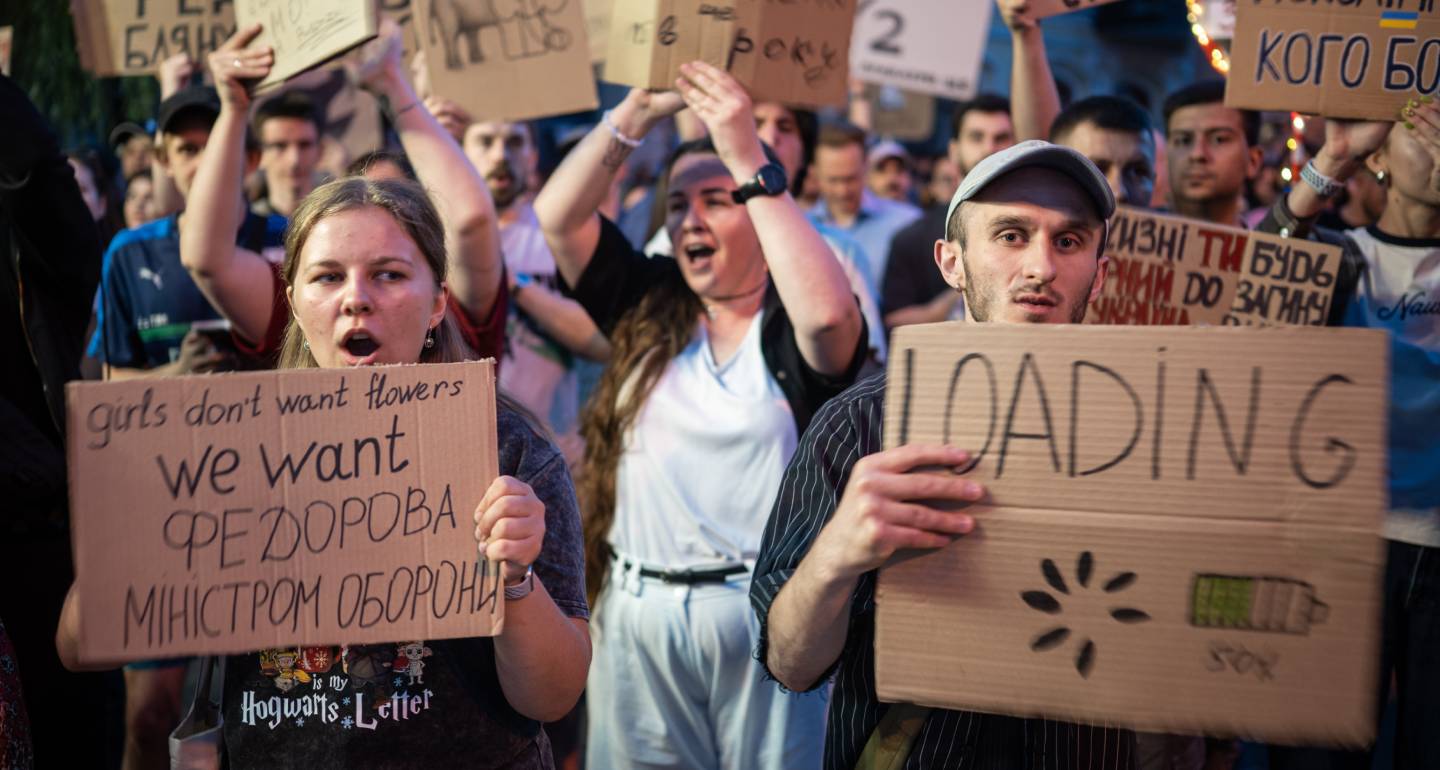
With his public call for new elections in Ukraine, ex-defense minister Mykhailo Fedorov has opened Pandora’s box.

Konstantin Skorkin

In the discussions made possible by the State Duma election campaign, one question is being asked more and more loudly. “What next?”

Andrey Pertsev

Two divergent trends—Putin’s hardline vision of how to prosecute the war in Ukraine, and a growing desire for change in Russia—could tear the regime apart.

Tatiana Stanovaya
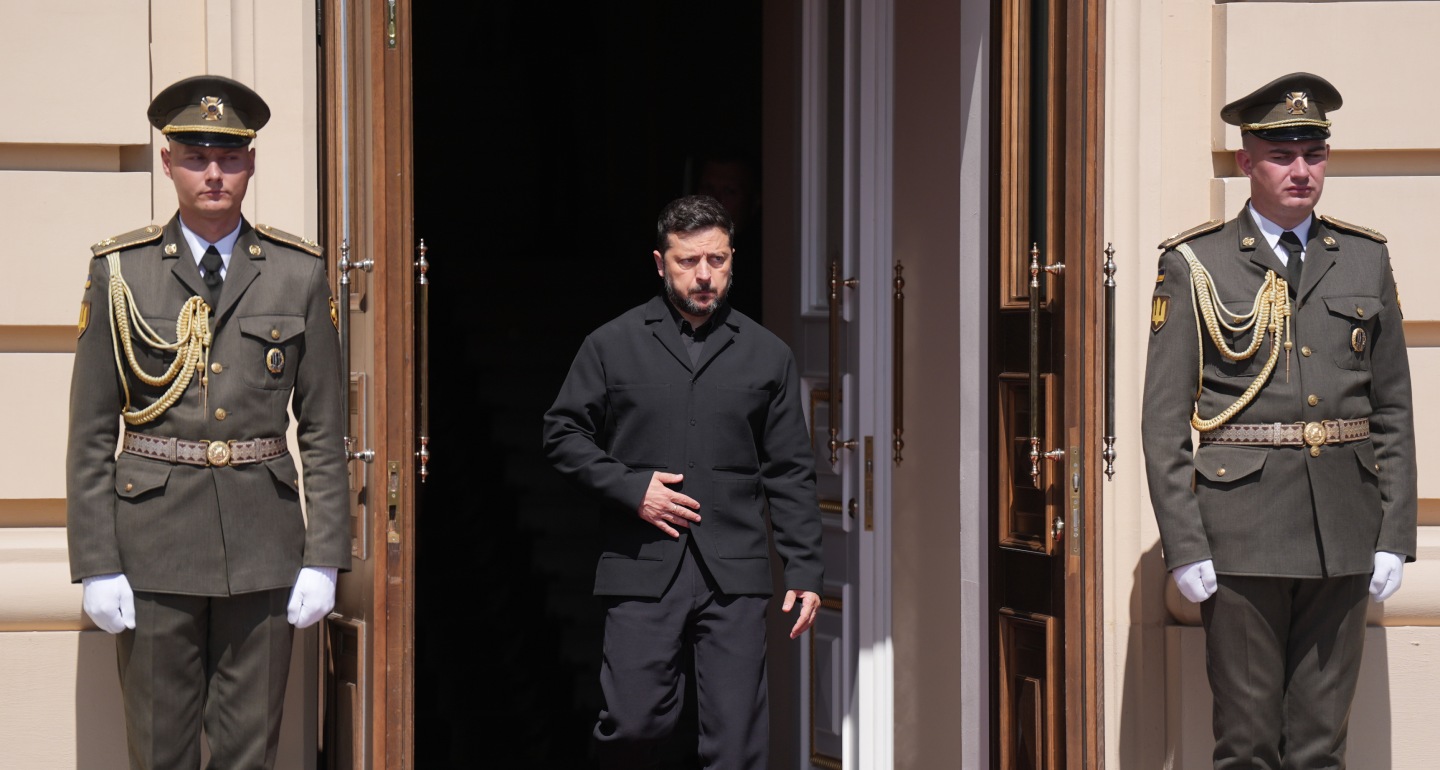
Ultimately, Zelensky sided neither with the reform camp nor with the military establishment as such, but with political control.
Balázs Jarábik