

Research
- +6
Yasmine Farouk, Nathan J. Brown, Maysaa Shuja Al-Deen, …
{
  "authors": [
    "Anouar Boukhars"
  ],
  "type": "other",
  "centerAffiliationAll": "dc",
  "centers": [
    "Carnegie Endowment for International Peace",
    "Malcolm H. Kerr Carnegie Middle East Center"
  ],
  "collections": [],
  "englishNewsletterAll": "menaTransitions",
  "nonEnglishNewsletterAll": "",
  "primaryCenter": "Carnegie Endowment for International Peace",
  "programAffiliation": "MEP",
  "programs": [
    "Middle East"
  ],
  "projects": [],
  "regions": [
    "North Africa",
    "Mali"
  ],
  "topics": [
    "Security",
    "Military"
  ]
}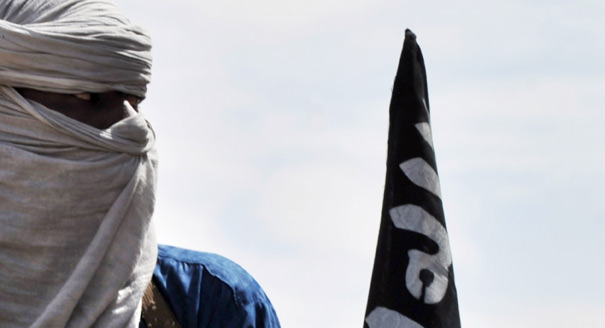
Source: Getty
The January 2013 French intervention in northern Mali has severely degraded the military capabilities of militant organizations. But as violent extremists are being subdued in one area, new hot spots of confrontation are emerging.
Source: FRIDE
The January 2013 French intervention in northern Mali has severely degraded the military capabilities of militant organizations, disrupted their organisational capacities and destroyed many of their sanctuaries. But as violent extremists are being subdued in one area, new hot spots of confrontation are emerging. When forced out of one of their safe havens, transnational terrorist groups such as Al-Qaeda in the Islamic Maghreb (AQIM) just disappear into other peripheral zones of tension. This paper examines how chaotic environments in North Africa are giving new breathing space to a splintered terrorist organisation. Chastened by its many blunders in northern Mali, an off-balance AQIM is trying to shift gear, focusing less on becoming the face of local militancy in North Africa and more on stealthily parasiting local militant organisations without dominating them.The full text of this working paper is available on the FRIDE website.
Former Nonresident Fellow, Middle East Program
Boukhars was a nonresident fellow in Carnegie’s Middle East Program. He is a professor of countering violent extremism and counter-terrorism at the Africa Center for Strategic Studies, National Defense University.
Recent Work


Yasmine Farouk, Nathan J. Brown, Maysaa Shuja Al-Deen, …
Frederic Wehrey, Nathan J. Brown, Bader Al-Saif, …
Carnegie does not take institutional positions on public policy issues; the views represented herein are those of the author(s) and do not necessarily reflect the views of Carnegie, its staff, or its trustees.

Russia’s AI-driven propaganda campaigns operate in a fragmented, chaotic, and often illogical manner. That’s not necessarily a problem for the Kremlin, though: It’s much easier to mimic genuine public debate that way.

Ilya Klishin

Russian strikes are weakening the economy sustaining Ukraine’s war effort. Closing the growing funding gap will require more European support and politically contentious reforms in Kyiv.

Balázs Jarábik

The European far right might fail to steer EU policy in the direction Russia wants, but they will create enough chaos inside Europe to benefit the Kremlin.

Dimitar Bechev

With the growth in points of friction between the great powers, organizations like the SCO will continue to play a role in the strategic adaptation of the smaller powers caught between them.

Temur Umarov

Two divergent trends—Putin’s hardline vision of how to prosecute the war in Ukraine, and a growing desire for change in Russia—could tear the regime apart.

Tatiana Stanovaya