

In The Media
Lilia Shevtsova
{
  "authors": [
    "Lilia Shevtsova"
  ],
  "type": "commentary",
  "centerAffiliationAll": "",
  "centers": [
    "Carnegie Endowment for International Peace",
    "Carnegie Russia Eurasia Center"
  ],
  "collections": [],
  "englishNewsletterAll": "",
  "nonEnglishNewsletterAll": "",
  "primaryCenter": "Carnegie Russia Eurasia Center",
  "programAffiliation": "",
  "programs": [],
  "projects": [],
  "regions": [
    "Russia"
  ],
  "topics": [
    "Political Reform"
  ]
}
Source: Getty
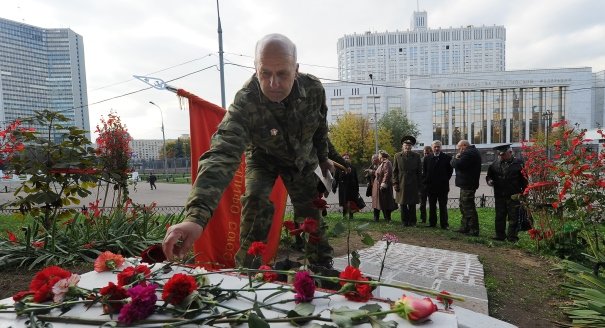
If 1991 opened opportunities for Russia, including a path toward a rule-of-law state and an open society, 1993 closed all options except one: a new system of personalized power.
If you believe that 1991, the year of the collapse of the Soviet Union, was the key date in the history of the post-communist Russia, you are wrong! Indeed, Russia, as a new state was born in late 1991 when the Soviet Union went down. But the Russian system of governance, the way Russia is ruled and the relationship between the state and the society were built two years later—in 1993. We still try to skip over that year choosing not to deliberate on the dramatic developments that preceded the emergence of the new Russian political order. The reasons are clear: we do not want to dwell on violent struggle, on the shooting of the parliament, and the bloodshed in October 1993, especially when we still have not decided who was wrong and who was right in those turbulent times. But you know what—- until we decide what happened in those days and why, and what the 1993 story ramifications were for Russia, we cannot build the new Russian identity and consolidate society. Spaniards became a nation when they found their common truth about their civil war. In October 1993, civil war broke out in Russia. Yes, it was a “small” civil war in one city—Moscow. But it is this civil war that has determined the current Russian trajectory.
The confrontation between the Supreme Soviet, the Russian legislature, and the executive power–President Yeltsin in 1993 had a two year-long story of a deadlock. This deadlock was the result of mutual animosity between Yeltsin and Khasbulatov, the head of the Supreme Soviet, some would say. Then why would these two people from the same team that fought together with the Soviet Center suddenly become enemies? There should be some reasons for that. If one thinks that it was a confrontation between reformers and traditionalists, one does not understand the whole truth. Yes, Yeltsin’s team included liberals and technocrats, but apparatchiks and traditionalists, too. While the Supreme Soviet that became the center of consolidation of populist forces included democrats and people that had their own ideas on how to reform Russia.
Confrontation between the two branches of power that brought dramatic stand-off had structural roots and most certainly it was inevitable. Look for yourselves. The Supreme Soviet was a leftover from the Soviet Union which had one more bizarre level—nearly 1000 strong Congress of People’s Deputies. According to the old constitution the legislature was the key center of power. When Yeltsin was elected and in November 1991 given (by the Congress) emergency powers for one year, the confrontation between the two branches became unavoidable. Both branches followed the inevitable law of monopoly on power. This law bringing about mutual hostility had been strengthened by the mentality of the Russian political class on both sides—with both teams striving to guarantee for themselves monopoly on power. Neither team was ready to sit down and talk, to look for compromises; they were ready to fight for power until the very end and with all means. There was economic motivation for that too—the privatization issue and the attempts of both branches to control it and obtain the jewels of the previously state-owned property.
Could there be a peaceful exit from this deadlock? Theoretically, yes. I have in mind a “zero solution” which meant agreement on the new constitution that would become the basis of a new state with a distribution of functions which would prevent the clashes; voluntary dissolution of the parliament and stepping down of the president; and the new elections in the end of 1993. No one agreed to zero option—neither side was ready to share power. But worth mentioning one fact: it was Yeltsin who had been trying desperately to liquidate the Supreme Soviet and even made unsuccessful attempt to do this in the spring of 1993, and it was Yeltsin who could use the military means to pursue this goal.
Yeltsin tried to disband the Supreme Soviet in spring 1993, but without success. In September, he made a new attempt breaking the deadlock by issuing the Ukaz N 1400, and dissolving the parliament in favor of a presidential rule. The Supreme Soviet decided to resist and fight back. The story ended with Yeltsin shooting at the White House. Even today we don’t know how many people were killed on October 2-4 when the violence broke out in the Moscow streets and during the shelling of the Russian White House. According to official sources, 147 were killed and 372 were injured. But the eyewitnesses speak about hundreds and thousands who were killed and injured.
The tragedy ended with the adoption of the new Constitution that Yeltsin edited himself. This constitution became the foundation of the new state and the new system with the president staying above the fray, unaccountable to anyone and concentrating all means of power. The Russian president would definitely never have any opponent or rival. Even Russian tsars would envy the power of the new Russian monarch. “We need such strong executive to proceed with the reforms,” the Yeltsin’s allies used to say. After the new constitution was adopted, reforms in Russia stalled.
Looking back at these events, one could define them without further hesitation and ambivalence: In September-October 1993 Boris Yeltsin and his team performed a coup d’état that resulted in Russia’s return to an authoritarian system of governance.
True, during Yeltsin’s tenure Russia demonstrated elements of political pluralism and political struggle. But it was dynamism without certain rules of the game and without rule of law—personalized power creates its own laws. Political struggle was a natural consequence of Yeltsin losing his support in the society and of the weakness of his rule.
But Yeltsin created a potentially repressive political machine that waited for a new driver. Yeltsin’s successor used it much more effectively.
If 1991 opened for Russia variety of options, that included a path toward a rule of law state and an open society, 1993 closed all options except one. This option was a new system of personalized power with no checks and balances, and no counterweight to the person sitting in the Kremlin. This was a direct result of the tragic days of October 1993.
The current Russian authorities have a problem with openly defining their attitude to this tragedy and the two sides of the confrontation. But they definitely understand that the way the conflict was resolved formed the new reality which made the current regime possible.
Former Senior Associate, Russian Domestic Politics and Political Institutions Program, Moscow Center
Shevtsova chaired the Russian Domestic Politics and Political Institutions Program at the Carnegie Moscow Center, dividing her time between Carnegie’s offices in Washington, DC, and Moscow. She had been with Carnegie since 1995.
Recent Work
Lilia Shevtsova
Lilia Shevtsova
Carnegie does not take institutional positions on public policy issues; the views represented herein are those of the author(s) and do not necessarily reflect the views of Carnegie, its staff, or its trustees.

Blurring the line between humans and animals is a long-standing tradition in social utopian prose. In his latest novel, Leonid Bershidsky reminds us that in social experiments, people are often treated no differently than animals.

Alexander Baunov

In the tenth year of his presidency, President Mirziyoyev’s system is becoming even more personalized than that of his predecessor Karimov.

Galiya Ibragimova
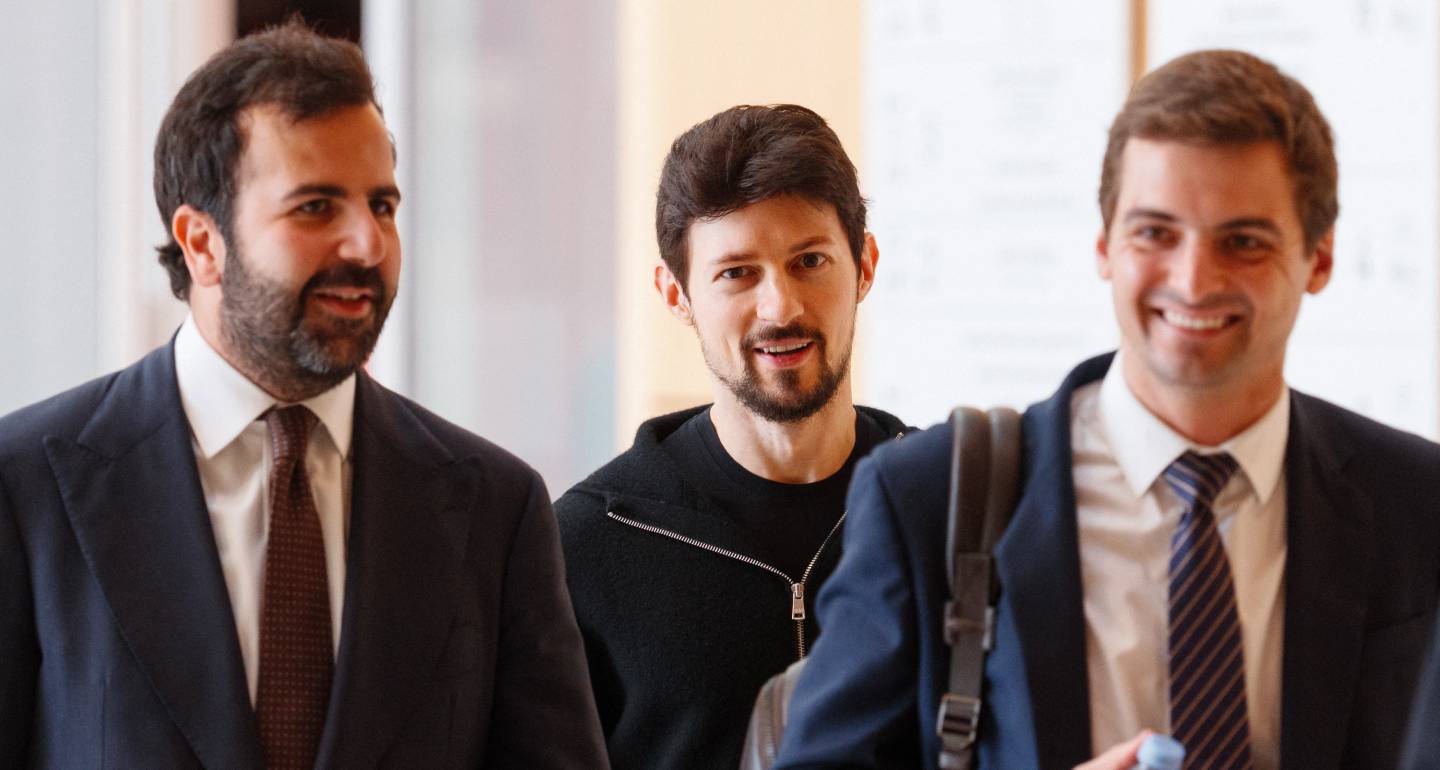
While France and Australia are seeking to establish the legal obligations of messaging apps like Telegram, Russia wants total subordination.

Maria Kolomychenko
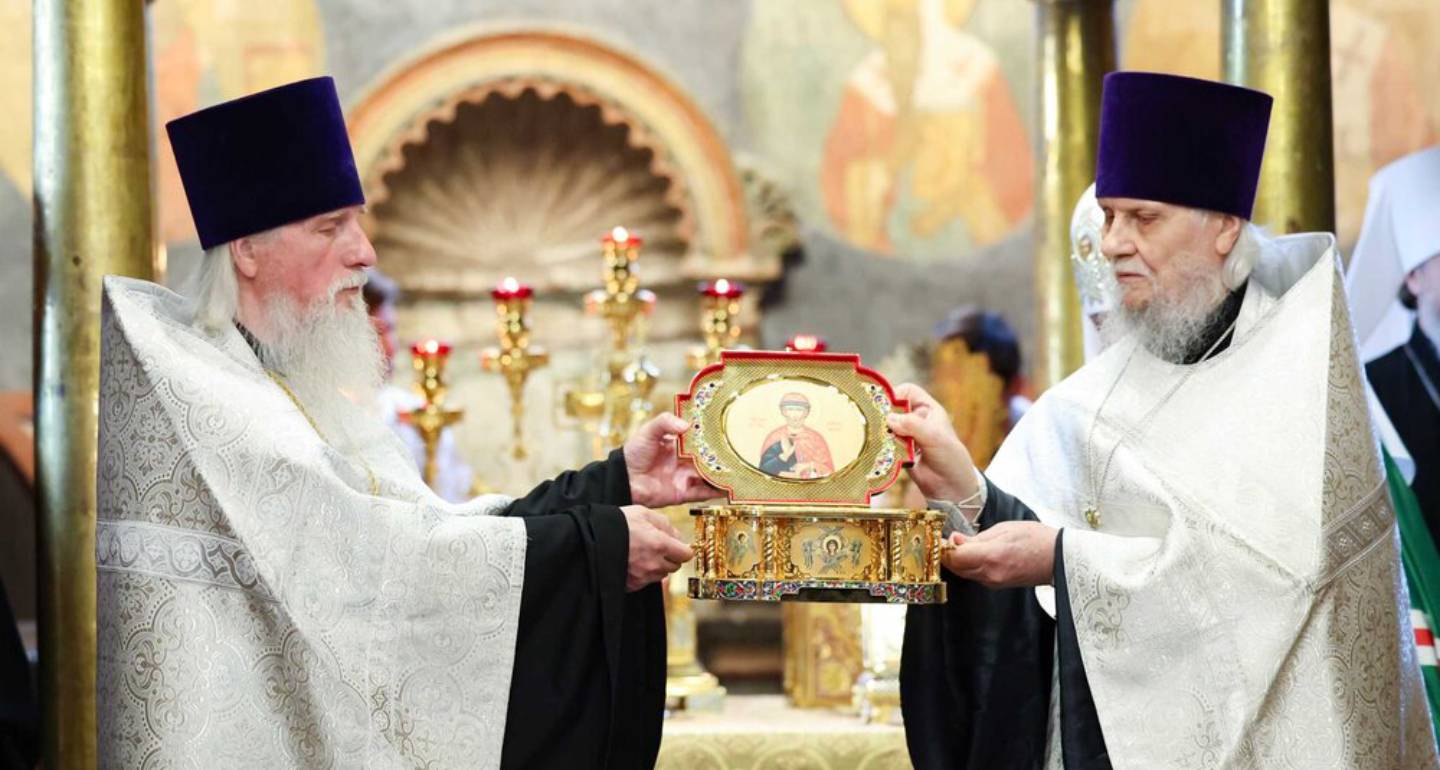
The recent uncovering of Dmitry Donskoy’s relics in the Cathedral of the Archangel is yet another attempt by the Russian Orthodox Church to help the state solve its problems. However, parroting the state’s version of Russian history leaves the Church with no message except “patriotism.”
Alexander Zanemonets

With the growth in points of friction between the great powers, organizations like the SCO will continue to play a role in the strategic adaptation of the smaller powers caught between them.

Temur Umarov