

Commentary
Evan A. Feigenbaum
{
  "authors": [
    "Evan A. Feigenbaum"
  ],
  "type": "legacyinthemedia",
  "centerAffiliationAll": "dc",
  "centers": [
    "Carnegie Endowment for International Peace"
  ],
  "collections": [],
  "englishNewsletterAll": "asia",
  "nonEnglishNewsletterAll": "",
  "primaryCenter": "Carnegie Endowment for International Peace",
  "programAffiliation": "AP",
  "programs": [
    "Asia"
  ],
  "projects": [],
  "regions": [
    "East Asia",
    "China"
  ],
  "topics": [
    "Economy"
  ]
}
Source: Getty
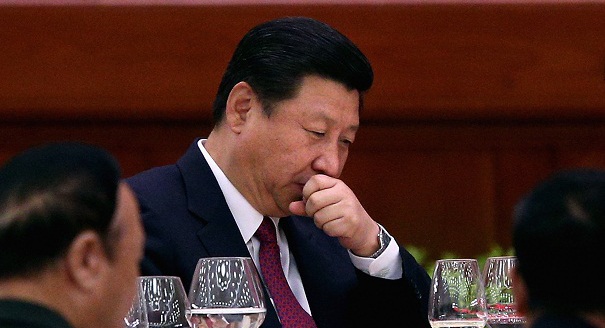
The central issue to be addressed by the Third Plenum is the proper role of the state in China, including the organization of the state and the relations of the state to markets and to citizens.
Source: CNBC
Carnegie’s Evan Feigenbaum appeared on CNBC to discuss what to look for from the Third Plenum of the 18th Chinese Communist Party Congress, which is expected to launch wide-ranging economic reforms. Feigenbaum pointed out that reform is best viewed as a process rather than an event, and that the most important thing to come out of the Plenum will be a sense of the broad direction in which reforms over the coming five years will move. He asserted that the highest priority for the Plenum should be to outline what the role of the state is going to be in the coming years, particularly in three areas: the state's relationship to markets, its relationship to its citizens, and the way in which it is organized. These three areas correspond to three high priority reforms: reducing energy and other factor price distortions, rural land reform to give peasants stronger property rights, and restructuring of the fiscal relationship between the central and local governments. Overall, Feigenbaum said that he sees reason for optimism about the coming reform announcement.

Vice President for Studies
Evan A. Feigenbaum is vice president for studies at the Carnegie Endowment for International Peace, where he oversees work at its offices in Washington, New Delhi, and Singapore on a dynamic region encompassing both East Asia and South Asia. He served twice as Deputy Assistant Secretary of State and advised two Secretaries of State and a former Treasury Secretary on Asia.
Recent Work
Evan A. Feigenbaum
Evan A. Feigenbaum

For every ruble allocated to social policy, health, and education in 2027, double that amount is earmarked for the army, the police, and the security services.

Alexandra Prokopenko

Depleted financial reserves and a shrinking tax base mean it is no longer possible to simultaneously deliver high defense spending, price stability, and economic growth.
Alexandra Prokopenko

With the growth in points of friction between the great powers, organizations like the SCO will continue to play a role in the strategic adaptation of the smaller powers caught between them.

Temur Umarov

A much-discussed disagreement over internet restrictions in Russia was never an existential threat for Putin: It was about elite groups protecting their interests.
Alexandra Prokopenko

The demands of the Kremlin’s war in Ukraine, demographic problems, and public hostility toward Central Asians mean Russia does not have enough workers.
Salavat Abylkalikov