

Commentary
Alexey Malashenko
{
  "authors": [
    "Alexey Malashenko"
  ],
  "type": "commentary",
  "centerAffiliationAll": "",
  "centers": [
    "Carnegie Endowment for International Peace",
    "Carnegie Russia Eurasia Center"
  ],
  "collections": [],
  "englishNewsletterAll": "",
  "nonEnglishNewsletterAll": "",
  "primaryCenter": "Carnegie Russia Eurasia Center",
  "programAffiliation": "",
  "programs": [],
  "projects": [
    "Eurasia in Transition"
  ],
  "regions": [
    "North America",
    "United States",
    "Middle East",
    "Syria",
    "Russia"
  ],
  "topics": [
    "Security",
    "Foreign Policy",
    "Global Governance"
  ]
}
Source: Getty
The agreement on Syria between Russia and the United States turned out to be insufficient. A broader compromise is required to resolve the crisis, particularly between the warring sides in Syria.
The recent visit to Moscow of the Syrian government officials and moderate opposition leaders for consultations related to Geneva II Peace Conference, set for January 22, 2014, gives some cause for optimism. After all, just six months ago, the situation in Syria seemed absolutely hopeless.
Light at the end of the tunnel was lit in May 2013 when the Russian Foreign Minister Sergey Lavrov and the U.S. Secretary of State John Kerry agreed to a peace conference on the Syrian issue.
However, the agreement between these once omnipotent powers turned out to be insufficient. A broader compromise is required to resolve the crisis, particularly between the warring sides in Syria. In addition—and perhaps most importantly—there has to be mutual understanding between half a dozen external actors, including Saudi Arabia, Qatar, Iran, Turkey, and others. One may say that the Syrian conflict reflects the global multi-polarity and in a way suggests that each of the consequent crises will be increasingly harder to resolve.
Of course, the world still somewhat resembles Zbigniew Brzezinski’s Grand Chessboard. Yet the difference now is in the fact that the pieces on this chessboard move by themselves, at their own discretion, rather than upon the will of the chess players sitting across from each other. Also, the pieces are no longer black and white—bishops, rooks, and even pawns are multicolored in an unfamiliar way. The habitual openings, gambits, and endgame combinations are all gone. (The game of the Arab Spring is as if playing itself out on its own.) Chaos, which is extremely hard if at all possible to control, reigns.
Officially, no one wants this chaos. In reality, however, every side is trying to use this troubled time to its advantage, score some points, and raise its profile and influence in the region.
The Syrian conflict is unfolding right in the epicenter of the Middle Eastern and, more broadly, global turmoil. The outcome of Geneva II negotiations may not only give a start to the peace settlement in Syria, but perhaps even more importantly, may define more clearly the correlation of forces in the region and indirectly (or maybe even directly) affect the normalization of the abnormal situation there.
Geneva II will also determine how much Washington influences the current developments, as well as the chances for Moscow’s return to the Middle East. As of today, it looks like the United States is trying to distance itself from the Middle Eastern upheavals, and it will definitely not assume the main responsibility for their consequences. It is actually understandable given the internal problems the United States is facing and the unclear prospects for American policy in Afghanistan. One can even sympathize with the White House in this situation.
On the contrary, Moscow finds itself in a state of unexpected euphoria, which has grown particularly strong after reaching an agreement on the Syrian regime’s chemical weapons that it most actively participated in. The chaos in the region coupled with the American fatigue give Russia a pretext for its return to the Middle East. However, in this case, the Kremlin will have to clearly formulate Russia’s strategic interests in this unpredictable region. Under these circumstances, the outcome of Geneva II becomes twice as important.
Former Scholar in Residence, Religion, Society, and Security Program
Malashenko is a former chair of the Carnegie Moscow Center’s Religion, Society, and Security Program.
Recent Work
Alexey Malashenko
Alexey Malashenko
Carnegie does not take institutional positions on public policy issues; the views represented herein are those of the author(s) and do not necessarily reflect the views of Carnegie, its staff, or its trustees.

Russia’s ruling party would have benefited from Putin appearing as its distant patron, but as an active frontman imposing his views on the public, he has done nothing but harm both the party’s election campaign and the ruling system overall.

Andrey Pertsev

Depleted financial reserves and a shrinking tax base mean it is no longer possible to simultaneously deliver high defense spending, price stability, and economic growth.

Alexandra Prokopenko

Blurring the line between humans and animals is a long-standing tradition in social utopian prose. In his latest novel, Leonid Bershidsky reminds us that in social experiments, people are often treated no differently than animals.

Alexander Baunov
While France and Australia are seeking to establish the legal obligations of messaging apps like Telegram, Russia wants total subordination.

Maria Kolomychenko
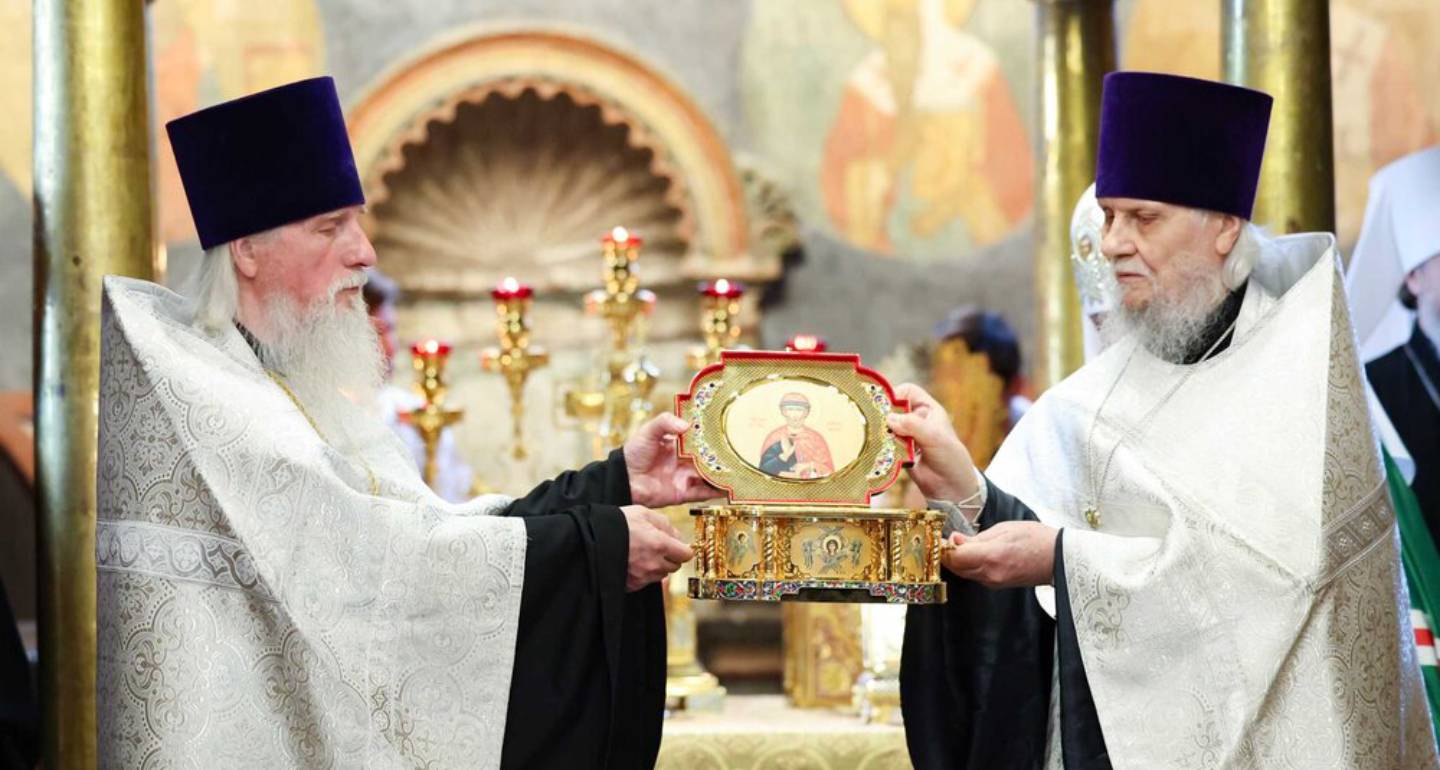
The recent uncovering of Dmitry Donskoy’s relics in the Cathedral of the Archangel is yet another attempt by the Russian Orthodox Church to help the state solve its problems. However, parroting the state’s version of Russian history leaves the Church with no message except “patriotism.”
Alexander Zanemonets