• Research
  • Politika
  • About
Carnegie Russia Eurasia center logoCarnegie lettermark logo
  • Donate
{
  "authors": [
    "Julie Leighton"
  ],
  "type": "commentary",
  "centerAffiliationAll": "",
  "centers": [
    "Carnegie Endowment for International Peace",
    "Carnegie Russia Eurasia Center"
  ],
  "collections": [],
  "englishNewsletterAll": "",
  "nonEnglishNewsletterAll": "",
  "primaryCenter": "Carnegie Endowment for International Peace",
  "programAffiliation": "",
  "programs": [],
  "projects": [],
  "regions": [
    "North America",
    "United States"
  ],
  "topics": [
    "Economy",
    "Foreign Policy",
    "Global Governance"
  ]
}

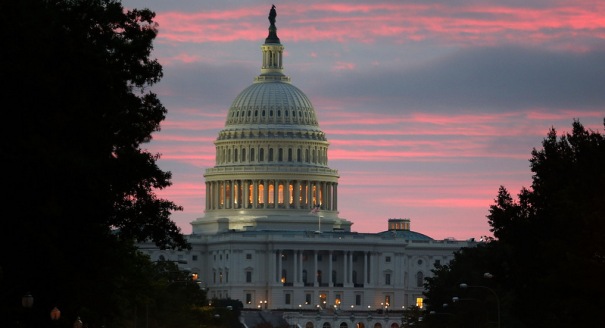
Source: Getty

Commentary

Title VIII: A Worthwhile Expense

Title VIII, also known as the Program for Research and Training on Eastern Europe and Eurasia did not receive funding for the 2013 fiscal year. It has been a proven success in the past. If given the proper funding, Title VIII may continue to be so in the future.

Link Copied
By Julie Leighton
Published on Nov 8, 2013

Title VIII, also known as the Program for Research and Training on Eastern Europe and Eurasia, is a State Department initiative that provides American scholars with grants for language training and research opportunities within either Eastern European or Eurasian area concentrations. It did not receive funding for the 2013 fiscal year. Many programs, including those hosted by the Wilson Center, the American Council of Learned Societies, the Social Science Research Council, and the National Council for Eurasian and East European Research, have been either downsized or canceled.

Why is this significant? Title VIII, and the various institutions that support its grant recipients, work to ensure that scholars have sufficient conceptual and strategic knowledge of the former Soviet space. The idea being that these experts will eventually shape America’s foreign policy within the region and should be trained accordingly. That premise is sound: former grant recipients include Michael McFaul, Condoleezza Rice, and Madeleine Albright.

At a time of mass American budgetary constriction, eliminating programs and cutting funding is to be expected. However, the value of Title VIII’s appropriations in 2012 was roughly 3.5 million dollars. A drop in the bucket.

Budgetary debates aside, from a geopolitical standpoint discontinuing this program seems shortsighted. The state of contemporary American-Russian relations leaves much to be desired. With no signs of improvement in the immediate future, is it logical to cancel a program that boasts so many successful Russia experts as its alumni? Given the tensions between the two countries, should not its continuation be an absolute priority?

Title VIII has been a proven success in the past. If given the proper funding, it may continue to be so in the future. And surely even the slightest possibility of improved relations between the two countries justifies the expenditure.

Julie Leighton is an independent Russian researcher. She was a research assistant at Russia and Eurasia Program at the Carnegie Endowment for International Peace.

About the Author

Julie Leighton

Former Research Assistant, Russia and Eurasia Program

Julie Leighton
Former Research Assistant, Russia and Eurasia Program
EconomyForeign PolicyGlobal GovernanceNorth AmericaUnited States

Carnegie does not take institutional positions on public policy issues; the views represented herein are those of the author(s) and do not necessarily reflect the views of Carnegie, its staff, or its trustees.

More Work from Carnegie Russia Eurasia Center

  • Commentary
    Carnegie Politika
    What Should We Take From Andrey Melnichenko’s Essay in the Economist?

    Andrey Melnichenko’s essay offers no answer to the fundamental question of how, under any kind of negotiated settlement, Europe can protect itself from the Russian ressentiment that is inevitable in all scenarios except for an outright victory for Putin.

      Leonid Bershidsky

  • Commentary
    Carnegie Politika
    Parliamentary Elections in Occupied Ukraine Risk Backfiring for the Kremlin

    Despite unhappiness on the ground, Moscow is determined to use both carrot and stick to ensure there is record support for United Russia in occupied Ukraine.

      Konstantin Skorkin

  • Commentary
    Carnegie Politika
    Lukashenko’s Concessions to Kyiv Reflect Russia’s Weakness

    The recent damage inflicted by Ukrainian drones and missiles on Russia has made Belarus aware of its own vulnerabilities—and surprisingly amenable to Kyiv’s demands.

      Artyom Shraibman

  • Commentary
    Carnegie Politika
    Iran War Fallout Gifts Putin Diplomatic Victory at ASEAN Summit

    Russia looks set to reap economic benefits from closer ties with Southeast Asian countries that are keen to find reliable energy suppliers and diversify trade ties.

      • Alexander Gabuev

      Alexander Gabuev

  • Commentary
    Carnegie Politika
    Simmering U.S.-Iran Conflict Is Moscow’s Ideal Outcome

    Ongoing uncertainty in the Middle East allows Moscow to both increase its influence in Tehran and continue to enjoy the financial windfall of higher oil prices.

      Nikita Smagin

Get more news and analysis from
Carnegie Russia Eurasia Center
Carnegie Russia Eurasia logo, white
  • Research
  • Politika
  • About
  • Experts
  • Events
  • Contact
  • Privacy
  • For Media
Get more news and analysis from
Carnegie Russia Eurasia Center
© 2026 Carnegie Endowment for International Peace. All rights reserved.