

Commentary
Maria Lipman
{
  "authors": [
    "Maria Lipman"
  ],
  "type": "commentary",
  "centerAffiliationAll": "",
  "centers": [
    "Carnegie Endowment for International Peace",
    "Carnegie Russia Eurasia Center"
  ],
  "collections": [],
  "englishNewsletterAll": "",
  "nonEnglishNewsletterAll": "",
  "primaryCenter": "Carnegie Russia Eurasia Center",
  "programAffiliation": "",
  "programs": [],
  "projects": [],
  "regions": [
    "Russia"
  ],
  "topics": [
    "Political Reform",
    "Democracy",
    "Civil Society"
  ]
}
Source: Getty
The aggravation of the human rights situation in today’s Russia is impossible to deny. What makes things worse is that in Russia the political power is above the law.
Tatiana Lokshina, program director for Human Rights Watch Russia, wrote in December last year that "the ongoing crackdown on civil society is truly unprecedented. Today is the worst period for human rights in Russia since the Soviet Union collapsed." The time qualifier is important: even today Putin’s Russia has more freedom—of travel, information, and expression—than the late Soviet Union. To give an idea of the difference: in the Soviet Union private property was outlawed and profit-making was a crime. And yet, Lokshina is right: the aggravation of the human rights situation in today’s Russia is impossible to deny.
Constraints on rights and freedoms are not a new trend in Putin’s Russia, but up until a couple years ago his regime was—not more liberal, but more permissive.
Vladimir Putin's predecessor and anointer, Russia's first President Boris Yeltsin, faced vehement political opposition; his authority was gravely challenged by various political players. Close to the end of his tenure he narrowly escaped impeachment. But he did not try to impose restrictions on political rights or freedom of the print or broadcast media that were at times harshly critical of his policies.
As soon as Vladimir Putin came to power over a decade ago he made it very clear that his vision of governance was that of centralized control. In a matter of just a few years he secured full control over the political scene. The nominally existent democratic checks and balances were radically eviscerated. The legislature, regional leaders, opposition parties, business tycoons and large-audience broadcast media—all were basically subordinated to the Kremlin. Elections were no longer a risky business for the leadership: ever since 2000 the federal level elections had preordained results. Public participation in politics was heavily curtailed; a cancellation of gubernatorial elections was among the most significant steps in this process. The transition from the turbulence and instability of Yeltsin's Russia to Putin's political monopoly mostly drew on manipulative means, with little resort to repression.
While the political realm was securely protected against any unwanted forces or figures, the Kremlin remained relatively permissive as far as other societal activities were concerned. This included various nongovernment organizations and a number of smaller-audience nongovernment media, charitable work and other kinds of volunteer civic initiatives. The environment for such organizations was not auspicious, however the Kremlin, ever apprehensive of any autonomous players, had introduced a broad variety of laws, rules and practices that kept societal forces at the government's discretion. When the Orange revolution broke out in Ukraine in late 2004, the Kremlin tightened the screws lest the Russian people would want to emulate their Ukrainian neighbors. But the Ukrainian example did not inspire unrest in Russia, and after 2008—when Dmitry Medvedev became Russia's "interim" president—the Kremlin grew a bit more lenient. Those years were marked by a sharp rise of civic activism among young urban Russians, equipped with the Internet and the social networks.
Putin's announced comeback to the presidency and the egregiously rigged parliamentary election in late 2011 led to mass protests. The same young urban Russians who had developed civic skills in the previous years took to the streets chanting "Russia without Putin"—a clear message that they would no longer be alienated from politics.
That was exactly the kind of development that Putin's Kremlin had always sought to prevent. The government shifted to a repressive gear as soon as Putin was inaugurated for his third term. What followed was "the ongoing crackdown" that Lokshina wrote about. It included a series of new legislative norms encroaching on rights and freedoms; a nation-wide campaign against nongovernment organizations that received foreign funding; harassment and prosecution of civic activists; the infamous law against "propaganda of nontraditional sexual relations among minors" which has come down to a ban on the visibility or displays of tolerance toward gays and lesbians—to mention just some out of the repressive and intimidating measures.
What makes things worse is that in Russia the political power is above the law. In politically sensitive cases the court rulings are guided not by the law but by the interests of the powers that be. And defendants in such cases cannot count on justice.
Former Scholar in Residence, Society and Regions Program, Editor in Chief, Pro et Contra, Moscow Center
Lipman was the editor in chief of the Pro et Contra journal, published by the Carnegie Moscow Center. She was also the expert of the Carnegie Moscow Center’s Society and Regions Program.
Recent Work
Maria Lipman
Maria Lipman
Carnegie does not take institutional positions on public policy issues; the views represented herein are those of the author(s) and do not necessarily reflect the views of Carnegie, its staff, or its trustees.

Japan’s long-term security policy is driven by concerns about China, and there is little appetite for (or interest in) pursuing a confrontation with Moscow.

James D.J. Brown

The truth of the strategic situation is that Europe and Russia are extremely unlikely to be able to “turn the page” on their confrontation within the next two decades.

Arkady Moshes
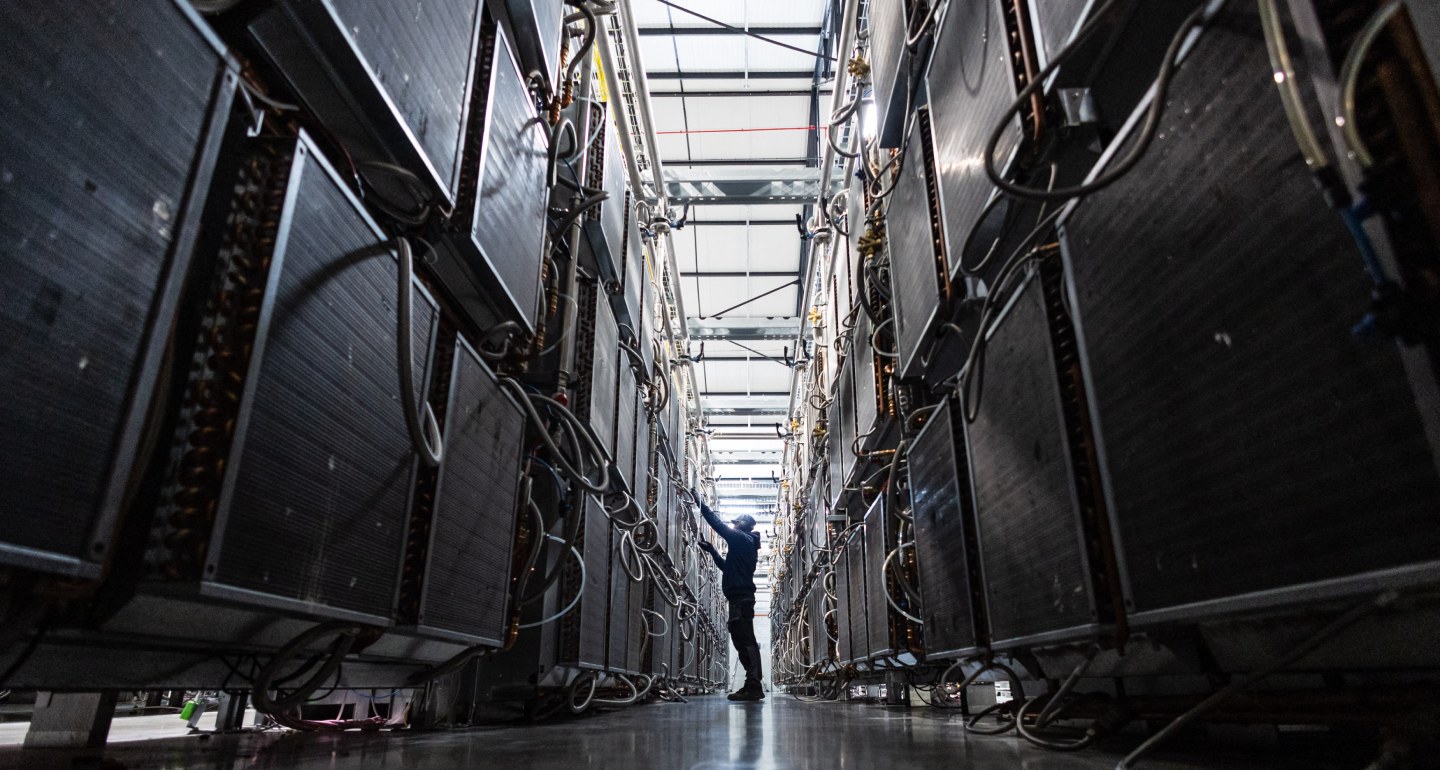
Russia spent years building a “sovereign internet,” concentrating web infrastructure exclusively within Russian territory. Ukrainian drone attacks have shown how vulnerable that approach has left the Russian internet.

Maria Kolomychenko

Putin’s conservative staffing policies and search for ever greater control have cemented parliament’s transformation into a bureaucratic appendage of the executive branch.

Andrey Pertsev

Russia’s AI-driven propaganda campaigns operate in a fragmented, chaotic, and often illogical manner. That’s not necessarily a problem for the Kremlin, though: It’s much easier to mimic genuine public debate that way.

Ilya Klishin