

Commentary
Dmitri Trenin
{
  "authors": [
    "Dmitri Trenin"
  ],
  "type": "commentary",
  "centerAffiliationAll": "",
  "centers": [
    "Carnegie Endowment for International Peace",
    "Carnegie Russia Eurasia Center"
  ],
  "collections": [],
  "englishNewsletterAll": "",
  "nonEnglishNewsletterAll": "",
  "primaryCenter": "Carnegie Russia Eurasia Center",
  "programAffiliation": "",
  "programs": [],
  "projects": [],
  "regions": [
    "North America",
    "United States",
    "Russia",
    "Eastern Europe",
    "Ukraine",
    "Western Europe",
    "Germany"
  ],
  "topics": [
    "Economy",
    "Security",
    "Foreign Policy"
  ]
}
Source: Getty
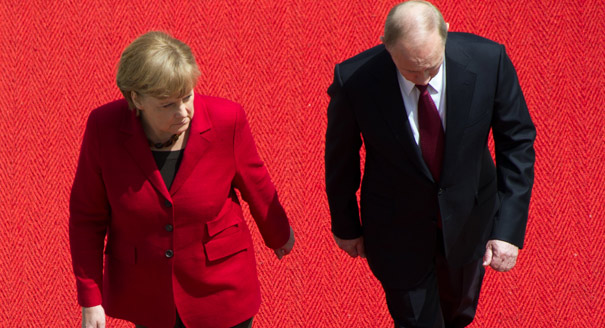
Germany is Europe’s sole emerging power, and potentially a power in Eurasia, and Ukraine is a good place to start working toward its new role. For starters, Germany needs to stop thinking of Ukraine as a U.S.-Russian issue, and assume responsibility there on behalf of the EU as a whole.
Even as new Cold War talk with reference to Russia has become standard elsewhere, the German chancellor Angela Merkel, in an interview with the Frankfurter Allgemeine Zeitung published on Friday, said that she was "convinced that, for the medium and longer term, close partnership with Russia should be pursued." She added that she saw no need either for a new version of Ostpolitik based on containing the Russian power or for bringing back military conscription in Germany. Rather, she opined that Russia would not become a dropout in the globalized world, that sanctions were a tool, not the goal. The Ukraine crisis, the chancellor stressed, should be resolved diplomatically.
This statement comes at an important juncture. The West is running out of symbolic sanctions and faces the prospect of having to apply some real ones, which would hurt Russia, but not leave the West unscathed. The European Union, with its one billion dollars' worth in daily trade with Russia, is expected to deliver the heaviest blow, and to bear the consequences. By contrast, as the respected German diplomat Wolfgang Ischinger said wryly with reference to Senator McCain's home state, Arizona will not lose a single dollar. No burden sharing, there. It is not surprising that the German business community has no intention to amputate part of its business operations—and profits—in the name of some "international duty" imposed on them by Germany's U.S. ally.
Relations with Russia have also undergone a major change. The gratitude to Moscow for letting go of the GDR, and pulling back its massive military forces from East Germany in exchange for a fairly modest compensation is gone with Helmut Kohl. Germany's advocacy of Russia in the councils of the West is gone with Gerhard Schroeder. Angela Merkel's own hopes for a modernized Russia are gone with Dmitry Medvedev's failure to win Vladimir Putin's approval for a second term in the Kremlin. The German media's campaign against "Putin's Russia" has finished off whatever remained of the special German-Russian relationship founded by Gorbachev and Kohl. Except, of course, for the 6,200 German companies doing business in Russia.
Clearly, the "Post-Cold War era" is over for Germany. It is less clear what comes next. Germany may continue with its trademark economic activism and political abdication, which both makes it ever richer and helps avoid clashes with allies. Such a course, however, is increasingly less sustainable in the face of the challenges which Europe is now facing, and not only in the aftermath of the euro crisis. If anything, the Ukraine crisis is Exhibit A in the gallery of disasters rooted in the lack of strategic thinking and leadership in Europe.
Germany may revise its passive abdication in favor of more Cold War activism vis-à-vis Russia. This, however, is rejected by the business community, the social democratic members of the ruling coalition in Berlin, a number of prominent political figures such as former chancellors Schmidt and Schroeder, and a group of "Russland-Versteher," ranking politicians and experts who claim to understand Russia and plead for an understanding with it. Despite the media efforts to the contrary, a surprising share of German public opinion support a moderate course toward Russia, and not only because of the economic gains they do not want to give up. 100 years after the start of World War I and nearly 70 years after the end of World War II, Angela Merkel may not agree with them, but she listens.
This brings us to the crux of the matter. Germany is slowly and carefully growing out of the constraints it had been living with since 1945. It is Europe's sole emerging power, and potentially a power in Eurasia. It knows it needs a continuing alliance with the United States, deepening integration with its EU partners, and a strategic approach toward Russia, China, India, and the rest of Asia. To rise up to the challenge, Berlin will need to develop two qualities rare in today's world: strategic independence and leadership—both on behalf of Germany itself and of Europe.
Ukraine is a good place to start working toward that new role. For starters, Germany needs to stop thinking of Ukraine as a U.S.-Russian issue, and assume responsibility there on behalf of the EU as a whole, canvassing its partners' support for such an engagement. Merkel should let Barack Obama continue with his pivot to Asia, and free up John Kerry's time to deal with the Middle East, while engaging herself to help Ukrainians rebuild their country on an equitable and sustainable foundation. Ambassador Ischinger's appointment as the OSCE facilitator of the intra-Ukrainian dialogue is a useful step, as are Foreign Minister Frank-Walter Steinmeier's revived contacts with Sergei Lavrov. The chancellor, whose differences in worldview with the Russian president are well-known, needs to patiently pursue dialogue with Vladimir Putin on issues ranging from Ukraine and Moldova to energy and arms. Obama has no plans for a one-on-one with Putin in Normandy next month. Merkel has no excuse to miss the opportunity.
Germany's time to step up has come. With abdication no longer an option, the only question is whether it will lead or have to follow.
Former Director, Carnegie Moscow Center
Trenin was director of the Carnegie Moscow Center from 2008 to early 2022.
Recent Work
Dmitri Trenin
Dmitri Trenin
Carnegie does not take institutional positions on public policy issues; the views represented herein are those of the author(s) and do not necessarily reflect the views of Carnegie, its staff, or its trustees.
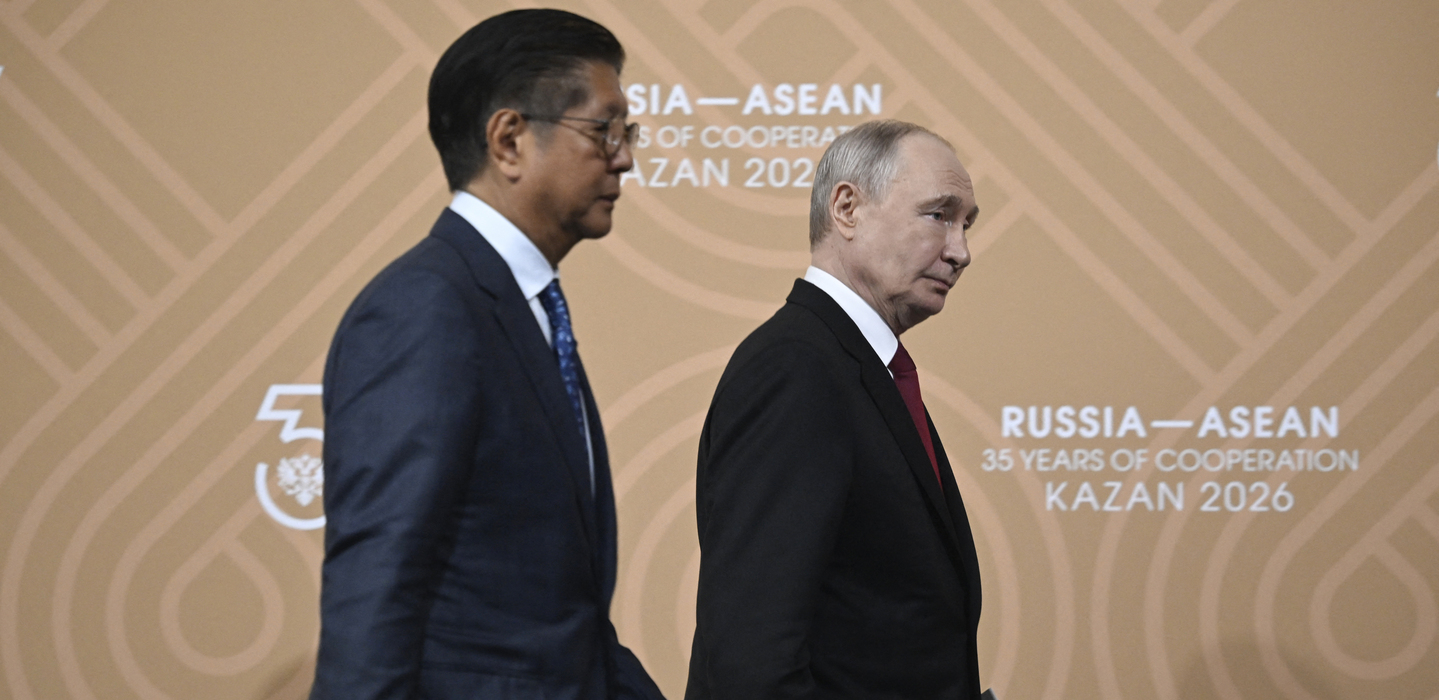
Russia looks set to reap economic benefits from closer ties with Southeast Asian countries that are keen to find reliable energy suppliers and diversify trade ties.

Alexander Gabuev
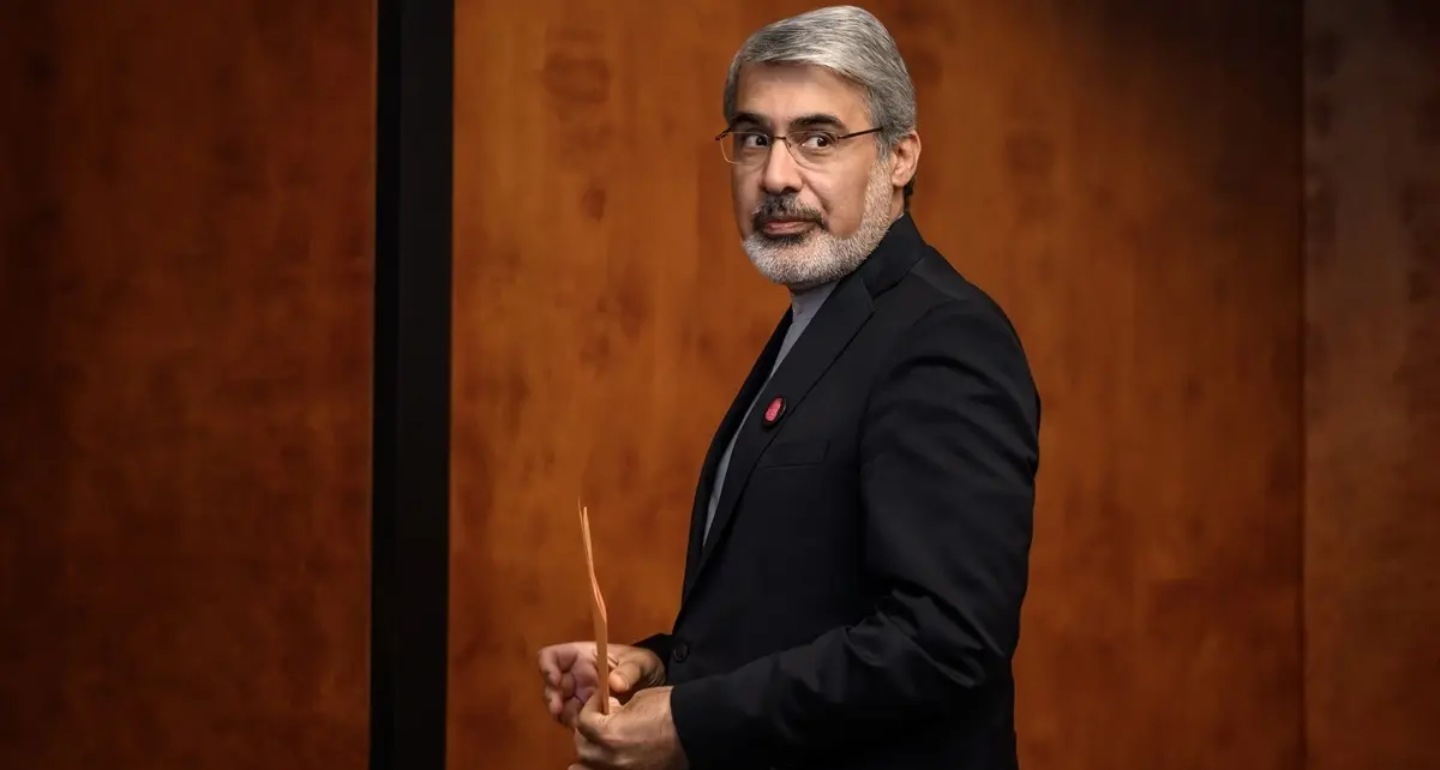
Ongoing uncertainty in the Middle East allows Moscow to both increase its influence in Tehran and continue to enjoy the financial windfall of higher oil prices.

Nikita Smagin
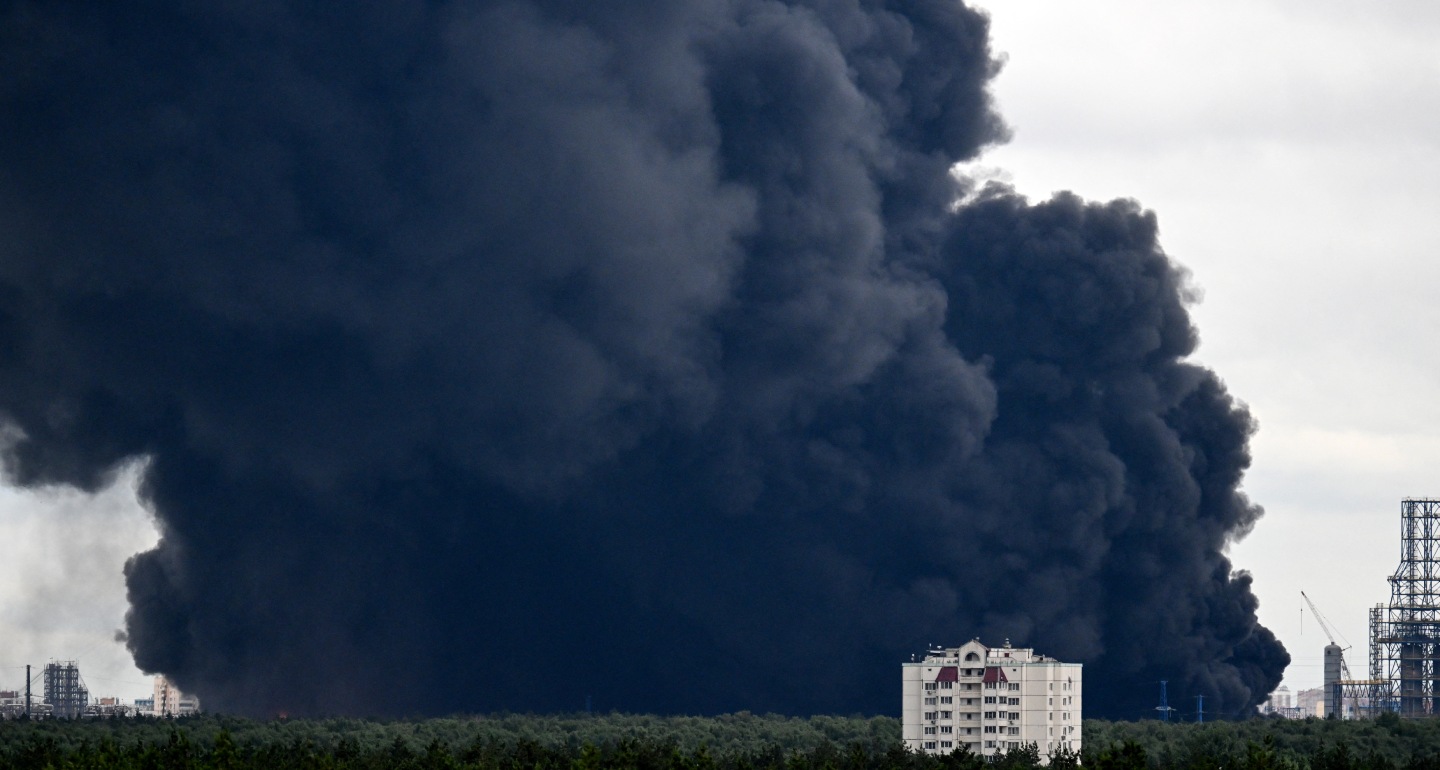
If it proves impossible for the Russian authorities to avoid a gasoline deficit, the question then becomes how they will organize the distribution of a scarce resource.

Sergey Vakulenko
This year’s wars have made alternative routes to transit through Russia no less risky for Central Asian countries.

Galiya Ibragimova
Reestablishing a dialogue with Moscow is not a goal in its own right. The goal is to guarantee the independence of Ukraine and the peace and security of Europe.
Arkady Moshes