

In The Media
Lilia Shevtsova
{
  "authors": [
    "Lilia Shevtsova"
  ],
  "type": "legacyinthemedia",
  "centerAffiliationAll": "",
  "centers": [
    "Carnegie Endowment for International Peace",
    "Carnegie Russia Eurasia Center"
  ],
  "collections": [],
  "englishNewsletterAll": "",
  "nonEnglishNewsletterAll": "",
  "primaryCenter": "Carnegie Russia Eurasia Center",
  "programAffiliation": "",
  "programs": [],
  "projects": [],
  "regions": [
    "Russia",
    "Eastern Europe",
    "Ukraine"
  ],
  "topics": [
    "Political Reform",
    "Foreign Policy"
  ]
}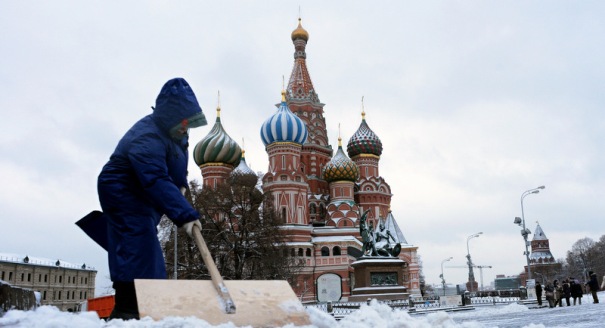
Source: Getty
Putin looks like he will continue to ride the tide he has set into motion for the time being. But amidst his tactical successes the signs of a looming strategic defeat can be already seen.
Source: American Interest
Let’s begin with two broad brushstrokes: First, imagine, if you will, a country whose political establishment and society can’t stop talking about a neighboring country. This country obsesses over teaching its neighbor how to live and angrily punishes it for its disobedience. Moreover, this country and its media are fixated on this neighbor, even to the exclusion of domestic developments. What could we say about such a country? That it has lost its way. That it doesn’t have a feel for its own sense of identity. I’m speaking, of course, about Russia, whose television personalities, politicians, and pundits can’t stop talking about Ukraine and show not the slightest interest in anything happening in Russia itself. Everyone is looking at Ukraine, and Ukraine is the key trigger of Russian emotions, anger, frustration, and longing to demonstrate might and resolve.Second, regarding the national “round tables” in Ukraine that Kiev is trying to host under OSCE auspices in order to resolve its political crisis: Kiev is right not to want to legitimize the separatists by dealing with them. However, the Western governments have been pretty evasive on the issue of who should talk to whom. If the West supports the “federalization” concept endorsed by the separatists, then it would mean the end of Ukraine in its current geographical format.
Putin looks like he will continue to ride the tide he has set into motion for the time being. But amidst his tactical successes we can already see the signs of a looming strategic defeat: The very idea of prolonging one’s rule by attempting to hold one’s country and the world in the past, after all, is in itself a kind of defeat.
So much for the broad brushstrokes. Now let’s add a few finer brushstrokes, step back, and give our landscape a chance to come into view. ...
Read the full text of this article in the American Interest.
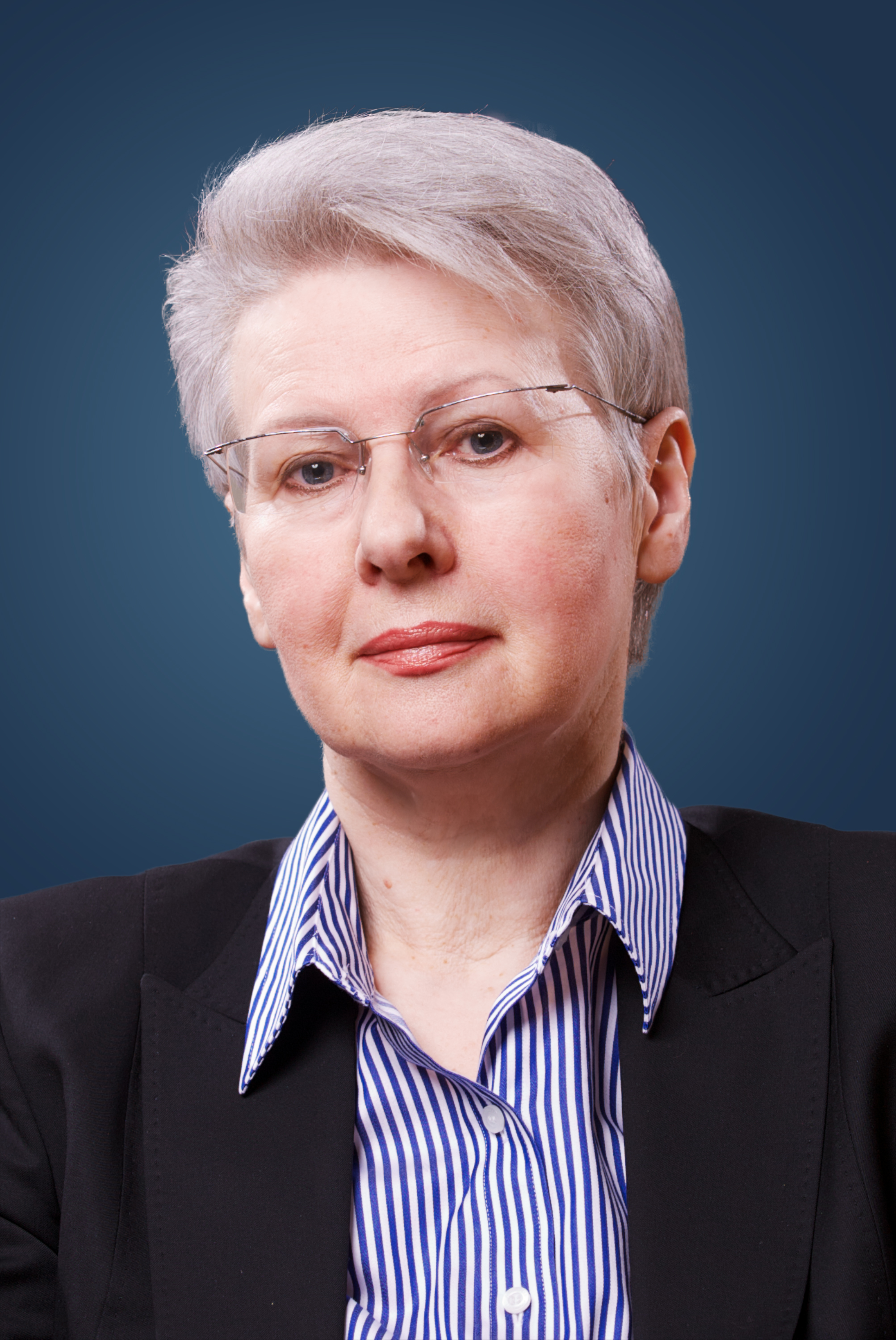
Former Senior Associate, Russian Domestic Politics and Political Institutions Program, Moscow Center
Shevtsova chaired the Russian Domestic Politics and Political Institutions Program at the Carnegie Moscow Center, dividing her time between Carnegie’s offices in Washington, DC, and Moscow. She had been with Carnegie since 1995.
Recent Work
Lilia Shevtsova
Lilia Shevtsova
Carnegie does not take institutional positions on public policy issues; the views represented herein are those of the author(s) and do not necessarily reflect the views of Carnegie, its staff, or its trustees.

If the Russian-speaking community in Latvia cannot articulate their interests without being seen as disloyal, they could end up embracing a pro-Kremlin agenda.

Sergejs Potapkins

Russia’s ruling party would have benefited from Putin appearing as its distant patron, but as an active frontman imposing his views on the public, he has done nothing but harm both the party’s election campaign and the ruling system overall.

Andrey Pertsev

Depleted financial reserves and a shrinking tax base mean it is no longer possible to simultaneously deliver high defense spending, price stability, and economic growth.

Alexandra Prokopenko

Blurring the line between humans and animals is a long-standing tradition in social utopian prose. In his latest novel, Leonid Bershidsky reminds us that in social experiments, people are often treated no differently than animals.

Alexander Baunov

In the tenth year of his presidency, President Mirziyoyev’s system is becoming even more personalized than that of his predecessor Karimov.

Galiya Ibragimova