

Commentary
Alexey Malashenko
{
  "authors": [
    "Alexey Malashenko"
  ],
  "type": "commentary",
  "centerAffiliationAll": "",
  "centers": [
    "Carnegie Endowment for International Peace",
    "Carnegie Russia Eurasia Center"
  ],
  "collections": [],
  "englishNewsletterAll": "",
  "nonEnglishNewsletterAll": "",
  "primaryCenter": "Carnegie Russia Eurasia Center",
  "programAffiliation": "",
  "programs": [],
  "projects": [
    "Eurasia in Transition"
  ],
  "regions": [
    "North America",
    "United States",
    "Middle East",
    "Iran",
    "Syria",
    "Russia"
  ],
  "topics": [
    "Political Reform",
    "Security",
    "Foreign Policy",
    "Global Governance"
  ]
}
Source: Getty
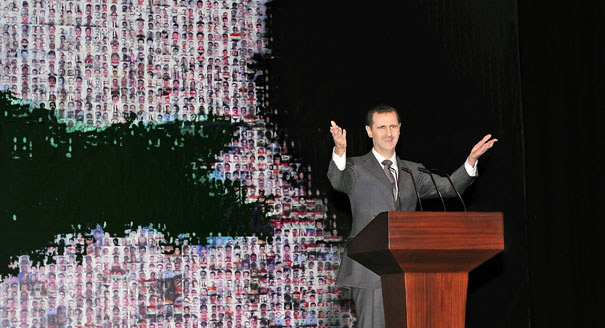
The June 3 Syrian vote is unlikely to radically change or improve the situation in the country. Rather, Bashar al-Assad’s re-election may only worsen it.
What do the June 3 presidential elections in Syria represent?
For President Bashar al-Assad, they are:
For Assad’s adversaries, both inside the country and abroad, the elections point to:
Russia and Iran recognize the legitimacy of the upcoming elections (Russia is sending its observers there), while the United States, Europe, and most Arab countries do not share this view. Indeed, conducting elections in the midst of a civil war that has claimed more than 150,000 lives looks controversial and inappropriate. Besides, as of today, around two million Syrians have left their country, and another seven million are displaced inside Syria. It is hard to tell how much of the country’s territory is controlled by Assad or the opposition. The three presidential candidates are running a purely pro forma race. Two of them—parliament member Maher Abdel Hafiz Hajjar and former minister Hassan Abdulla al-Nouri—have no chance of winning. The third candidate’s name is Bashar al-Assad. The June presidential elections thus look like a theater of absurdity.
As for the Kremlin, it finds itself in a bind right before and during the presidential elections. On the one hand, Moscow has no chance but to recognize their legitimacy. However, Assad's victory may lend him an air of even greater invincibility and independence from Russia. (He has not always heeded Moscow's advice in the past, either.)
Thus, paradoxically, Moscow may hold even less sway over the Syrian president now. Besides, Russia cannot get along with the Syrian opposition. I am not talking about the Islamic radicals here; it is impossible for Moscow to deal with them a priori. But neither can it find common ground with the secular liberal opposition, which is ready to work with the Kremlin if it abandons its unconditional support for the Assad regime. Thus, the Syrian elections will not put an end to Moscow's problems but will simply add another dimension to them.
We will probably never learn the true results of these elections. After all, Assad received 97 percent of the vote in the so-called “referendum of trust” in 2007. Nevertheless, he will actually get the votes of his supporters in the struggle against the opposition. Many of them fear that Assad will be succeeded by Islamic radicals. However, the majority of Syrians will not support Assad.
The situation has also been complicated by the crisis in Ukraine, which drastically escalated the tensions between the external actors in the Syrian crisis—Russia and the West—which are no longer considered partners, as had been the case until recently, but are instead seen as adversaries. Under these circumstances, Moscow may adopt an even harsher stand on the Syrian issue. We should also keep in mind that Russia, which values its relations with Iran quite highly, is embracing the Iranian position on this issue.
The disagreements between Russia and the United States on whether the elections should actually take place are rather telling. Washington sees the elections as an obstacle to the Geneva III negotiations, while Moscow believes that they will stimulate further negotiation process. Both positions have some rationale behind them. The Americans believe that fair elections are only possible after the coalition transitional government is formed, which has to be done before the elections. The Russians, on the other hand, think that the elections will in fact help to stabilize the situation, which will create preconditions for reconciliation and the formation of transitional government.
All in all, the June 3 vote is unlikely to radically change or improve the Syrian situation. Rather, Bashar al-Assad’s re-election may only worsen it.
Former Scholar in Residence, Religion, Society, and Security Program
Malashenko is a former chair of the Carnegie Moscow Center’s Religion, Society, and Security Program.
Recent Work
Alexey Malashenko
Alexey Malashenko
Carnegie does not take institutional positions on public policy issues; the views represented herein are those of the author(s) and do not necessarily reflect the views of Carnegie, its staff, or its trustees.
Though Orban is gone, Putin can still count on some like-minded individuals in Central and Eastern Europe. However, they will seek to avoid open confrontation with EU institutions over Ukraine and their ties with Moscow.

Dimitar Bechev
The truth is that Japan’s government is seeking a degree of reengagement but at a vastly reduced level than under Abe. Most significantly, Japan has shown no willingness to ease sanctions.

James D.J. Brown
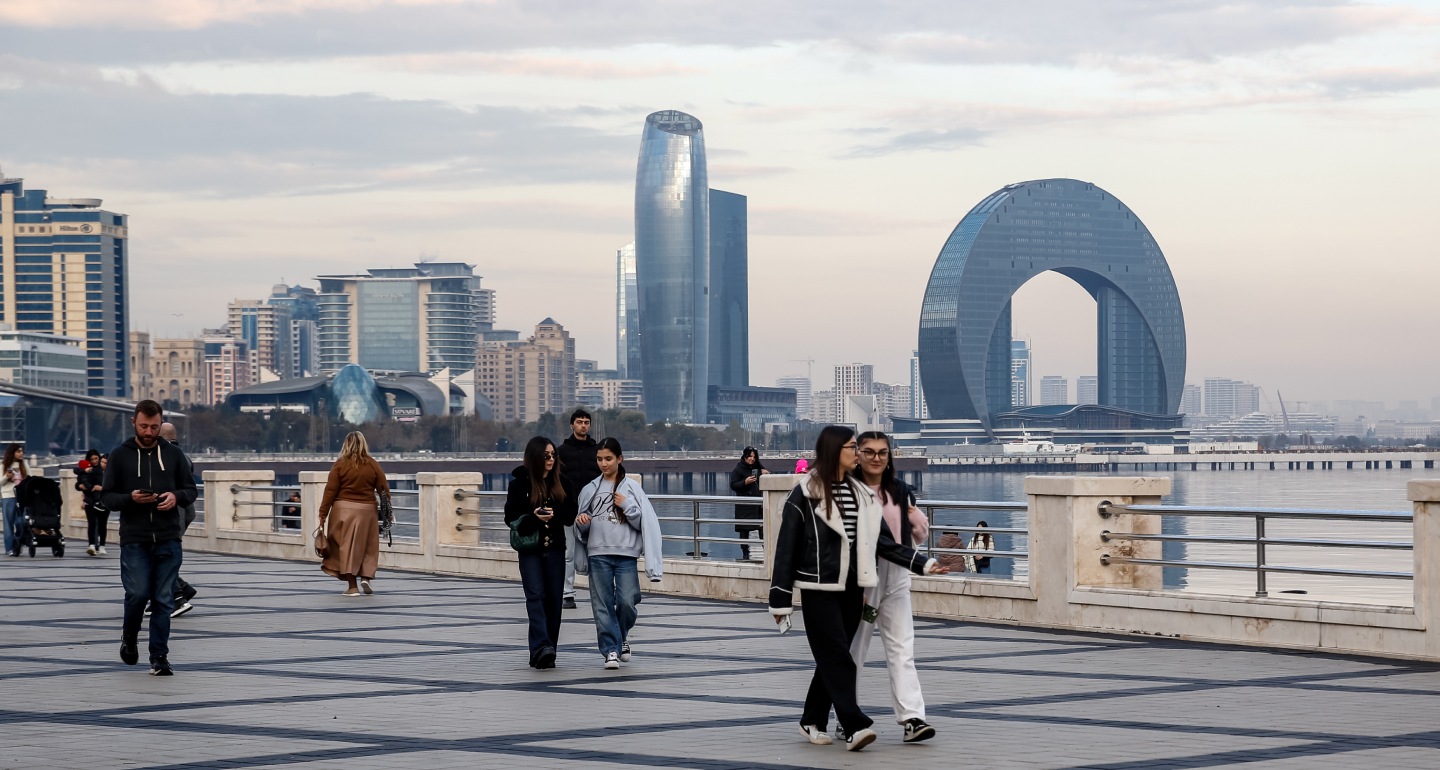
Azerbaijan’s relations with the EU appear to be going from strength to strength after several years in the deep freeze following the military escalation in Karabakh in 2023 and Azerbaijan’s bitter fallout with France and several other EU member states.
Shujaat Ahmadzada
The cost of air defense has become an unregistered tax on revenue for businesses. While military rents are consolidated in the federal budget, the costs of defense are being spread across the balance sheets of companies and regional governments.

Alexandra Prokopenko

Governments in Estonia, Latvia, and Lithuania want to ensure that a U.S. military withdrawal would not leave them dangerously exposed to a Russian attack.

Sergejs Potapkins