

Commentary
Dmitri Trenin
{
  "authors": [
    "Dmitri Trenin"
  ],
  "type": "legacyinthemedia",
  "centerAffiliationAll": "",
  "centers": [
    "Carnegie Endowment for International Peace",
    "Carnegie Russia Eurasia Center"
  ],
  "collections": [],
  "englishNewsletterAll": "",
  "nonEnglishNewsletterAll": "",
  "primaryCenter": "Carnegie Russia Eurasia Center",
  "programAffiliation": "",
  "programs": [],
  "projects": [],
  "regions": [
    "Caucasus",
    "Russia",
    "Eastern Europe",
    "Ukraine"
  ],
  "topics": [
    "Political Reform",
    "Economy",
    "Foreign Policy"
  ]
}
Source: Getty
If Russia wants to stay in the game of global competition, it has no choice but to work toward becoming a civic nation, a rules-based polity, and a modern economy.
Source: Financial Times
If the Maidan protests and their aftermath did not disabuse Russia of the hope of a Eurasian Union that includes Ukraine, the signing last week of EU association agreements on economics and trade with Ukraine, Georgia and Moldova should have done so. Three former Soviet republics are now linked, however loosely, to the EU.
President Vladimir Putin is discovering that the “Russian world” he often refers to is a soft-power category – geocultural rather than geopolitical or geoeconomic, and that Ukrainians and Russians are not “one people”.
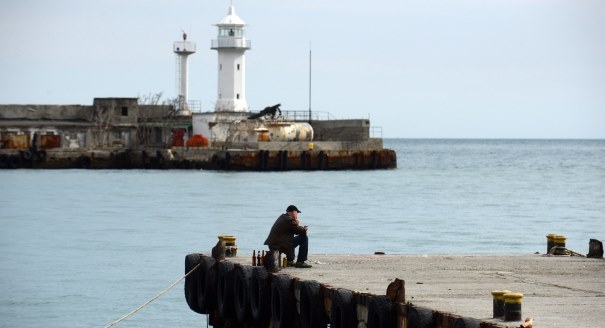
At this point, rather than worrying about what it sees as its losses, Moscow should consolidate its gains.It has managed to reincorporate Crimea, arguably the only part of post-Soviet Ukraine that had a strong affinity with the Russian state. It should work hard to turn the peninsula, particularly its southern coast, into a thriving region, economically on a par with the Greater Sochi area, making it a showcase of Russia’s capacity to develop depressed areas with significant potential for tourism.
It also needs to keep Crimea’s diverse population happy, including the ethnic Russian majority; the ethnic Ukrainian minority (about 25 per cent); and, particularly, the Crimean Tatars (more than 10 per cent), Muslims who regard the territory as their ancestral homeland.
Next, its main strategic interest lies in keeping Ukraine out of Nato – and here the prospects are good. Washington has to balance its global commitments, from the South China Sea to Iraq, and Ukraine is nowhere near the top. Berlin and Paris are adamant neither Ukraine nor Georgia and Moldova should join. London sees no reason to extend the borders of common defence to Russia’s heartland.
Moscow should shift to a longer-term approach to relations with Kiev, switching from using armed rebellion in the eastern region of Donbass as a means of protecting its interests to a broader political strategy involving all of Ukraine. As the Russian defence industry’s ties with Ukrainian contractors grow unreliable, it should seize the chance to create a fully sustainable defence industry within own borders. Russia will also need to adjust its overall trade relations with Ukraine, and do so in full compliance with World Trade Organisation norms and principles.
One clear gain, besides Crimea and Sevastopol, may be the Ukrainians who cross the border into Russia. Sharing a common language and culture, they can be perfectly integrated. Rather than gathering further lands, Moscow needs to gather people from the former Soviet Union who would help it build a motivated and younger workforce, and a greater consumer base. Such a policy should favour those who can contribute the most to its wellbeing – primarily the engineers and other workers producing aircraft engines and missiles, enterprises that used to be important to Russia but face contraction or extinction as Ukraine adapts to the EU’s trading requirements.
The Russian Federation needs to continue its transition from an empire to a continent-size nation state. While it needs more people, it does not need more land. It should not think of the Eurasian Union as a replica of the EU but rather as a kind of North American Free Trade treaty. Economic interest, rather than common ethnicity or shared history, is the glue to seal the new association.
Moscow’s longing, in the past quarter century, to be admitted into the west has suffered a setback: it should see this as a blessing in disguise. With its occidental option closed for now, its choices are clearer than ever. If it embraces a “fortress Russia” concept and practises economic isolation and political repression, it will head for a catastrophe on the scale of the Soviet Union’s. If it turns east, it will make itself a raw materials appendage and a tributary of China, destroying its self-image as a strategically independent power.
If it wants to stay in the game of global competition, it has no choice but to work towards becoming a civic nation, a rules-based polity and a modern economy.
Countries, like people, often do the right thing when all other options are closed. For Russia, the choices have rarely been starker.
This article was originally pubilshed in the Financial Times.
Former Director, Carnegie Moscow Center
Trenin was director of the Carnegie Moscow Center from 2008 to early 2022.
Recent Work
Dmitri Trenin
Dmitri Trenin
Carnegie does not take institutional positions on public policy issues; the views represented herein are those of the author(s) and do not necessarily reflect the views of Carnegie, its staff, or its trustees.
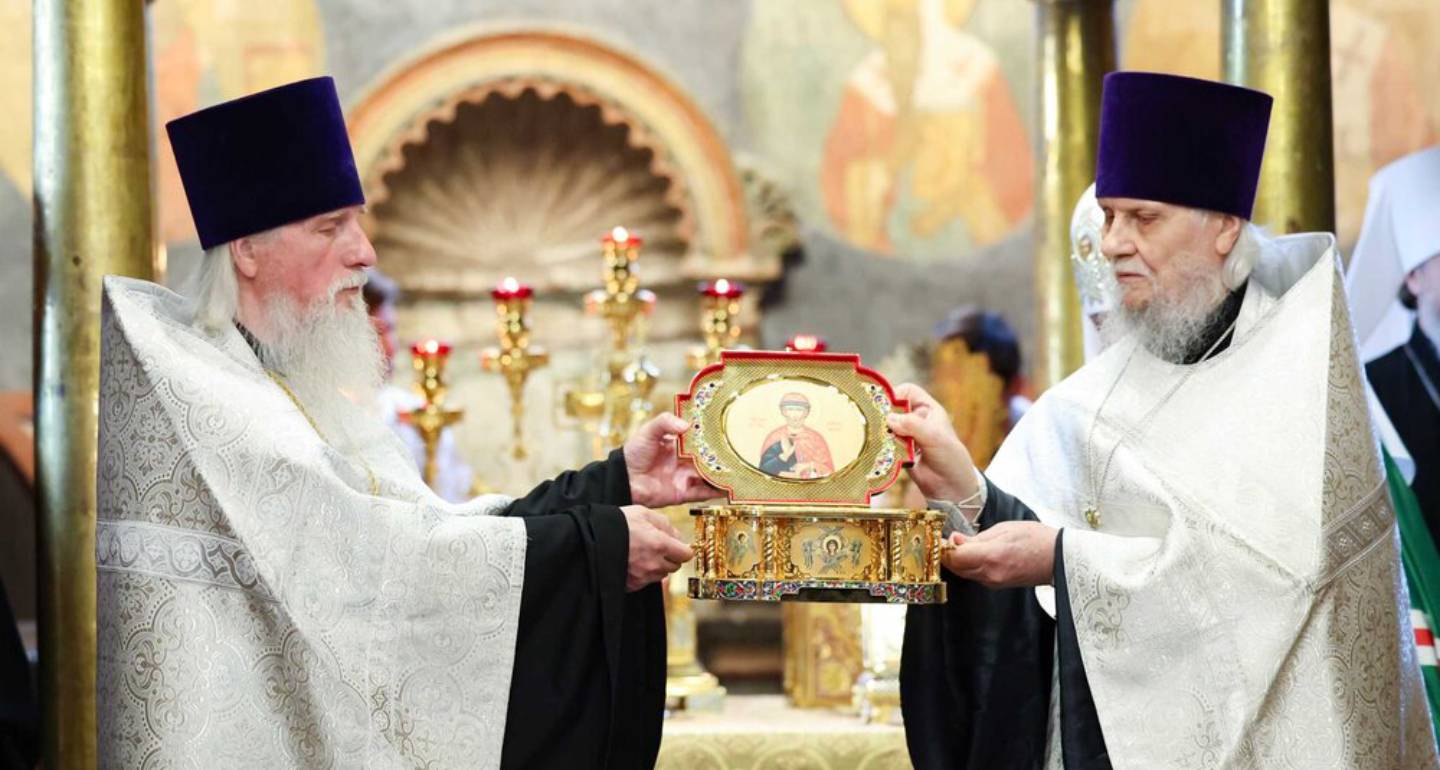
The recent uncovering of Dmitry Donskoy’s relics in the Cathedral of the Archangel is yet another attempt by the Russian Orthodox Church to help the state solve its problems. However, parroting the state’s version of Russian history leaves the Church with no message except “patriotism.”
Alexander Zanemonets

With the growth in points of friction between the great powers, organizations like the SCO will continue to play a role in the strategic adaptation of the smaller powers caught between them.

Temur Umarov
The war in Ukraine and a change in ownership led VK to neglect its commercial ventures in favor of implementing the Kremlin’s online agenda. Now it’s been sanctioned by the EU.

Maria Kolomychenko
A regime founded on force, coercion, and repression does not want its propaganda, with all its flaws of logic, omissions, and outright lies, to be competing with the most simple of all messages: Thou shalt not kill.

Leonid Bershidsky

The greater threat to Zelensky comes not from Fedorov alone, but from the convergence between the former defense minister’s political campaign and the anti-corruption investigations moving ever closer to the presidential administration.

Balázs Jarábik