

Research
- +4
Milan Vaishnav, Rahul Verma, Rukmini S., …
{
  "authors": [
    "Christophe Jaffrelot"
  ],
  "type": "legacyinthemedia",
  "centerAffiliationAll": "dc",
  "centers": [
    "Carnegie Endowment for International Peace"
  ],
  "collections": [],
  "englishNewsletterAll": "ctw",
  "nonEnglishNewsletterAll": "",
  "primaryCenter": "Carnegie Endowment for International Peace",
  "programAffiliation": "SAP",
  "programs": [
    "South Asia"
  ],
  "projects": [],
  "regions": [
    "South Asia",
    "Pakistan"
  ],
  "topics": [
    "Political Reform"
  ]
}
Source: Getty
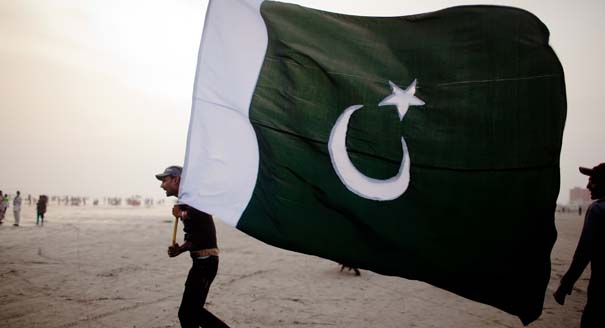
If one goes by the media coverage of Imran Khan’s Azadi March from Lahore to Islamabad, one may conclude that Imran has become the leader of the Pakistani opposition. But it remains to be seen if he can overcome the obvious weaknesses of his strategy.
Source: Indian Express
If one goes by the media coverage of Imran Khan’s Azadi March from Lahore to Islamabad last Saturday — strident, anecdotal and picturesque as it has to be on TV — one may conclude that Imran has become the leader of the opposition, even if this title is officially held by Syed Khurshid Ahmed Shah of the Pakistan People’s Party (PPP). But after a week in Islamabad, including one day and half a night watching the cavalcade and listening to the speeches of Imran Khan and his lieutenants, I could not help but wonder if he can conceal the obvious weaknesses of his strategy.
Khan founded the Pakistan Tehreek-e-Insaf (PTI) in 1996, four years after winning the cricket World Cup. But the party bagged only one seat in 2002, Imran’s own, and boycotted the 2008 elections. The PTI began to gain momentum in 2011 by capitalising on two themes: the defence of national sovereignty vis-à-vis the US (especially the drone strikes in the Pashtun belt) and the fight against corruption, the scourge of Pakistan that had reached new highs under Asif Ali Zardari. In 2011, Khan held a meeting in Lahore attracting about 100,000 people, a turning point.
Imran Khan’s popularity owed largely to the fact that he was in tune with the expectations of many Pakistanis, including the urban middle class and the youth. The formula “Naya Pakistan”, which was extensively used by the Pakistani media to describe the atmosphere of the 2013 elections — that registered a record turnout — was originally the PTI’s campaign slogan. The party, which made inroads in the big cities, came second in Faisalabad and Karachi. It also came second at the national level with 16.7 per cent of valid votes against the 15.1 per cent of the PPP, which was relegated to third position for the first time, but won more seats than the PTI.
The PTI believed that it had been deprived of some seats it had actually won because of rigging and presented its case before the election commission. More than a year after, a very small number of the petitions had been dealt with — and not always in favour of the PTI either. The rigging of the elections was the initial motivation behind the PTI’s mobilization last week, but the Azadi March also targeted the Nawaz Sharif government. Certainly, in one year, Nawaz Sharif has not achieved much. In contrast to his previous government, he has been relatively inactive and even absent. More importantly, he has continued with the patrimonial and even predatory modus operandi of the PPP. In a way, one family has been replaced by another at the helm of Pakistan, since Sharif’s brother is the chief Minister of Punjab. Hence Imran Khan’s formula: the “Sharif monarchy”.The fact that when civilians have been in office two families — Bhutto/ Zardari and Sharif — have alternated in power since 1988 is certainly problematic. This dynastic syndrome helps Khan present himself as an alternative to the establishment. But does that make him a democrat?
First, Khan has shown affinities with Islamic parties, as evident from his defence of the anti-blasphemy law, his discourse on Sharia, his rejection of the Ahmadis and the coalition he has made with the Jama’at-i-Islami to rule the province of Khyber-Pakhtunkhwa. Second, he supported Pervez Musharraf’s government in 2002 during the referendum that gave legitimacy to the would-be president-general. Third, while the PTI attracted some new blood early on, the politicians who joined the party later had long careers behind them — and sometimes dubious records. Some of them have worked closely with Musharraf, including the party spokesperson, Shireen Mazari, Sheikh Rashid (a former PML-N minister who was minister for five years under Musharraf) and Khurshid Kasuri (Musharraf’s minister of foreign affairs). Others have worked with General Zia-ul-Haq, like Javed Hashmi, a former leader of the PML-N and an activist of the Jama’at-i-Islami’s student union before that. In the container transformed into a mobile home that took Imran Khan from Lahore to Islamabad on August 15 were also politicians who were neither new blood nor progressive, like Shah Mahmood Qureshi, former leader of the PML-N and PPP. His father, a big landowner in South Punjab, had already switched allegiance from Bhutto to Zia (who had named him governor of Punjab in 1985), but Qureshi had joined the PPP for a while, becoming minister of foreign affairs in 2008 before shifting to the PTI in 2011.
If Imran Khan is against political dynasties, he can only object to Qureshi’s pedigree. And if he is to promote a new Pakistan, he should be worried about the presence of so many old politicians who are clearly part of the establishment he is attacking. Imran Khan has also received the oblique support of the Chaudhry brothers of the Pakistan Muslim League Quaid-e-Azam (PML-Q), Musharraf’s former party, who are the heirs to an old political family (one more!) that has always been close to the army. Now that they are locked in a rivalry with the Sharifs — their former allies — they appeal today for a national government. While “Inquilab” is the motto, “kursi” is the sub-text of the leaders on the streets of Islamabad today.
In addition to these fundamental contradictions, the immediate political future of Imran Khan is obscured by others which are more tactical. First, he has not left any way out for himself in the present confrontation with Nawaz Sharif, declaring emphatically that he would not leave Islamabad till the prime minister resigns and elections are called. Such a maximalist stand would be sustainable only if he could expect support from the army, the usual referee in such circumstances, which had forced fresh elections three times in the 1980s and 1990s.
Imran Khan may well be in touch with the still-influential former ISI chief Ahmed Shuja Pasha (who may support him in order to put pressure on Nawaz Sharif because the prime minister is trying to put Musharraf on trial, something no armyman can swallow easily). But Imran has probably alienated Raheel Sharif, chief of the army staff, by asking repeatedly for negotiations with the Tehrik-i-Taliban Pakistan (TTP).
Last but not least, Imran Khan has probably displeased some urban middle-class voters who think that his strategy weakens an already fragile democracy. The Azadi March has seen sporadic violence, and if the sit-in that started on Saturday results in some anarchy, the army may eventually have a good excuse to intervene. The urban middle class may also find the timing of the agitation ill-conceived, given the Islamist threat and the economic problems that the country is facing.
However, if Imran Khan wins something in this confrontation by forcing Nawaz Sharif to make at least one substantial concession, he may appear as a hero to other segments — the lower middle class and the poor — which are looking for a saviour and do not believe in the PPP as much as they used to.
Former Nonresident Scholar, South Asia Program
Jaffrelot’s core research focuses on theories of nationalism and democracy, mobilization of the lower castes and Dalits (ex-untouchables) in India, the Hindu nationalist movement, and ethnic conflicts in Pakistan.
Recent Work

Milan Vaishnav, Rahul Verma, Rukmini S., …
Christophe Jaffrelot
Carnegie does not take institutional positions on public policy issues; the views represented herein are those of the author(s) and do not necessarily reflect the views of Carnegie, its staff, or its trustees.

The greater threat to Zelensky comes not from Fedorov alone, but from the convergence between the former defense minister’s political campaign and the anti-corruption investigations moving ever closer to the presidential administration.

Balázs Jarábik
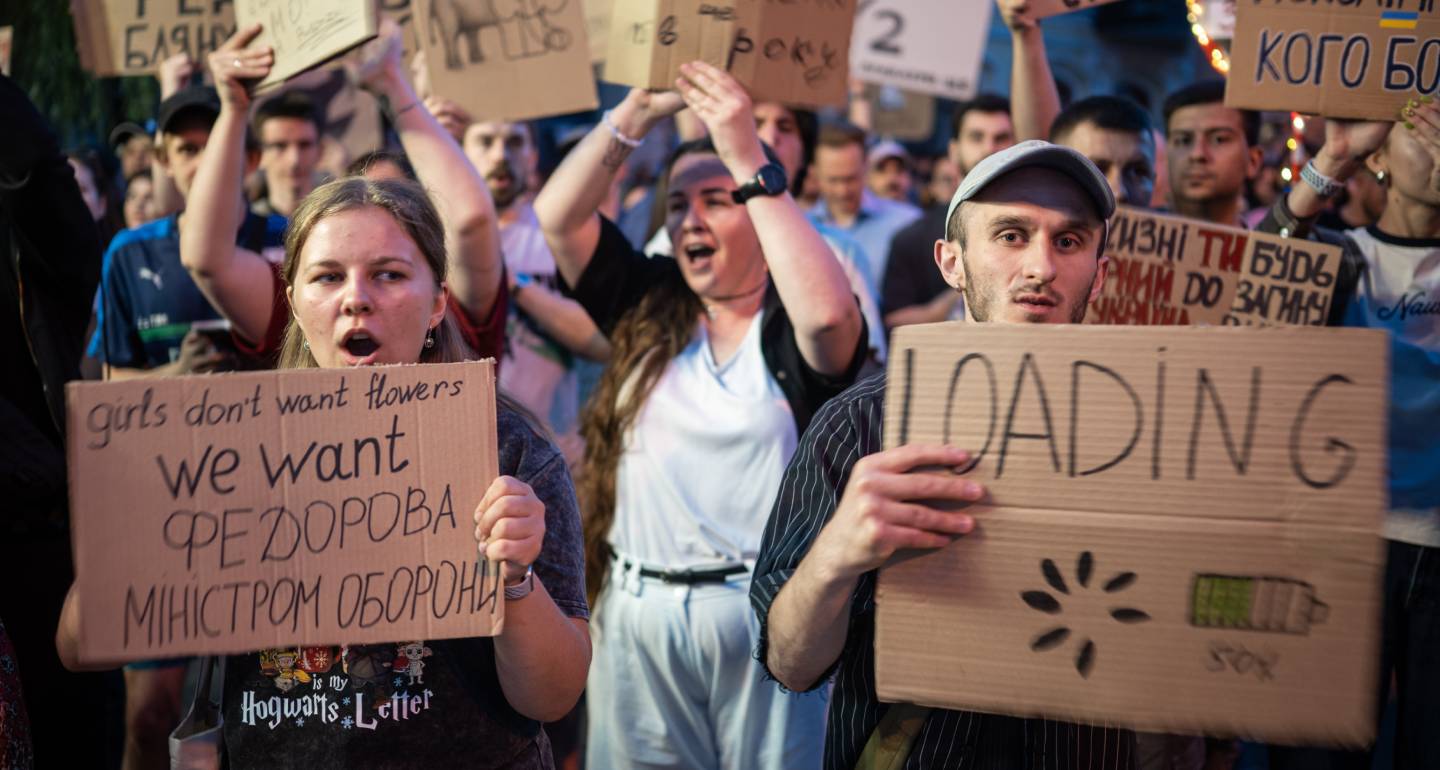
With his public call for new elections in Ukraine, ex-defense minister Mykhailo Fedorov has opened Pandora’s box.

Konstantin Skorkin
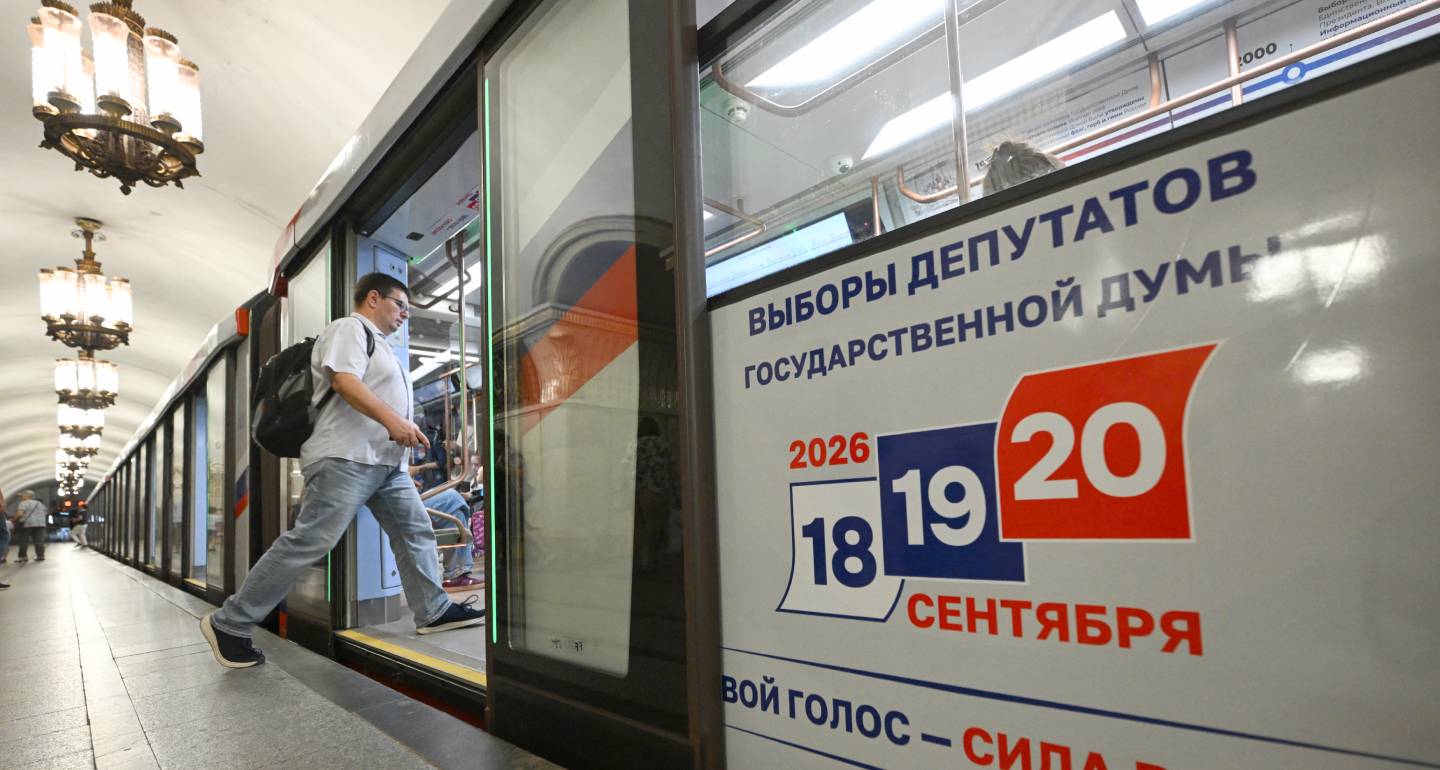
In the discussions made possible by the State Duma election campaign, one question is being asked more and more loudly. “What next?”

Andrey Pertsev

Two divergent trends—Putin’s hardline vision of how to prosecute the war in Ukraine, and a growing desire for change in Russia—could tear the regime apart.

Tatiana Stanovaya
Ultimately, Zelensky sided neither with the reform camp nor with the military establishment as such, but with political control.
Balázs Jarábik