

Paper
Renée DiResta, Rachel Kleinfeld, Margot Treadwell
{
  "authors": [
    "Rachel Kleinfeld"
  ],
  "type": "legacyinthemedia",
  "centerAffiliationAll": "dc",
  "centers": [
    "Carnegie Endowment for International Peace"
  ],
  "collections": [
    "Democracy and Governance"
  ],
  "englishNewsletterAll": "democracy",
  "nonEnglishNewsletterAll": "",
  "primaryCenter": "Carnegie Endowment for International Peace",
  "programAffiliation": "DCG",
  "programs": [
    "Democracy, Conflict, and Governance"
  ],
  "projects": [],
  "regions": [
    "North America",
    "United States"
  ],
  "topics": [
    "Political Reform",
    "Democracy"
  ]
}
Source: Getty
Democracy requires more people to care about the state of their government than their favorite reality tv show. But as government becomes more distant and less relevant, fewer and fewer people show up.
Source: Hill
Some sweep elections call for the losing party to wake up and figure out why it is that voters dislike them. This election is different. It is a wake-up call for our entire nation — a call we refuse at the risk of losing our democracy itself.
The 2014 midterms were less a referendum on a party than a president. President Obama has been found sorely lacking in leadership. Republicans benefited from popular anger. But no party really lost, and no party really won.
Instead, I found as I knocked doors in my (swing) state of Colorado that most voters feel that democracy has nothing to do with them anymore. Neither party listens. Neither party makes a difference to their lives. Neither party has anything concrete to offer, other than a slew of angry ads every two years.Moreover, those voters are right. The renowned political scientist Francis Fukuyama just published a tome titled Political Order and Political Decay: From the Industrial Revolution to the Globalization of Democracy. It charts how countries can become strong and functional, in part by moving from countries that serve a small group of elites to ones that benefit most of their people. But it also charts how states can degenerate and lose their ability to function for their citizens. The United States is one of Fukuyama's examples of such degeneration.
The reasons can be seen in the story of two past sweep elections. In 1984, when President Reagan swept 48 states, Democrats went off and, with the help of the Democratic Leadership Council and its think tank, the Progressive Policy Institute, founded a new centrism. They decided that the party had become too beholden to special interests, and needed to get back to middle-class values and middle-class platform issues. Some called it triangulation, but it was, at least, an effort to appeal to many Americans.
When Democrats swept in 2008, the Republican Party dithered, and their grass roots formed the Tea Party. The Tea Party was a populist movement that sprang from anger at the Republican Party. Willing to destroy their party to get heard, they demanded that someone start paying attention. But drowning government in a bathtub turned out to disable a functional state, and further destroy the ability of our country to lead.
We have an electorate today begging for leadership, and a party system that refuses to lead. In fact, they refuse to even put the issues on the agenda that matter to most people. Gerrymandering has entrenched this two-party system and deepened its dysfunction. In most of our House and state-level races, the winner is predetermined by the district, which has been crafted to skew left or right. This means that rising political leaders have no incentive to reach for the center: Instead, their incentive is to play to their party.
But parties are no longer mass vehicles for citizen participation. They are elite groupings of people who deeply care about politics, most of whom have group or corporate interests to push forward. So parties on both the left and right are beholden: to those who give them money and to those who can bring out the vote. Those groups get listened to; the rest get lip service.
The role of money in politics has been discussed ad nauseum. One thing often left out of the discussion is how money affects politicians' time and social relationships. Fundraising pressures mean that politicians are forced to spend most of their time in rooms with people who give them money. Whether our politicians themselves are elites or not, when they reach Congress they spend most of their time surrounded only by college grads, when fewer than a third of Americans graduate from college. They are surrounded by people for whom a six-figure income is considered a normal salary. Most American families of four earn just over half that much. They hear the well-reasoned arguments of such elites. They become part of that class. Meanwhile, when they fly home for grueling weekends of glad-handing, they must run from event to event, where they hear from the politically mobilized and organized. The lives of most Americans become anecdotes for a speech: intellectually grasped, but not emotionally understood.
Of course, it is not only the politicians' fault. Democracy requires more people to care about the state of their government than their favorite reality tv show. But as government becomes more distant and less relevant, fewer and fewer people show up. Those that come to the table want something. This is how democracy is lost.
From my think tank perch at the Carnegie Endowment for International Peace, I study how countries fall apart and how they can be put back together again. Lesson number one: Don't lose the open, inclusive political institutions you have. They can take generations to rebuild.
The last time America faced this sort of "elite-capture" was at the turn of the last century. A movement of the middle class reduced the influence of money in politics and set America on the road to 20th-century strength — but also reduced the voice of the poor and immigrant classes. It is time for a do-over, to save our democracy again.
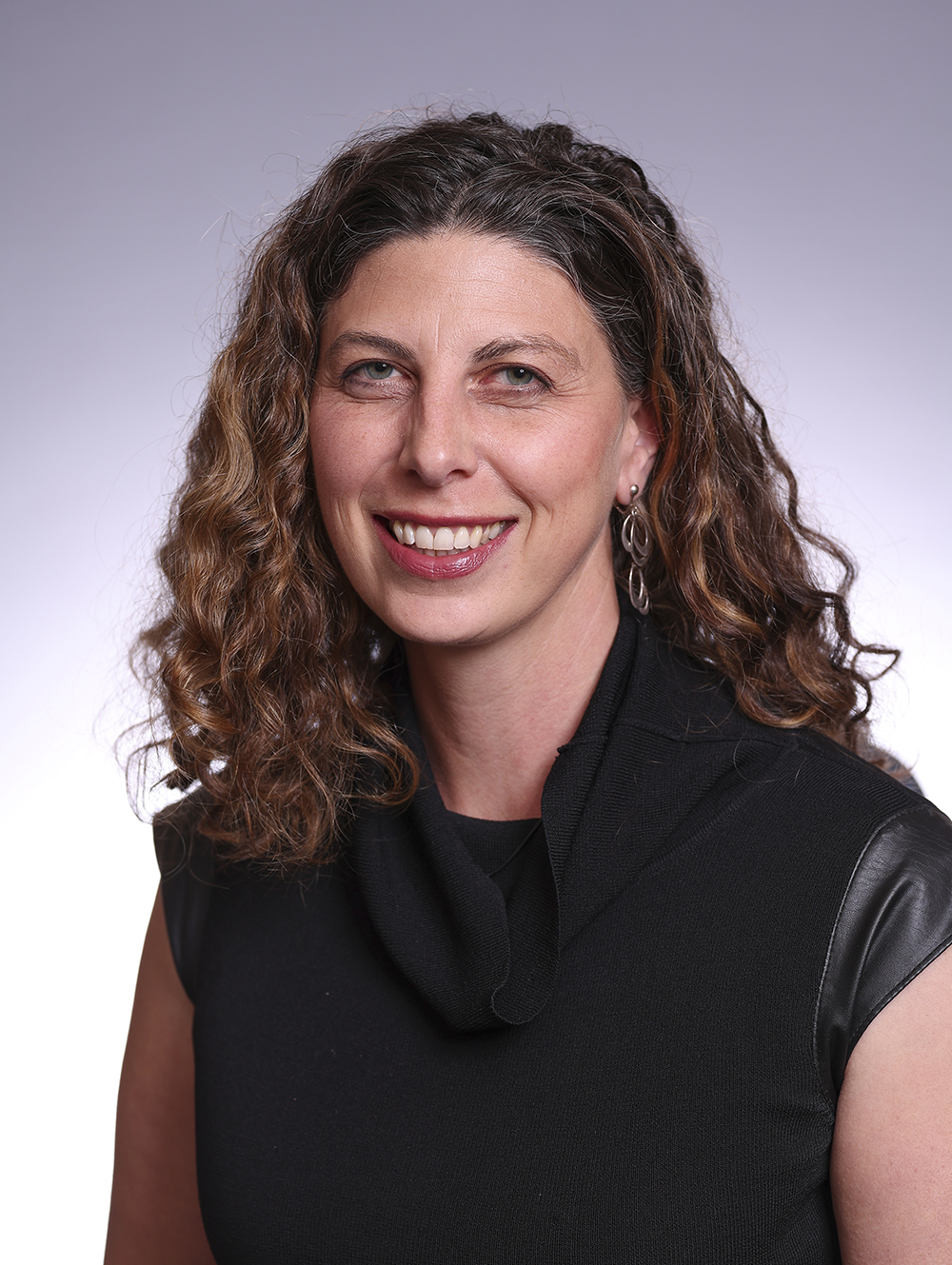
Senior Fellow, Democracy, Conflict, and Governance Program
Rachel Kleinfeld is a senior fellow in Carnegie’s Democracy, Conflict, and Governance Program, where she focuses on issues of rule of law, security, and governance in democracies experiencing polarization, violence, and other governance problems.
Recent Work
Renée DiResta, Rachel Kleinfeld, Margot Treadwell
Political Violence Researchers, Rachel Kleinfeld, ed., Dalya Berkowitz, ed.
Carnegie does not take institutional positions on public policy issues; the views represented herein are those of the author(s) and do not necessarily reflect the views of Carnegie, its staff, or its trustees.

Putin’s conservative staffing policies and search for ever greater control have cemented parliament’s transformation into a bureaucratic appendage of the executive branch.

Andrey Pertsev

Ex-president Gurbanguly Berdimuhamedov remains interested in politics, but his son Serdar, Turkmenistan’s current president, is becoming increasingly independent and willing to break with his father’s legacy. If their covert rivalry goes too far, both risk losing power.

Galiya Ibragimova

Sergei Kiriyenko used Russia’s parliamentary vote to further hone his strategy of corporate mobilization that is designed to maximize votes for United Russia.
Andrey Pertsev

Trump has promised Belarus a massive potash deal. But Minsk is seeking something greater: restored Western transit and greater room for maneuver from Russia.

Balázs Jarábik

The European far right might fail to steer EU policy in the direction Russia wants, but they will create enough chaos inside Europe to benefit the Kremlin.

Dimitar Bechev