

Q&A
Matt Ferchen
{
  "authors": [
    "Matt Ferchen"
  ],
  "type": "legacyinthemedia",
  "centerAffiliationAll": "",
  "centers": [
    "Carnegie Endowment for International Peace",
    "Carnegie China"
  ],
  "collections": [
    "China and the Developing World"
  ],
  "englishNewsletterAll": "",
  "nonEnglishNewsletterAll": "",
  "primaryCenter": "Carnegie China",
  "programAffiliation": "",
  "programs": [],
  "projects": [],
  "regions": [
    "North America",
    "South America",
    "Southern, Eastern, and Western Africa",
    "East Asia",
    "China"
  ],
  "topics": [
    "Economy",
    "Trade"
  ]
}
Source: Getty
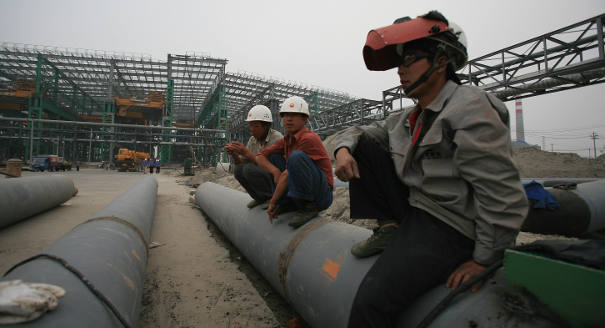
Despite slowing Chinese demand for commodities, countries in Latin America and Africa can still benefit from closer economic ties with China.
Source: Phoenix Weekly
Phoenix Weekly: As China’s global impact increases, its influence in the developing world is also growing, particularly in Africa and Latin America. In China’s eyes, these two regions may appear to be similar, but in fact, as Matt Ferchen argues, they are vastly different. China’s policy of nondiscriminatory diplomacy involves treating countries in different parts of the world as if they were the same, which means that differences between regions are often overlooked when policies are being made.
Ferchen: The overall comparison of China's ties to Latin America and Africa is interesting for a number of reasons. First, both of these regions fit into China’s formal diplomatic framework as “developing country” regions and as such are a high priority for Chinese diplomats and foreign policy thinkers. This is because China has revived an old interest from Mao-era diplomacy in being a leader of the “Third World.” Today this is most clearly expressed in China’s efforts to promote South-South relations, in particular with both Africa and Latin America.
In addition, Latin America and Africa are both clear matches for China’s foreign policy of peaceful development, since both regions have numerous commodity-rich countries that can both supply China with needed natural resources and also offer markets for Chinese investors—a “win-win” cycle of complementary commercial and development engagement. Governments and the general public in both regions are also generally quite receptive to China’s policy of respect for sovereignty and for economic engagement that is largely free of the political terms and other conditions that often come with Western financial and development support.These similarities are a convenient framework for China’s diplomatic and development agendas in Latin America and Africa. At the same time, China’s mistaken notion of regional uniformity does not in fact reflect the major differences that exist between these parts of the world.
Politically speaking, Latin America has embraced democratic governance norms, including constitutional rule of law, in a much more complete way than Africa has. Ironically, in many ways, this has meant that Chinese commercial engagement with Latin America has been far more superficial than Chinese interactions with Africa. Another key political difference is that Latin American countries, with a few important exceptions, face far fewer destabilizing internal conflicts when compared to those that still exist in many parts of Africa.
Latin America and Africa also differ in economic and commercial terms. On average, Latin American countries are much wealthier than their African peers and in fact many of them are wealthier than China on a per capita basis. Moreover, some business practices and investment methods that China has found to be highly effective in some African countries are complete non-starters in Latin America. For example, in Africa it is not uncommon for Chinese firms to bring at least some of their own workers for various state-led investment projects, whereas in Latin America bringing foreign labor is often constitutionally prohibited.
And while China has made a point of emphasizing its own anticolonial track record with both Africa and Latin America, such rhetoric is likely to have a much stronger appeal in Africa than in Latin America. This is because Latin American countries became independent in the early nineteenth century rather than the mid-twentieth century as was the case for most African countries.
As Latin American and African countries enter their second decade of intensifying commercial and diplomatic ties with China, countries in both regions share a common desire to ensure that they do not repeat past cycles of economic or political dependency.
This balancing act is a profound challenge for these countries, but the hope is that regional organizations such as the Forum on China-Africa Cooperation (FOCAC) and the Community of Latin American and Caribbean States (CELAC) can evolve into bodies that effectively represent regional interests vis-à-vis China. Ideally, these institutionalized multilateral dialogues with China will help African and Latin American countries to establish equal and healthy ties with Beijing. For the time being, however, China clearly remains in the driver’s seat of these interactions.
That is to say, in terms of demand, Latin American commodity exporters are still very reliant on China. The slowing Chinese economy, and in particular the country’s slowing demand for minerals like iron ore and copper, is really beyond the control of Latin American exporters, although China still makes up a huge proportion of global demand for those minerals.
Many of South America’s main exporters of iron ore and other minerals are watching China’s reform efforts, in particular urbanization, and wondering if new sources of demand will replace previous ones. Chinese concerns about the air pollution associated with coal-fueled steel plants is another example of a policy campaign in China that may have a significant impact on demand yet remain completely out of exporters’ control. As for Africa, I’m sure that many companies and governments in the region’s mineral- and other commodity-rich countries are also looking anxiously at changes in China’s development speed and trajectory.
Yet despite China’s slackening demand for particular minerals, Latin American and African countries can still benefit from stronger ties with China, at least in certain contexts. For instance, agricultural exporters in both regions are optimistic that the ongoing expansion of China’s middle class will open possibilities for greater trade and investment. In the meantime, developing countries in Africa and Latin America watch closely to see how economic changes in China will affect their own futures.
This article was originally published in Chinese by Phoenix Weekly.

Former Nonresident Scholar, Carnegie-Tsinghua Center for Global Policy
Ferchen specializes in China’s political-economic relations with emerging economies. At the Carnegie–Tsinghua Center for Global Policy, he ran a program on China’s economic and political relations with the developing world, including Latin America.
Recent Work
Matt Ferchen
Matt Ferchen, Anarkalee Perera
Carnegie does not take institutional positions on public policy issues; the views represented herein are those of the author(s) and do not necessarily reflect the views of Carnegie, its staff, or its trustees.

For every ruble allocated to social policy, health, and education in 2027, double that amount is earmarked for the army, the police, and the security services.

Alexandra Prokopenko

Cargo traffic through Russia’s Northern Sea Route has increased because of the disruption caused by the conflict in the Middle East, the Ukraine war, and U.S.-China tensions.

Mikhail Korostikov

Trump has promised Belarus a massive potash deal. But Minsk is seeking something greater: restored Western transit and greater room for maneuver from Russia.

Balázs Jarábik

Depleted financial reserves and a shrinking tax base mean it is no longer possible to simultaneously deliver high defense spending, price stability, and economic growth.
Alexandra Prokopenko

With the growth in points of friction between the great powers, organizations like the SCO will continue to play a role in the strategic adaptation of the smaller powers caught between them.

Temur Umarov