

Paper
Ariel (Eli) Levite, Toby Dalton
{
  "authors": [
    "Ariel (Eli) Levite"
  ],
  "type": "legacyinthemedia",
  "centerAffiliationAll": "dc",
  "centers": [
    "Carnegie Endowment for International Peace",
    "Malcolm H. Kerr Carnegie Middle East Center"
  ],
  "collections": [
    "Iranian Proliferation",
    "U.S. Nuclear Policy"
  ],
  "englishNewsletterAll": "ctw",
  "nonEnglishNewsletterAll": "",
  "primaryCenter": "Carnegie Endowment for International Peace",
  "programAffiliation": "NPP",
  "programs": [
    "Nuclear Policy"
  ],
  "projects": [],
  "regions": [
    "North America",
    "United States",
    "Middle East",
    "Iran"
  ],
  "topics": [
    "Political Reform",
    "Nuclear Policy",
    "Arms Control"
  ]
}
Source: Getty
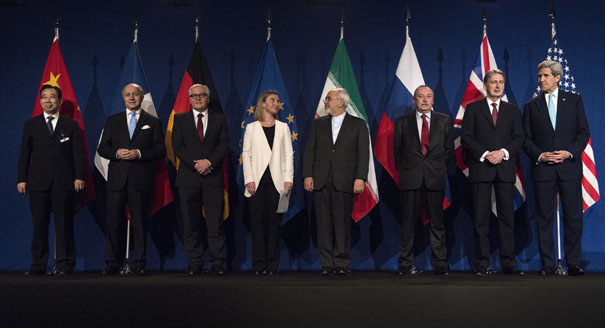
If the parties’ opening positions are used as benchmarks, the parameters of the Joint Comprehensive Plan of Action favor Iran. If the deal is seen through the lenses of their strategic objectives, the picture is far more nuanced.
Source: Norwegian Institute of International Affairs
The ink has barely dried on the recent “Parameters” for a “Joint Comprehensive Plan of Action” (JCPOA), which itself is merely another interim step en route to a fully-fledged comprehensive agreement that may or may not be reached by the end of June and which, furthermore, even if concluded could (certainly if judged in light of the previous agreements with Iran) significantly deviate from its current composition. Already, predictably conflicting narratives between Iran and the US have emerged on what was agreed upon in Lausanne, raising serious questions whether the parameters of the deal as described will survive the ongoing negotiations. Under these circumstances it is challenging to provide a definitive assessment of the agreement in hand.
Nevertheless, how does it look? In our judgment a great deal depends on one’s vantage point. If one is persuaded that the agreement averted imminent Iranian nuclearization and that such prospect would have inevitably unleashed war with Iran, then almost any deal seems preferable. If on the other hand you believe that Iran was not about to resume its pre-2003 Manhattan -type nuclear weapons program and war was a remote prospect, then time need not have been of the essence for the P-5, which in turn casts the achieved outcome in much less favorable light the outcome achieved.This article was published in full in the Norwegian Institute of International Affairs.
Senior Fellow, Nuclear Policy Program, Technology and International Affairs Program
Levite was the principal deputy director general for policy at the Israeli Atomic Energy Commission from 2002 to 2007.
Recent Work

Ariel (Eli) Levite, Toby Dalton
Ariel (Eli) Levite, Toby Dalton
Carnegie does not take institutional positions on public policy issues; the views represented herein are those of the author(s) and do not necessarily reflect the views of Carnegie, its staff, or its trustees.

Putin’s conservative staffing policies and search for ever greater control have cemented parliament’s transformation into a bureaucratic appendage of the executive branch.

Andrey Pertsev

Ex-president Gurbanguly Berdimuhamedov remains interested in politics, but his son Serdar, Turkmenistan’s current president, is becoming increasingly independent and willing to break with his father’s legacy. If their covert rivalry goes too far, both risk losing power.

Galiya Ibragimova

Sergei Kiriyenko used Russia’s parliamentary vote to further hone his strategy of corporate mobilization that is designed to maximize votes for United Russia.
Andrey Pertsev

Trump has promised Belarus a massive potash deal. But Minsk is seeking something greater: restored Western transit and greater room for maneuver from Russia.

Balázs Jarábik

The European far right might fail to steer EU policy in the direction Russia wants, but they will create enough chaos inside Europe to benefit the Kremlin.

Dimitar Bechev