

Commentary
Uri Dadush
{
  "authors": [
    "Uri Dadush"
  ],
  "type": "other",
  "centerAffiliationAll": "",
  "centers": [
    "Carnegie Endowment for International Peace"
  ],
  "collections": [],
  "englishNewsletterAll": "",
  "nonEnglishNewsletterAll": "",
  "primaryCenter": "Carnegie Endowment for International Peace",
  "programAffiliation": "",
  "programs": [],
  "projects": [],
  "regions": [
    "Middle East",
    "North Africa"
  ],
  "topics": [
    "Economy"
  ]
}
Source: Getty
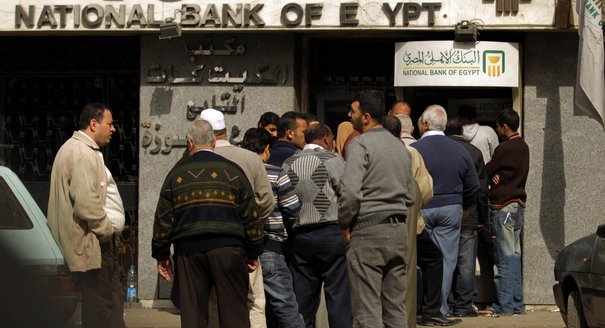
Economic integration is crucial in order to achieve rapid and sustainable growth. However, instabilities in the Middle East and North Africa and the recent plunge in oil prices may stifle economic progress.
Source: OCP Policy Center
Integration into the global economy is essential for rapid and sustained growth, but the countries of the MENA region remain among the least integrated, and were so even before the Arab uprising and the spreading turmoil. To fight poverty and create jobs, the MENA countries must engage in a broad-ranging process of reforms designed to enhance their competitiveness. Trade agreements can provide an important supporting role to this effort, but only if they are part of a wider process of domestic re-forms and they are truly ambitious in scope.
The weak trade performance of the MENA region has been extensively documented and analyzed. Beginning in the early 1990’s, the writer has worked at irregular inter-vals on some 7 or 8 separate examinations of the econo-mic integration of the MENA region and of individual countries in the region, and it is frankly distressing how little the story on trade has changed.There is no doubt that a truly ambitious trade initiative – part of a broad country-driven reform effort designed to improve the business environment and boost productivity – and supported by the region’s main trading partners through enhanced market access and funds - would boost the region’s development prospects. Such a trade initia-tive, one that could conceivably be comparable in scope and ambition to that which propelled the EU’s accession countries, would also lead to accelerated integration with-in the region, bind the region more closely with its Euro-pean neighbors and the United States, create jobs and help reestablish the region’s badly frayed social contract...
This paper was originally published by the OCP Policy Center.

Former Senior Associate, International Economics Program
Dadush was a senior associate at the Carnegie Endowment for International Peace. He focuses on trends in the global economy and is currently tracking developments in the eurozone crisis.
Recent Work
Uri Dadush
Uri Dadush
Carnegie does not take institutional positions on public policy issues; the views represented herein are those of the author(s) and do not necessarily reflect the views of Carnegie, its staff, or its trustees.

Russian strikes are weakening the economy sustaining Ukraine’s war effort. Closing the growing funding gap will require more European support and politically contentious reforms in Kyiv.

Balázs Jarábik

For every ruble allocated to social policy, health, and education in 2027, double that amount is earmarked for the army, the police, and the security services.

Alexandra Prokopenko

Depleted financial reserves and a shrinking tax base mean it is no longer possible to simultaneously deliver high defense spending, price stability, and economic growth.
Alexandra Prokopenko

This year’s wars have made alternative routes to transit through Russia no less risky for Central Asian countries.

Galiya Ibragimova

A much-discussed disagreement over internet restrictions in Russia was never an existential threat for Putin: It was about elite groups protecting their interests.
Alexandra Prokopenko