

Commentary
Ruslan Suleymanov
{
  "authors": [
    "Ruslan Suleymanov"
  ],
  "type": "commentary",
  "blog": "Carnegie Politika",
  "centerAffiliationAll": "",
  "centers": [
    "Carnegie Endowment for International Peace",
    "Carnegie Russia Eurasia Center"
  ],
  "englishNewsletterAll": "",
  "nonEnglishNewsletterAll": "",
  "primaryCenter": "Carnegie Russia Eurasia Center",
  "programAffiliation": "",
  "regions": [
    "Russia",
    "Middle East"
  ],
  "topics": [
    "Global Governance",
    "Security",
    "Foreign Policy"
  ]
}
Source: Getty
Disillusioned with the West over Gaza, Arab countries are not only trading more with Russia; they are also more willing to criticize Kyiv.
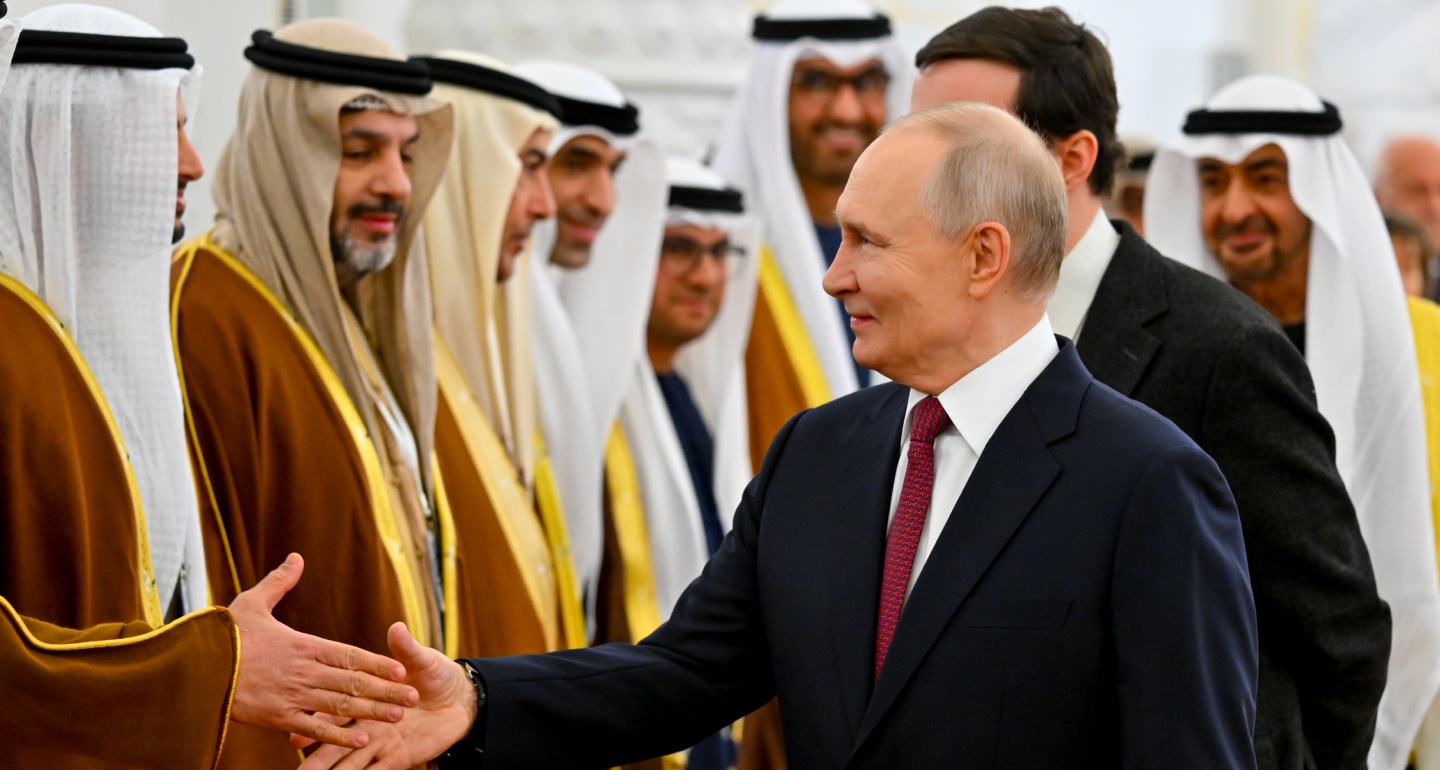
At the beginning of Russia’s full-scale invasion of Ukraine, the Arab world tried to maintain an equal distance from Moscow and Kyiv. However, it has since moved closer to supporting Russia. Western backing for Israel’s actions in Gaza has made it easier for Arab officials to dismiss arguments about the need to ostracize an aggressor nation, while U.S. President Donald Trump’s efforts to engage with Moscow make it much harder for the West to chastise the Arab world for its ties to the Kremlin. Increasingly, relations between Russia and Arab countries are not just economic—they are also political.
In December 2025, the United Arab Emirates issued a strongly worded statement condemning an alleged Ukrainian drone attack on one of the residences of Russian President Vladimir Putin—even though no hard evidence of the attack was ever produced. This was the UAE’s most one-sided intervention in the Russia-Ukraine conflict, and a significant departure from its initial neutrality.
Immediately after the invasion in 2022, most Arab countries either expressed concern or condemned Russia’s aggression outright (statements by Lebanon and Libya are prime examples). While wary of ruining decades-long relationships with Moscow, many Arab officials made gestures of support for Kyiv at international events—in part to preserve their reputation in the eyes of their Western partners, who were backing Ukraine. A resolution passed by the United Nations on March 2, 2022, calling on Russia to withdraw from Ukraine was supported by sixteen Arab countries. Only four abstained or were absent, and the only one to vote against it was Syria (then ruled by President Bashar al-Assad, who was deeply indebted to Moscow for its military support).
Ukrainian President Volodymyr Zelensky was invited to attend a gathering of the Arab League in the Saudi Arabian city of Jeddah in May 2023 (no Russian officials were present). And in the early years of the fighting, some Arab states even provided financial and humanitarian aid to Ukraine. In 2022, for example, the UAE gave Kyiv $100 million. The following year, Saudi Arabia provided $410 million, Kuwait transferred $1 million for generators, and Qatar gifted $100 million for humanitarian needs.
Several Arab countries—in particular Qatar, the UAE, and Saudi Arabia—have taken on mediator roles. Thanks to the efforts of Riyadh, Kyiv exchanged pro-Kremlin politician Viktor Medvedchuk and fifty-five Russians for 215 Ukrainian prisoners of war in 2022. The UAE, meanwhile, has brokered the exchange of almost 5,000 Russian and Ukrainian prisoners, and Qatar was involved in negotiating the release of Ukrainian children illegally seized by Russia.
Over time, however, the attitude of the Arab world toward the fighting has changed—primarily because of disillusionment with Kyiv’s Western allies. The West’s active engagement with Ukraine contrasts with its somewhat more detached stance on war and humanitarian disasters in Yemen, Libya, Syria, and Sudan. And Europe’s readiness to accept millions of Ukrainians fleeing war was strikingly different from its attitude toward refugees from the Middle East in the migrant crisis of the 2010s.
All of this reinforced Arab countries’ belief in Western double standards. Then, Israel’s military operation in Gaza helped foster a widespread belief in the Arab world that the United States and Europe are selective in their application of international law.
The result was a shift in the position of Arab states toward Ukraine. For example, only ten of the twenty-two Arab League states attended the Summit on Peace in Ukraine held in Switzerland in June 2024, and just three signed the final communique—a stark contrast with the gathering in Jeddah a year earlier.
The Arab world’s disillusionment with the West and its willingness to deepen ties with Moscow has coincided with the Kremlin’s search for new markets and transport routes amid Western sanctions and international isolation. Russian agricultural produce is particularly in demand among Arab countries. Egypt, Algeria, Libya, Saudi Arabia, and Morocco are all among the ten biggest buyers of Russian grain. In addition, Moscow has doubled its exports of poultry to Arab countries over the last four years.
Total trade volumes have also spiked. The value of trade between Russia and the UAE increased from $9 billion in 2022 to $12 billion in 2025, making the UAE one of Russia’s top ten trading partners. The Russia-Egypt economic relationship has also flourished, with trade turnover soaring from $6 billion in 2022 to $10.5 billion in 2025. Today, Egypt is the world’s biggest buyer of Russian grain, and Russian state atomic agency Rosatom is helping construct the El Dabaa Nuclear Power Plant.
Russia is also a major supplier of weapons to Iraq and Algeria (Washington has threatened Algeria with sanctions over its purchases of Su-57 fighter jets). And Moscow has even managed to retain two military bases in Syria and build ties with the new regime, despite the removal of Assad being a humiliation for Kremlin foreign policy.
Over the last four years, an embattled Ukraine has been unable to offer Arab countries anything that could incentivize them to cut ties with Russia. Western exhortations to isolate Moscow because of its military aggression have also failed—particularly following the war in Gaza. With the return of Trump to the White House, it has been even easier for Arab states to work with Russia: the U.S. president is not one to hold his partners to account for human rights violations.
In December 2025, not a single Arab state voted for a UN resolution condemning Russia’s aggression in Ukraine: a far cry from the sixteen Arab countries that supported a similar resolution at the beginning of the war.
Finally, Washington’s recent efforts to reach an agreement with Moscow on Ukraine have once again created a demand for Arab mediation. In 2025, Saudi Arabia hosted Russian-U.S. talks, and in February 2026, three-way talks between Russia, Ukraine, and the United States were held in the UAE. All of this makes the Arab states more confident when it comes to working closely with Moscow, and even leveling public criticism of Kyiv.
Non-resident research fellow, the Institute for Development and Diplomacy (Azerbaijan)
Recent Work
Ruslan Suleymanov
Ruslan Suleymanov
Carnegie does not take institutional positions on public policy issues; the views represented herein are those of the author(s) and do not necessarily reflect the views of Carnegie, its staff, or its trustees.

Japan’s long-term security policy is driven by concerns about China, and there is little appetite for (or interest in) pursuing a confrontation with Moscow.

James D.J. Brown

The truth of the strategic situation is that Europe and Russia are extremely unlikely to be able to “turn the page” on their confrontation within the next two decades.
Arkady Moshes
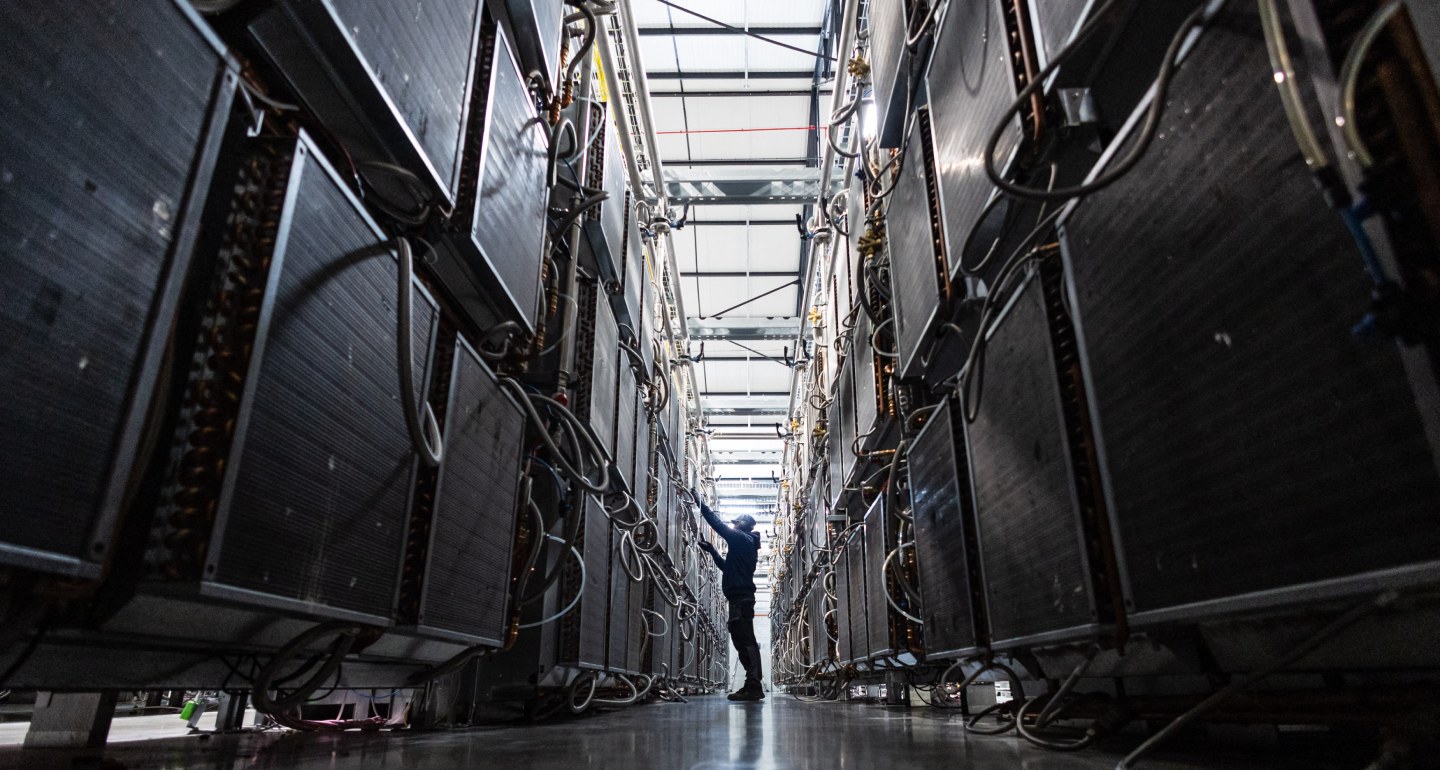
Russia spent years building a “sovereign internet,” concentrating web infrastructure exclusively within Russian territory. Ukrainian drone attacks have shown how vulnerable that approach has left the Russian internet.

Maria Kolomychenko

Putin’s conservative staffing policies and search for ever greater control have cemented parliament’s transformation into a bureaucratic appendage of the executive branch.

Andrey Pertsev

Russia’s AI-driven propaganda campaigns operate in a fragmented, chaotic, and often illogical manner. That’s not necessarily a problem for the Kremlin, though: It’s much easier to mimic genuine public debate that way.

Ilya Klishin