With the White House only interested in economic dealmaking, Georgia finds itself eclipsed by what Armenia and Azerbaijan can offer.
Bashir Kitachaev
{
"authors": [
"Bayram Balci",
"Thomas Liles"
],
"type": "other",
"centerAffiliationAll": "dc",
"centers": [
"Carnegie Endowment for International Peace"
],
"collections": [],
"englishNewsletterAll": "ctw",
"nonEnglishNewsletterAll": "",
"primaryCenter": "Carnegie Endowment for International Peace",
"programAffiliation": "russia",
"programs": [
"Russia and Eurasia"
],
"projects": [],
"regions": [
"Caucasus",
"Georgia"
],
"topics": [
"Religion"
]
}Source: Getty
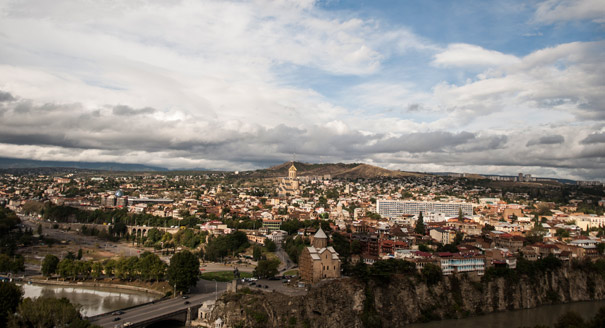
Despite the relatively small number of Muslims in Georgia, issues related to Islam and Muslims have taken on an increasingly high profile in recent years.
Source: Yearbook of Muslims in Europe
Despite the relatively small number of Muslims in Georgia, issues related to Islam and Muslims have taken on an increasingly high profile in recent years. 2014 witnessed continued public debate over the permissibility of ethnic Georgian Sunni Muslims to establish and preserve religious institutions.
Global events and transnational links also caused resonance. The participation of ethnic Kist, Georgian citizens in the so-called Islamic State of Iraq and Syria (ISIS), on the one hand, stoked fears of Salafi radicalisation among Georgia’s Kists, who are closely related to the Chechens, reside primarily in the Pankisi Gorge, and have traditionally adhered to Islam. On the other hand, Turkish and Iranian religious actors continued to develop links with Georgia’s Sunni and Shi‘i communities, respectively.Meanwhile, institutional and legal developments prompted state actors to become increasingly involved in managing Muslim issues. The Administration of Muslims of All Georgia (AMAG)—a state-supported Muslim organisation created by the government of former President Mikheil Saakashvili in 2011—underwent personnel changes and asserted greater control over Muslim persons and property in Eastern Georgia. Similarly, the creation of a new State Agency for Religious Issues gave the state a stronger legal basis for coordinating Muslim affairs....
This chapter originally appeared in the Yearbook of Muslims in Europe, Volume 7.
Former Nonresident Scholar, Russia and Eurasia Program
Balci was a nonresident scholar in Carnegie’s Russia and Eurasia Program, where his research focuses on Turkey and Turkish foreign policy in Central Asia and the Caucasus.
Thomas Liles
With the White House only interested in economic dealmaking, Georgia finds itself eclipsed by what Armenia and Azerbaijan can offer.
Bashir Kitachaev
Instead of a guaranteed ally, the Kremlin now perceives Armenia as yet another hybrid battlefield where it is fighting the West.
Mikayel Zolyan
While signaling internationally that it wants peace, the Azerbaijani regime continues to promote anti-Armenian sentiment at home to mobilize domestic support.
Bashir Kitachaev
The Armenian government’s efforts to reshape foreign policy after Baku seized control of Nagorno-Karabakh require the country to grapple with its national identity: something far from all Armenians are prepared to do.
Mikayel Zolyan
An official peace agreement between Armenia and Azerbaijan cannot by itself resolve decades of mistrust. The durability of peace will depend on healing trauma, reframing identities, diversifying narratives, and ensuring that ordinary citizens experience tangible improvements in daily life.
Zaur Shiriyev, Philip Gamaghelyan