

Commentary
Balázs Jarábik
{
  "authors": [
    "Balázs Jarábik"
  ],
  "type": "other",
  "centerAffiliationAll": "dc",
  "centers": [
    "Carnegie Endowment for International Peace"
  ],
  "collections": [],
  "englishNewsletterAll": "ctw",
  "nonEnglishNewsletterAll": "",
  "primaryCenter": "Carnegie Endowment for International Peace",
  "programAffiliation": "russia",
  "programs": [
    "Russia and Eurasia"
  ],
  "projects": [],
  "regions": [
    "Eastern Europe",
    "Moldova"
  ],
  "topics": [
    "Political Reform",
    "Democracy"
  ]
}
Source: Getty
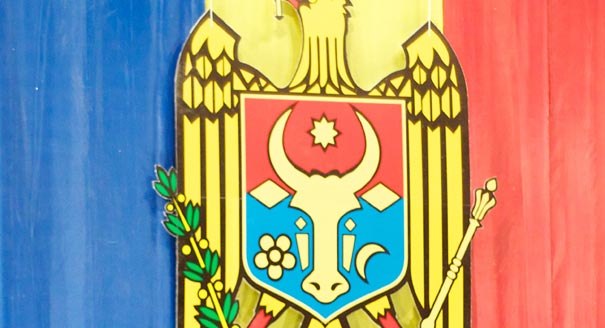
Fighting corruption in Moldova requires the government to address widespread conflicts of interest, increase transparency, and separate state functions from oligarchs’ interests.
Source: World Politics Review
Last month, the Moldovan Parliament voted to dismiss the government of Prime Minister Valeriu Strelet. The move came weeks after former Prime Minister Vlad Filat, who was also a former leader of the ruling coalition member Democratic Party, was arrested as part of an investigation into $1 billion that went missing from the country’s banking system. In an email interview, Balázs Jarábik, a nonresident scholar at the Carnegie Endowment for International Peace, discussed Moldova’s fight against corruption.
Corruption is found in every aspect of public life. With Western assistance and pressure, the nominally pro-European Union government coalition of former Prime Minister Valeriu Strelet’s Liberal-Democrats and the Democratic Party made some steps to curb corruption, most notably with the establishment of the Anti-Corruption Bureau. Nevertheless, perceptions of government corruption have worsened significantly. According to a World Bank survey, 53 percent of businesses in 2013 said paying bribes is an important part of doing business, up from 12 percent in 2005, making Moldova the survey’s worst-ranked country in the world.
Jarábik: With Western assistance, Moldova developed a number of new institutions to fight corruption, such as the National Anti-Corruption Center, the National Integrity Commission and the Anti-Corruption Prosecutor’s office. These institutions were responsible for arresting former Prime Minister Vlad Filat, even if in Moldova there is very little doubt that the arrest could not have happened without the explicit assent of Vlad Plahotniuc, the country’s most powerful oligarch and a key figure in the Democratic Party.
At the same time, the West, driven by its concern not to “lose” Moldova to Russia, essentially “sanctioned” the growing state capture by Moldova’s oligarchs by providing political support to hold the pro-EU ruling coalition together. This has given greater power to certain oligarchs, especially Plahotniuc, who has strengthened his grip over law enforcement and the judiciary. Plahotniuc used this advantage to win his battle with Filat, who was essentially “sacrificed” to assuage popular outrage over the $1 billion that disappeared from Moldovan banks.
Jarábik: After tens of thousands of Moldovans took to the streets to protest the bank fraud, the reaction from the political elite was to arrest Filat who, according to the available evidence, was involved in the scandal. The latest opinion polls show that those in the government suffered heavily, while two pro-Russia politicians—Renato Usatil, the mayor of Balti, and Socialist leader Igor Dodon—have seen their popularity rise.
Among European political circles, saving the pro-EU ruling coalition is still a priority. A new government coalition, with the support of the Communist Party, is likely to be a temporary solution. However, there is not enough support in the current Parliament to elect a new president from any party, and failure to elect a president automatically triggers new elections. It is also unclear whether Plahotniuc will be able to contain the country’s pro-Russia politicians.
When it comes to the economy and how to fight corruption, there are sound proposals from both local and international actors. Fighting corruption requires the government to address widespread conflicts of interest, increase transparency and separate state functions from oligarchs’ interests. Whether this is possible given the current political environment is an entirely different question.
This interview was originally pubsliehd in the World Politics Review.

Political analyst, former Slovak diplomat, and consultant specializing in Eastern Europe
Recent Work
Balázs Jarábik
Balázs Jarábik
Carnegie does not take institutional positions on public policy issues; the views represented herein are those of the author(s) and do not necessarily reflect the views of Carnegie, its staff, or its trustees.

The greater threat to Zelensky comes not from Fedorov alone, but from the convergence between the former defense minister’s political campaign and the anti-corruption investigations moving ever closer to the presidential administration.
Balázs Jarábik
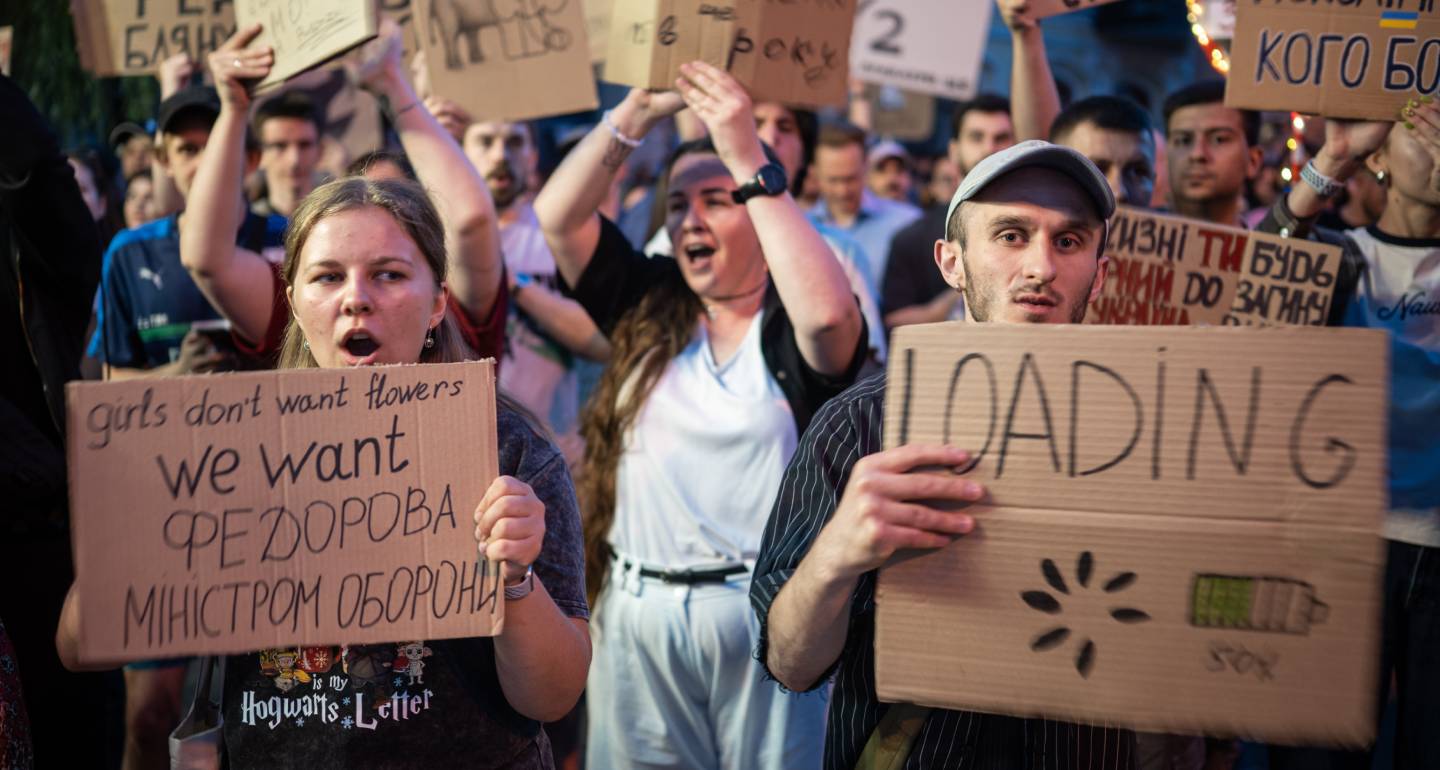
With his public call for new elections in Ukraine, ex-defense minister Mykhailo Fedorov has opened Pandora’s box.

Konstantin Skorkin

In the discussions made possible by the State Duma election campaign, one question is being asked more and more loudly. “What next?”

Andrey Pertsev
Two divergent trends—Putin’s hardline vision of how to prosecute the war in Ukraine, and a growing desire for change in Russia—could tear the regime apart.

Tatiana Stanovaya
Ultimately, Zelensky sided neither with the reform camp nor with the military establishment as such, but with political control.
Balázs Jarábik