

Commentary
Andrei Kolesnikov
{
  "authors": [
    "Andrei Kolesnikov"
  ],
  "type": "commentary",
  "centerAffiliationAll": "",
  "centers": [
    "Carnegie Endowment for International Peace",
    "Carnegie Russia Eurasia Center"
  ],
  "collections": [
    "Inside Russia"
  ],
  "englishNewsletterAll": "",
  "nonEnglishNewsletterAll": "",
  "primaryCenter": "Carnegie Endowment for International Peace",
  "programAffiliation": "",
  "programs": [],
  "projects": [],
  "regions": [],
  "topics": []
}
Source: Getty
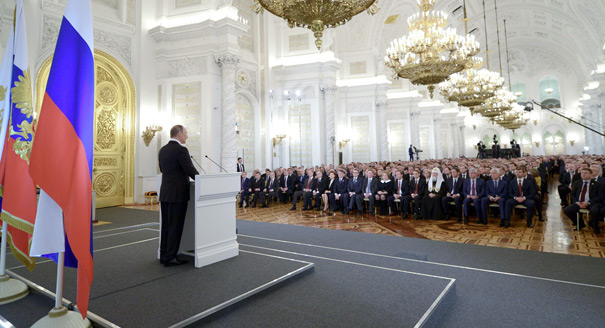
President Putin’s annual national addresses are short of ideas, but serve the purpose of sending signals to the Russian elite. This year, Putin underlined the idea of Russia as a nation under siege.
President Vladimir Putin’s annual “state of the nation” speeches have gotten briefer. The one he delivered in the Kremlin on December 3 was 12 minutes shorter than the one he gave in 2014.
The address contained no new ideas, but that was not its purpose. It was a piece of theater that sent signals of ideological guidance to the Russian elite about the state of their nation under siege.
Finding something original to say in a speech of this type is not a new problem. Putin’s team of writers would sympathize with the plight of Alexander Bovin, who worked as Leonid Brezhnev’s speechwriter in even more restrictive times. Once Bovin was so bored that he composed a poem about his work:
Another speech, another dacha,
Drink after drink—with none to spare—
With tears and laughter, simple structure,
When every day is a nightmare.
The General Secretary of the Communist Party apparently did not like the poem.
The idea of an annual presidential address to the nation was devised in 1993, reportedly by President Boris Yeltsin’s then adviser Yury Baturin, with another vision, as a kind of conversation between the leader and the nation.
The current master of the Kremlin does not want a conversation. Putin uses the occasion to conquer his audience with populist sound bites that solidify his “tough guy” image. In that spirit, he told his audience that “Allah has decided to punish the ruling clique in Turkey by taking away their mind and reason.”
More importantly, the speech also served the purpose of warning the elites to maintain their vigilance in an era when Russia is at odds with almost the entire Western world and part of the East as well. It was a set of instructions on the need to consolidate around their leader and his now-hopelessly-besieged fortress.
For instance, Putin called for the development of import substitution programs and set the goal that the domestic market should be fully provided with Russian-produced foods by 2020. This suggests that his Russian fortress will need to be completely outside the world’s supply chain by then.
The address neatly fitted the spin doctors’ construction of “Putin the Savior.” It matched well with the news of the evening before, in which Putin visited Crimea to open the first phase of an “energy bridge” with the Russian mainland to save the peninsula from dependence on Ukrainian electricity. The next morning Putin was already skirmishing verbally with his foreign adversaries in Moscow.
The background to the speech is the slogan of “permanent war,” which Putin has inculcated in Russia and which is meant to serve as a substitute for a lack of economic prosperity. Crimea, Donbas, Syria, terrorists, and Turkey all form a chain of events that obviates both the need for an economic miracle and any critical reflections on the nature of the Russian political regime.
An already-standard arsenal of PR techniques was on display. The president drew direct analogies between the anti-Hitler coalition of World War II and the anti-Jihadist coalition of today. He equated patriotic sentiments with moral ones. He advanced the concept of a preventive and just war, which was very reminiscent of Lenin’s thesis of just wars waged by the proletariat.
Myths and symbols got the better of actual facts. The president ostentatiously thanked the engineers and workers of Russian defense companies for providing technology for the military operation in Syria in language that was reminiscent of the Soviet Union’s Great Patriotic War against the Nazis. He praised Russia’s farmers for catapulting Russia into a world club of food exporters, disregarding the fact that Russia’s villages and farms are actually decaying.
The president also attributed Russia’s growing birthrate to the government’s maternity program, whereas the evidence suggests that the country is at the top of a long-term demographic curve that started a long time ago in the twentieth century and is about to fall again.
The president looked to the future by saying, “We have repeatedly faced a historical choice of which road to take to further development. We crossed another milestone in 2014, when Crimea and Sevastopol were reunified with Russia. Russia resoundingly reaffirmed its status as a strong state with a millennium-long history and great traditions, as a nation consolidated by common values and common goals.”
This conclusion will be especially worrying to the 10–15 percent of the population who believe Russia is on a road to ruin and see no place for themselves in the president’s vision of the future.
The notion of “common values and common goals” was declared, but its meaning was only hinted at, just as Russian television viewers were told in confidential tones about the weather in the Syrian war zone. The military operation in Syria, the takeover of Crimea, and the backlash against the Turks all reflect a new poorly-articulated but commonly and intuitively felt idea of Russian national consolidation
Former Senior Fellow, Carnegie Russia Eurasia Center
Kolesnikov was a senior fellow at the Carnegie Russia Eurasia Center.
Recent Work
Andrei Kolesnikov
Andrei Kolesnikov
Carnegie does not take institutional positions on public policy issues; the views represented herein are those of the author(s) and do not necessarily reflect the views of Carnegie, its staff, or its trustees.
Rather than consolidating Russian society, the conflict in Ukraine has exacerbated existing divisions on a diverse array of issues, including support for the regime. Put another way, the impression that Putin now has the full support of the Russian public is simply incorrect.
Denis Volkov, Andrei Kolesnikov
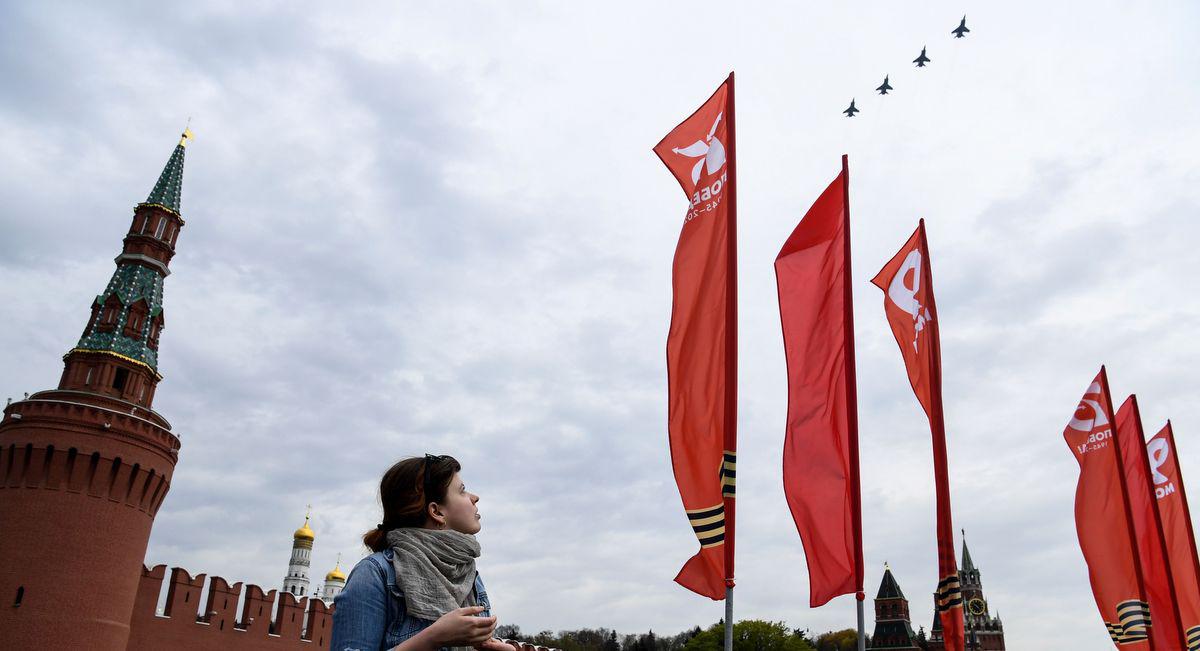
The foundation of the current Kremlin ideology is a defensive narrative: that we have always been attacked and forced to defend ourselves. Another line of defense is history.
Andrei Kolesnikov
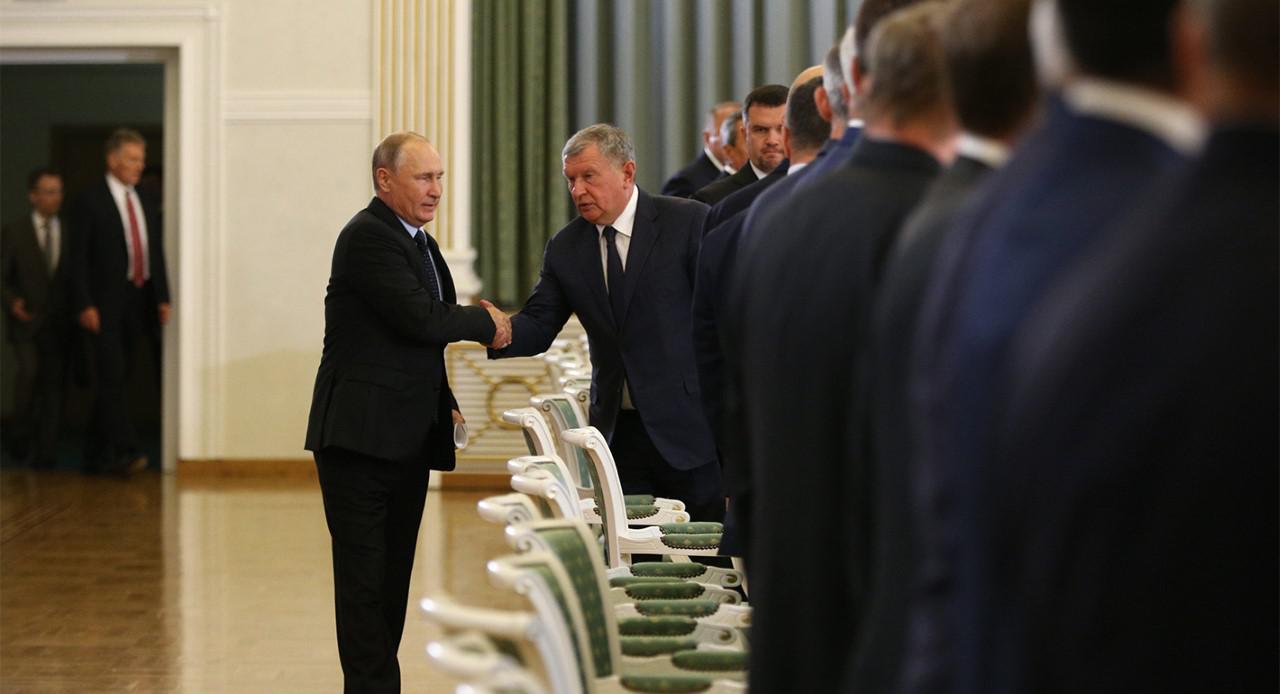
The pandemic has revealed a truth of the Russian government. Vladimir Putin has become increasingly disengaged from routine matters of governing and prefers to delegate most issues.

Tatiana Stanovaya
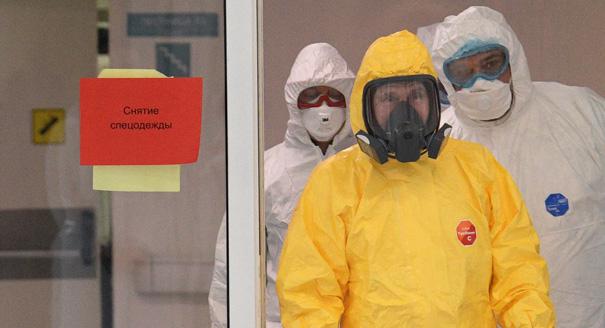
The fight against the new coronavirus in Russia is being led not by politicians oriented on the public mood, but by managers serving their boss. This is why the authorities’ actions appear first insufficient, then excessive; first belated, then premature.
Tatiana Stanovaya
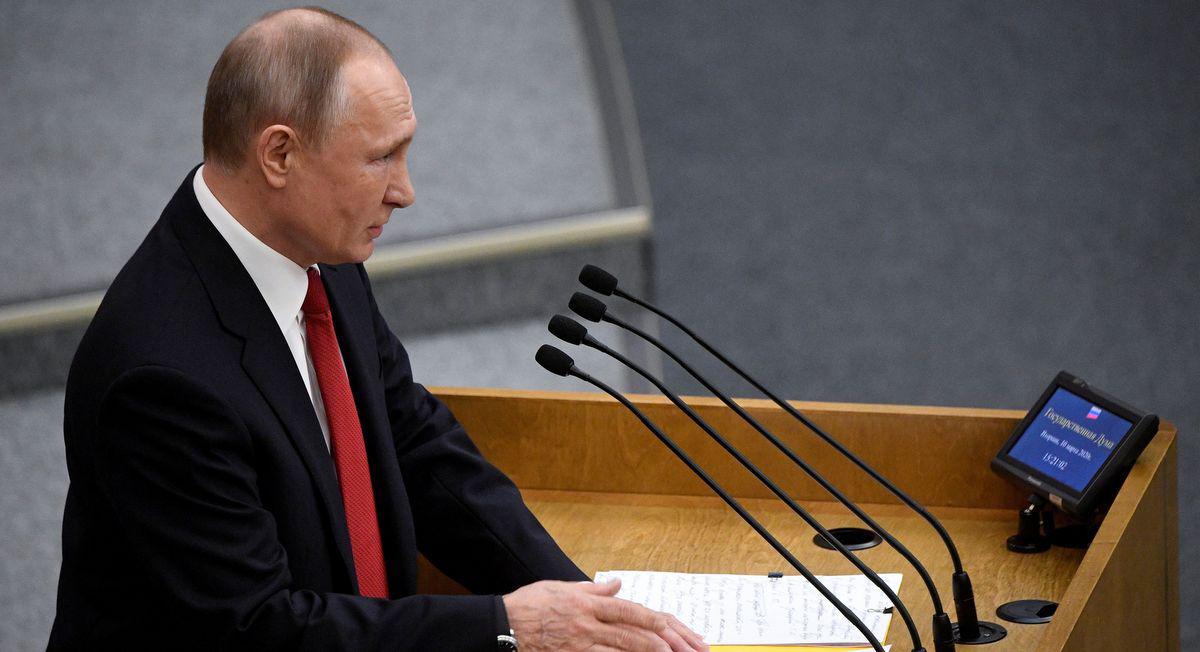
Amid a coronavirus pandemic and looming global economic crisis, Russian President Vladimir Putin has suddenly revealed how he intends to remain in power beyond 2024, when what should be his final term in office ends. In doing so, Putin seems to have bet – not incorrectly – that there is simply no one who can stop him.
Andrei Kolesnikov